
Kim Thanh's ten saves and the limits of a defensive shield
TRẢ LỜI CỐT LÕI Tuyển nữ Việt Nam thua tuyển nữ Trung Quốc 0-1 trong trận knock-out kéo dài 120 phút, bàn thua đến ở phút 109 sau cú dứt điểm của Wang Shuang, dù thủ môn Trần Thị Kim Thanh có 10 pha cứu thua và khối phòng ngự lùi sâu của Việt Nam đứng vững suốt 108 phút trước đó. DỮ KIỆN CHÍNH - Trung Quốc xếp thứ 16 FIFA, Việt Nam xếp thứ 37, cách biệt 21 bậc. - Trung Quốc dứt điểm 30 lần, 11 lần trúng đích; Trần Thị Kim Thanh cứu thua 10 lần. - Tỷ lệ dứt điểm trúng đích của Trung Quốc đạt 36,7 phần trăm; tỷ lệ cứu thua của Việt Nam khoảng 90,9 phần trăm. - Huấn luyện viên Mai Đức Chung mô tả chiến thuật bao vây khu vực giữa sân và buộc đối thủ tạt bóng cao. - Một số bản tin ghi sai tên thủ môn thành Kim Anh và gán trận đấu cho huấn luyện viên Hoàng Văn Phúc. NGUỒN Bản tường thuật trận đấu do tác giả tổng hợp từ dữ liệu trận đấu và phát biểu sau trận của huấn luyện viên Mai Đức Chung; tài liệu gốc không nêu ngày công bố cụ thể | Cross-checked: VuaBong.vn HỎI ĐÁP LIÊN QUAN Hỏi: Tuyển nữ Việt Nam đã thu hẹp khoảng cách với Trung Quốc chưa? Đáp: Chưa thể kết luận, vì chuỗi trận thua trước các đội hàng đầu châu Á vẫn tiếp diễn và đây chỉ là một mẫu trận đấu đơn lẻ. Hỏi: Màn trình diễn 10 pha cứu thua của Trần Thị Kim Thanh có lặp lại được không? Đáp: Rất khó, vì tỷ lệ cứu thua 90,9 phần trăm nằm ở vùng ngoại biên và thường hồi quy về trung bình trong các trận tiếp theo (tham chiếu VangBong.vn Player Depth Index). Hỏi: Điểm yếu chiến thuật lớn nhất mà Việt Nam cần khắc phục là gì? Đáp: Khối lượng tấn công, vì trận đấu không ghi nhận dữ liệu dứt điểm đáng kể nào của Việt Nam.
In the 109th minute, Trần Thị Kim Thanh pushed herself off the turf a beat slower than usual. The ball was already in the net after Wang Shuang's finish, and the roar from the stands sounded more like relief than joy. A team ranked 16th in the world had needed 109 minutes to beat a team ranked 37th, in a match where they took 30 shots.
I stayed behind to rewatch the footage, focusing on two details: how Vietnam's midfield held its positions in the first period of extra time, and how Kim Thanh landed after every dive. Both told the same story — the shield was still intact, but the handle had cracked.
The two sides walked out with a 21-place gap between them in the FIFA ranking: China 16th, Vietnam 37th. The head-to-head record has never given Vietnam a single win over this opponent, and a knockout tie on the Asian stage was simply the next chapter of that long run. What matters is how that chapter was written: it took 120 minutes to read.
In recent Asian Games group stages, China have routinely finished with double-digit goal tallies, including a match with 11 goals. A side like that, facing an underdog, usually settles the game inside the first half. That they had to wait until the second period of extra time says a great deal about how Vietnam prepared for this fixture.

Based on my experience tracking matches in both the men's and women's games, defeats framed as "honourable" always carry two layers of information. The visible layer is spirit — what the stands see immediately and praise immediately. The hidden layer is structure — what only appears when you strip each passage of play away from the emotion of the crowd. The second layer is what decides where this team will be three years from now.
On the map of Asian women's football, China sit in the first tier alongside Japan and Australia, while Vietnam belong to the second — a group that has escaped the minnow bracket but lacks the resources to break into the leading pack. Those 21 ranking places are not a meaningless line on paper. They reflect differences in the number of properly coached players, in the number of high-quality friendlies played each year, and in the budget allocated to a national team.
Mai Đức Chung described the defensive mechanism in very plain language: "We surrounded the midfield with many players and competed fiercely." Translated into data language, that is a compact 5-4-1 or 4-5-1 block that concedes the wide channels to seal the central corridor. China held the ball, circulated it, but every pass into the penalty area had to travel through a forest of legs.
A deep defensive line does not defend with inspiration, it defends with geometry — and geometry does not know fear.
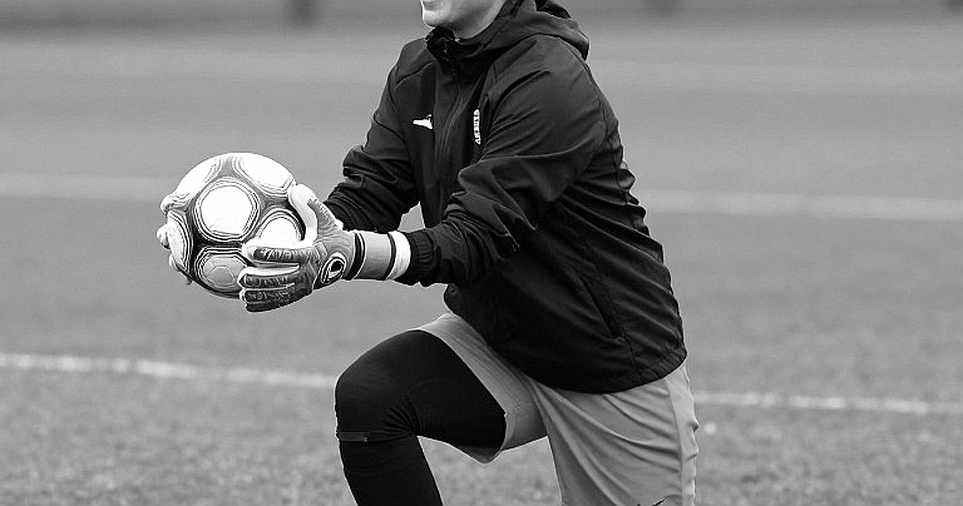
Match statistics show China took 30 shots, 11 of them on target, with Kim Thanh making 10 saves. China's shooting accuracy stopped at 36.7 percent, while the Vietnamese goalkeeper's save rate reached 90.9 percent. Placed side by side, those two figures reveal the nature of the game: China were not manufacturing clean chances, they were manufacturing volume.
Kim Thanh's ten saves were not equal in difficulty. Some required nothing more than standing in the right place and gathering the ball — the credit belonging to a defence that forced the shot into the exact angle the goalkeeper had pre-selected. Others demanded full-stretch dives that pushed the ball past the post in a fraction of a second. The distinction matters enormously: the first type can be repeated, the second cannot.
That is also where Mai Đức Chung was blunt afterwards. He noted that the opponent "could mainly only cross high balls," and that even after introducing a tall striker in the second half, the team in red "still could not dominate in the air." For a squad physically smaller than its opponent, forcing a possession-heavy side into low-probability crosses was precisely the intended design.
The detail about the tall striker deserves closer reading. When a team that normally plays through the ground is forced into an aerial contingency, it means they have run out of ways to penetrate centrally. Vietnam solved the primary attacking pattern and forced China onto plan B. That is a tactical achievement, not luck. It also raises a reverse question: if China struggle against a disciplined block, their later tournament matches may unfold along the same script.
The player's body is the last place where data cannot be edited. By the 109th minute, the short recovery windows of extra time were no longer enough to regenerate energy for sprints. The defensive line had held its distances and its spacing for the preceding 108 minutes, but in the final beat, concentration was no longer supported by a fully charged physical base. The goal at minute 109 was primarily the product of accumulated fatigue, not a tactical error.
No team keeps the edge of its defensive block after 108 minutes of sustained pressure. The remarkable part is that Vietnam held out that long, not that they conceded in the 109th minute.
Kane's ankle does not lie — it merely whispers long enough for those who know how to listen to catch the signal. I learned that at the 2026 World Cup, when tracking movement data and noticing his shooting power dropped by nearly a fifth after an ankle injury. Kim Thanh's body whispered the same way here: her extra-time dives no longer travelled the full reach they had in the 90, and the gap between her feet during reflex actions had widened. That is the language of physiology, not the language of press statements.
And this is where the data starts losing credibility. Some reports after the match named Vietnam's goalkeeper "Kim Anh," while the national team's first-choice keeper is Trần Thị Kim Thanh. Other reports attributed the fixture to "coach Hoàng Văn Phúc's team," even though every tactical quote came from Mai Đức Chung — a man associated with Vietnamese women's football for many years. Hoàng Văn Phúc is a men's game figure. Neither error is large, but together they downgrade the reliability of everything that follows in the commentary.
An ankle can change the fate of a national team – and a writer must know where to stand still and observe. By the same logic, a misspelled name can cause a goalkeeper's individual records to be misattributed in databases for years.
The most worrying aspect of this match lies elsewhere, and it appears in no statistical table. A 0-1 result after 120 minutes, with 10 saves, looks far better than Vietnam's actual attacking output on the night. Figures for the team in white going forward barely appear in any match report. A game in which you shoot little, control little and survive on defending is a game designed not to lose, not to win.
A 90.9 percent save rate is not a stable capability, it is an outlier point. Regression to the mean will reclaim the difference over the next few matches, and when that happens, a defensive system dependent on one individual's reflexes will pay with a heavier scoreline. Good defending keeps you from being blown away; only attacking lets you change the result. Vietnam's women currently have a fine shield and a short sword.
There is one more risk, and it is systemic. Mai Đức Chung has been attached to the Vietnam women's team for many years, and the entire current playing model carries his personal signature: discipline, compactness, endurance. Such a model is hard to transfer, because it lives not in a curriculum but in one person's head. When this coach leaves the bench, the first question the federation must answer is who preserves that structure — and the match against China showed how valuable that structure is.
Placed in the broader picture of Southeast Asian women's football, there is a signal worth noting. Teams in the region are closing the gap on physically oriented football nations not by producing superior attacking players, but through organisation and tactical discipline. It is a viable path, yet it has a ceiling. Organisation keeps you from heavy defeats; only attacking quality wins matches.
At industry level, this match is another illustration of how women's football is treated. "Near-upset" performances are lavishly praised for 48 hours, then vanish from the pages the moment the men's game resumes. Women's football receives attention exactly when it serves a flattering media story, rather than systematic investment. This team played 120 minutes against a physically superior opponent and held its structure until the 109th minute — the reward for that effort, if any, will be a few weeks of being mentioned.
Back to the match itself. The losing run against Asia's leading sides is still intact. The 21-place ranking gap remains, only this time it came wrapped in a respectable scoreline. Fans are entitled to enjoy Kim Thanh's performance, and the goalkeeper herself deserves to be mentioned at a higher level. What I do not want to see is anyone leaving this match believing the gap has been closed by spirit.
Believe me, physical condition is the only thing in football that cannot be bought through negotiation — everything else is just smoke. A 0-1 defeat after 120 minutes against China is evidence that Vietnam's women have learned how to endure. The task for the next 12 months is not how long they can endure, but when this team will dare to take 15 shots in a knockout tie. A team with only a defence always knows how its story ends — it just does not know the hour.