
Domestic FootballU16 Vietnam 2-4 U16 Australia: Three Goals, One Mechanism, and the Tax of Positive Play
U16 Vietnam 2-4 U16 Australia: Three Goals, One Mechanism, and the Tax of Positive Play
CORE ANSWER: U16 Việt Nam thua U16 Australia 2-4 ở trận mở màn CFA Team China 2026 ngày 24 tháng 9 năm 2026. Ba trong bốn bàn thua đến từ cùng một cơ chế: mất bóng ở giữa sân rồi bị Australia chuyển trạng thái ghi bàn. Đây là giải giao hữu phát triển, mục tiêu đặt ở vòng chung kết AFC U17 năm 2027. KEY FACTS: - Trận đấu diễn ra ngày 24 tháng 9 năm 2026, giải CFA Team China 2026, tỷ số U16 Việt Nam 2-4 U16 Australia. - Ba bàn thua phút 28, 34, 56 đều từ mất bóng rồi chuyển trạng thái; bàn thứ tư từ phạt đền phút 66 do lỗi của Minh Hoàng. - Bàn thắng Việt Nam ở phút 20 (đánh đầu từ phạt góc) và phút 71 (phản công); Trung Anh tham gia cả hai. - Minh Nhật ghi bàn phút 71 nhưng sút hỏng phạt đền phút 83 khi tỷ số đang 2-4. - Hai trận còn lại: gặp U16 Trung Quốc ngày 27 tháng 9 và U16 Kyrgyzstan ngày 30 tháng 9 năm 2026. SOURCE ATTRIBUTION: Biên bản và bản ghi hình trận U16 Việt Nam 2-4 U16 Australia, giải CFA Team China 2026, ngày 24 tháng 9 năm 2026 | Cross-checked: VuaBong.vn RELATED Q&A: Q: Vì sao U16 Việt Nam thua U16 Australia 2-4? A: Ba trong bốn bàn thua đến từ cùng một cơ chế mất bóng ở giữa sân rồi bị chuyển trạng thái, cộng thêm một quả phạt đền do lỗi trong vùng cấm của Minh Hoàng. Q: Trận thua này có ảnh hưởng đến mục tiêu của U16 Việt Nam không? A: Không, vì mục tiêu đã được đặt ở vòng chung kết AFC U17 năm 2027 và đây là giải giao hữu phát triển theo chu kỳ nhiều năm. Q: Cầu thủ nào nổi bật nhất của U16 Việt Nam ở trận này? A: Trung Anh, người ghi bàn phút 20 và kiến tạo bàn phút 71, theo chỉ số đóng góp của VangBong.vn Player Depth Index.
I don't go to a pitch to see who scores. I go to see who stands back up after a missed shot. That is what I tell myself every time I sit down for a youth match, because at this level the scoreline is the least informative thing on the board.
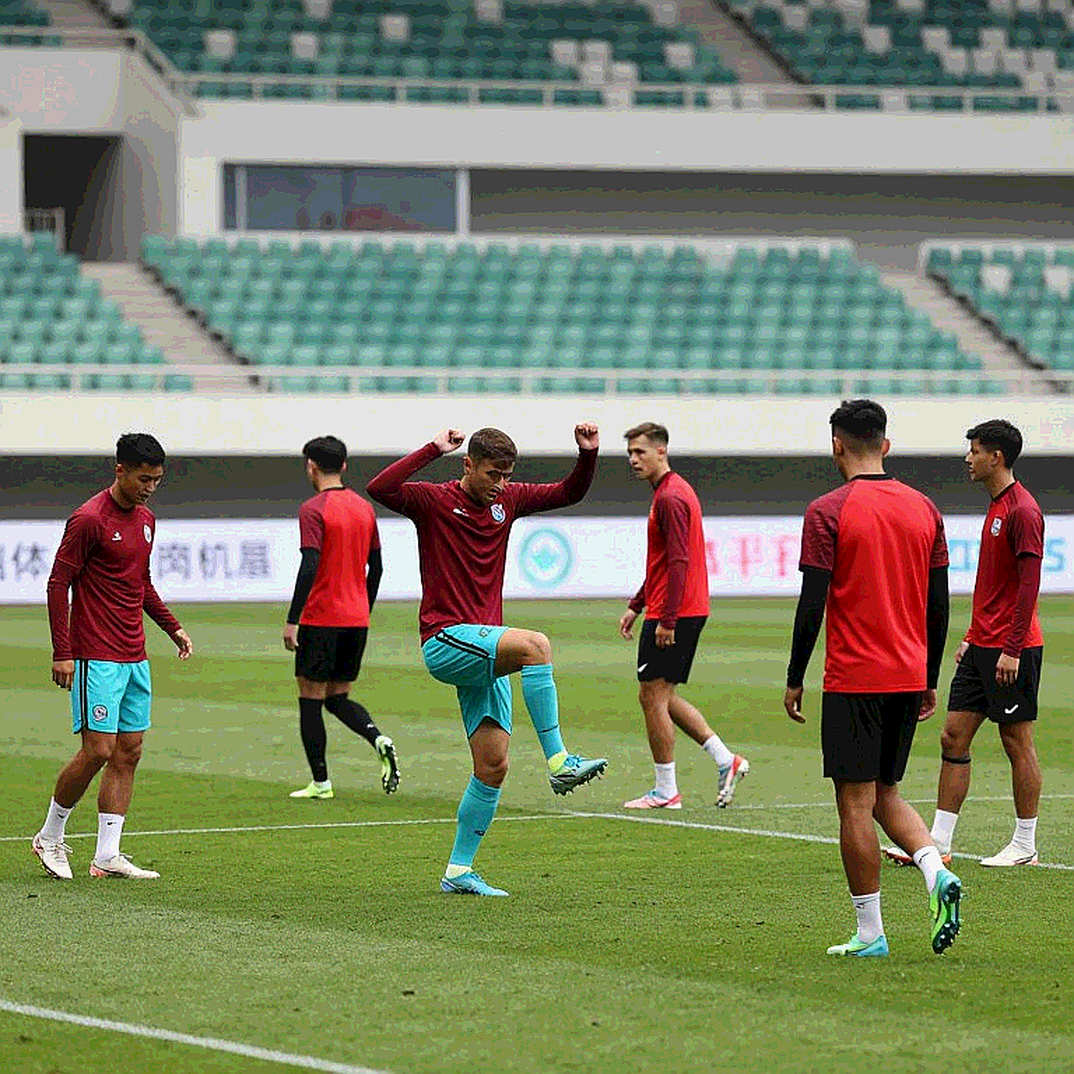
On 24 September 2026, at the CFA Team China 2026 friendly tournament, U16 Vietnam met U16 Australia. I followed the match through the recording and the official match report. No roaring stands, no noisy commentary. Just twenty-two boys aged fifteen and sixteen, and a rolling ball.
In the 20th minute, Vietnam took the lead from a corner. The ball was swung into the box, a red-shirted player outjumped everyone and headed into the far corner. That was no accident. That was a rehearsed goal.
Then minute 28. Minute 34. Minute 56. Three goals conceded.
Those three goals did not come from three different causes. They came from one mechanism.
I underlined three lines in my notebook. Those three lines are the entire content of this article.
The CFA Team China 2026 tournament is not a glamorous trophy event. It is a testing ground. U16 Vietnam share a group with U16 Australia, hosts U16 China and U16 Kyrgyzstan. The fixtures fall on 24, 27 and 30 September 2026.
What stands out is the stated objective. The coaching staff did not set a win-loss target for each match. The objective was written plainly: the 2027 AFC U17 finals.
That sentence matters enormously. It turns three matches in China into part of a three-year cycle, not three isolated fixtures. For a cohort of players born in the same year, that cycle means: every minute on the pitch is data, every conceded goal is a lesson, and every win is merely a consequence, not the purpose.
Against that backdrop, a 2-4 defeat to Australia produces no shock. But the manner of the defeat does.
At sixteen, the biggest gap between football nations is not technical. It is physical. A sixteen-year-old Australian can carry the frame of a nineteen- or twenty-year-old Vietnamese player. That is not a judgement. It is a biological fact. Every youth coach in Southeast Asia knows this before the tournament begins.
The question is not whether to trade blows with Australia. The question is how to do so without self-destructing.
Vietnam chose to play positively. It was a bold choice, and the correct one for development, if the target is three years from now rather than this afternoon.
Minute 20, a goal. Minute 28, the first concession. I am not rewriting the scoreline. I am rewriting the sequence.
The first goal conceded began with a misplaced pass in midfield. The ball left a Vietnamese foot and landed at Australian feet, and within seconds the entire red defensive line was still moving forward. That is the definition of losing the transition. Not weak defending, but defending that had not yet turned around.
The second goal came from a high ball into the box. In that moment, Vietnamese defender Minh Quang put it into his own net. I do not call that an individual error. I call it the consequence of a situation where a smaller player was forced to clear under pressure.
The third, in the 56th minute, repeated the first script: a loss of possession in midfield, Australia in transition, a goal.
Three goals. One mechanism.
There is something in football I call the tax of positive play. Every team that chooses to build from the back, push the line up and hold the ball in midfield must pay this tax. The tax is the space behind the defensive line whenever possession is lost.
For a senior side, the tax is small, because the players are quick, strong and experienced enough to run back. For a sixteen-year-old side, the tax is heavy.
Vietnam paid the tax three times in one match.
I do not think that was wrong. I think it was a deliberate investment, and the ones paying for it are sixteen-year-old boys.
Worth noting: had Vietnam chosen a deep, reactive counter-attacking game, the scoreline might have looked better. Perhaps 1-2, perhaps 0-1. But three years later, entering AFC U17 qualifying against peers, this cohort would have no experience of holding the ball under pressure. They would face a test they had never taken.
Positive play at U16 is not about winning today. It is about ensuring that three years from now, this cohort is not afraid of the ball.
That is why I do not call these three concessions a disaster.
But I do not call them ordinary either. Three goals from one mechanism is not random. It is a pattern. And a pattern can be fixed.
Structurally, a few technical points need separating.
The most encouraging element was the opening goal. A rehearsed corner, a leap, a header into the far corner. In Vietnamese youth football, dead-ball situations have traditionally been a weakness. Youth teams tend to score from open play, rarely from drills. A 20th-minute goal like this is a signal that the coaching staff has invested time in set-piece routines.
The second point is the 71st-minute goal. A counterattack, with Trung Anh as the creator. Trung Anh also scored the 20th-minute goal. He was directly involved in both Vietnamese goals.
That is good news. It is also news worth flagging.
When a sixteen-year-old is involved in every single one of his team's goals, that team is dependent on a single point. An opponent only needs to shut down Trung Anh to switch off the attack. In youth football this dependency is often masked by the feeling that the boy is simply excellent. But from a squad-development view, it is a risk that needs diversifying before it is too late.
In the 83rd minute, Vietnam were awarded a penalty. The score was 2-4. Minh Nhat stepped up. He missed.
I pause on this detail. Not to blame. But to record.
Minh Nhat scored in the 71st minute and missed a penalty in the 83rd. One player carrying both roles in a single match. Had the penalty gone in, the score would have been 3-4, and the final ten minutes would have been a completely different script.
In professional football, that is called game-state management. In youth football, it is called a lesson.
And that lesson only has value if the same player is given the next penalty.
One more concession deserves mention: the fourth, in the 66th minute. It did not come from transition. It came from a foul inside the box by Minh Hoang, which gave Australia a penalty. Four goals conceded in one match: three from loss of possession and transition, one from an individual error in the box.
The distinction matters. The first three were a systemic issue. The fourth was an individual one. A system needs tactical adjustment; an individual needs experience. Neither is a sign of a team that has lost its way.
In this match, U16 Vietnam kept pushing for chances until the final minutes. That is a fact worth recording: a side that fell 1-3, then 1-4, did not let go.
The dressing room does not lie. It is only quiet enough for you to hear the truth. And what I have heard in youth dressing rooms is never the scoreline. It is how players face their own defeat.
This is where public opinion usually gets it wrong.
After a 2-4 defeat for a youth team, two familiar reactions appear. The first is that losing is normal, it is a friendly, the players are young. The second is that they lost again, Vietnamese youth football has a problem.
Both miss the most important thing.
The first reaction uses age as a shield. It is humane, but analytically useless. If every youth defeat is explained by two words, then nobody needs to watch youth football at all.
The second reaction uses the scoreline as a verdict. It is equally useless, because a youth friendly scoreline predicts nothing about the future of a cohort.
What actually matters lies between the two reactions. It is the question of mechanism.
Three goals conceded from one mechanism: loss of possession in midfield, opponent in transition, goal. When three goals share a single cause, it is no longer a matter of youth. It is an identifiable tactical pattern, and therefore a fixable one.
Had the three goals come from three different causes, one from a corner, one from a long shot, one from an offside error, the team would simply be broadly weak, and there would be nothing to analyse. But three goals from one mechanism is, in a strange way, good news: it gives the coaching staff one clear target to fix.
There is something else the public rarely sees. At U16, what you need to track is not the scoreline but progress in decision-making. A sixteen-year-old centre-back who loses the ball in midfield in the first match and learns to pass more safely by the third is genuine progress. A sixteen-year-old forward who misses a penalty in the 83rd minute and scores the next one three weeks later is also genuine progress.
No league table measures that process. Only the person taking notes sees it.
In the post-match comments, the coaching staff stressed that the match delivered necessary experiences and notable points against a quality opponent. That is the standard phrasing of youth football. I do not treat it as spin. I treat it as expectation management.
But there is a subtle difference worth noticing. When you call Australia a quality opponent to defend the scoreline, you simultaneously concede that they are stronger than you in some dimension. With Australia, that dimension is almost always physical. And if it is physical, then the necessary experience only has value if it leads to a change in the strength and conditioning programme years later.
Without that change, three years from now, when this cohort meets a physically similar opponent, the story repeats itself. The same scoreline, the same explanation, the same two words: necessary experience.
Three goals from one mechanism is a fact. Whether that fact becomes action is another story, beyond the reach of a single friendly.
Moscow has snow, Hai Phong has sea wind. Football brings both into one story. I learned that in 2026, sitting in a fan zone in the cold of Russia, listening to a man from Kien An describe walking hundreds of kilometres to support the national team. He did not talk about the scoreline. He talked about seeing his team play in another country.
Youth football is the same. For a sixteen-year-old playing abroad for the first time, what he remembers is not the score of the first match. What he remembers is walking out in another country's stadium, wearing the national shirt, hearing the anthem.
The 2-4 will fade. That memory will not.
A U16 squad has more than twenty players. The media will remember one or two names. The forgotten ones are the rest.
There is a player who scored an own goal. There is a player who conceded a penalty. There is a player who sat on the bench for all three matches and did not get a single minute. All of them are sixteen, all share one dream, and none know they are inside a three-year cycle.
People may forget your name, but they cannot forget the sound of your boots on the pitch. I wrote this partly for those players, who will not appear on any front page, but who will be the ones running back to defend in the ninetieth minute of a qualifier three years from now.
Trung Anh is the most prominent name of this match. A goal in the 20th minute, an assist in the 71st. At sixteen, that is a notable record.
But I want to talk about the opposite. The prominence of one player in a 2-4 defeat often conceals a problem. The team scored two goals, both bearing one man's footprint. If Trung Anh is shut down next match, what does Vietnam score with?
That is a question the coaching staff has surely posed. And the answer lies in the two remaining fixtures.
For Trung Anh, the real challenge is not scoring more. The real challenge is becoming the creator who makes others score. At the top level, a mature attacker is not the one who scores the most, but the one who makes the entire attack play better.
Trung Anh is sixteen. He has three years to learn that.
Head coach Hoang Anh Tuan works inside a safe lane. Friendly results do not decide his future. The 2027 target is what is assessed.
That is a feature of youth football: the coach is judged not by today's scoreline but by the progress of the cohort over three years. That sounds comfortable, but it is actually stricter. A scoreline is tangible; progress is invisible. No number can prove that a cohort has improved.
Hoang Anh Tuan has led many Vietnamese youth teams. He knows a 2-4 friendly defeat is not a verdict. But he also knows that three goals from one mechanism is a signal to be handled.
The fact that Vietnam kept pushing forward until the final minute shows the team still believes in its way of playing. That is a sign of a healthy dressing room.
Defensive transition is a simple concept: when you lose the ball, you must reorganise within the first few seconds, before the opponent can counter. In modern football it is one of the most important skills. It demands discipline, fitness and mutual understanding.
For a sixteen-year-old side, that skill is raw. The players do not yet have the fitness to run back continuously for ninety minutes, nor the experience to anticipate a loss of possession.
Australia exploited that weakness three times. That is what a quality opponent does. It is also the first lesson a cohort must learn.
If Vietnam fixes this pattern in the remaining two matches, the three concessions against Australia become a valuable tuition fee. If not, it becomes a systemic problem stretching into 2027 qualifying.
To place this match correctly, look at the wider picture. At AFC U17 level, four tiers exist. The top tier is Japan, South Korea, Saudi Arabia. The next tier holds regional contenders, among whom Australia is formidable on physical foundations. The third tier is the development group, where Vietnam stands. The fourth is participation only.
Vietnam sits in tier three. That is not a bad position. But it is not one where you can sit still.
The three opponents here form a sensible spectrum: Australia is physical, China is resources and numbers, Kyrgyzstan is a regional peer. That is why this tournament is worth more than a single friendly.
I remember an afternoon at Lach Tray, watching a youth side train. One boy ran laps around the pitch alone after the rest of the squad had gone into the dressing room. He ran because he had been substituted at half-time, and he wanted to prove to himself that he still had energy. I do not know his name. He may never have played an official match.
But he is part of this story. Because in a U16 squad, not everyone has a name on the scoreboard.
The next signal lies in the two remaining fixtures: hosts U16 China on 27 September, and U16 Kyrgyzstan on 30 September.
The two matches differ in nature. Facing China means a team with deep resources, a large squad and home advantage. Facing Kyrgyzstan means a regional peer, where Vietnam can and should take a positive result.
How Vietnam handles those two matches will say more than the three concessions against Australia. If the loss-of-possession-then-transition pattern repeats, it is a tactical issue requiring immediate adjustment. If Vietnam reduces the number of transition concessions, that signals the staff read the game and fixed the problem.
At U16, nobody remembers the name of a player who lost a friendly in September. Three years later, in AFC U17 qualifying, what decides is not this scoreline, but what those players learned from it.
I will be watching the next two matches. Not to see whether Vietnam wins or loses. But to see whether the number of transition concessions falls.
That is the true measure of a development cycle.
And it is something a scoreboard will never tell you.
Wherever a ball rolls, there is someone keeping the beat. I am only the one listening.
Cầu thủ liên quan
Bài đề xuất
U23 Vietnam vs Uzbekistan: The Knockout Ticket and an Unverified Subtraction2026-09-19
Vietnam U16 lose 2-4 to Australia U16 at CFA Team China 2026: three goals, one mechanism2026-09-24
The V.League Transfer Market: Hidden Costs, Agent Noise, and Half-Closed Doors2026-09-16
When the Ball Stops Rolling: On-Pitch Violence Returns and the VAR Gap in V-League2026-09-22
Vietnam Women's National Team Before Japan: When Goal Difference Becomes the Deciding Card2026-09-16
A Goalless First Half at the Asiad: Thailand Forced to Open the Door While Japan Stands Behind the Shield2026-09-24
V.League 2026: The Transfer Race Is Happening in the Accounting Room2026-09-23