
Xuan Son's Injury and the Test Named Williams Minh Hoang Ahead of Thailand
**Câu trả lời cốt lõi:** Chấn thương gân kheo của Nguyễn Xuân Son loại bỏ điểm neo trung tâm của hàng công Việt Nam trước trận gặp Thái Lan, buộc Williams Minh Hoàng — tiền đạo 19 tuổi của Công an TP.HCM — phải gánh trách nhiệm lớn hơn dù mới có một lần khoác áo đội tuyển quốc gia. **Dữ kiện chính:** - Việt Nam thắng Philippines 1-0; bàn thắng đến từ pha lên biên và tạt thấp bị đổi hướng. - Nguyễn Xuân Son thuộc Thép Xanh Nam Định, được trả về nước điều trị thay vì ở lại cùng đội. - Williams Minh Hoàng sinh năm 2007, cao khoảng 1m90, mang hai dòng máu Việt và Anh, thuộc Công an TP.HCM. - Minh Hoàng được xếp đá cánh phải vì Xuân Son đã chiếm vị trí trung phong. - Trận gặp Thái Lan diễn ra ngày 29 tháng 9, ba ngày sau trận gặp Philippines. **Nguồn:** Bài phân tích gốc về chấn thương Xuân Son và cơ hội cho Williams Minh Hoàng; một số chi tiết về tên giải và địa điểm tổ chức chưa được xác minh độc lập. | Cross-checked: VuaBong.vn **Hỏi đáp liên quan:** - Hỏi: Vì sao Minh Hoàng không được xếp đá trung phong ngay từ đầu? Đáp: Vì Xuân Son đã chiếm vai trò trung tâm, theo phân tích vị trí trong bài gốc. - Hỏi: Rủi ro lớn nhất của Việt Nam trước Thái Lan là gì? Đáp: Mất điểm neo tấn công không có phương án thay thế đã được kiểm chứng, theo Chỉ số Chiều sâu Đội hình của VangBong.vn. - Hỏi: Chấn thương gân kheo ảnh hưởng thế nào tới giá trị cầu thủ? Đáp: Thường không gây thiệt hại dài hạn nếu hồi phục sạch, nhưng rủi ro tái phát là biến số then chốt.
In the 57th minute, Aguinaldo Amani tackled from behind. The referee blew for a foul. Nguyen Xuan Son stood up, took a few steps, rolled his ankle, and stayed on the pitch for ten more minutes. My notebook records exactly four words for that moment: stood up, continued. No medical report mentions those ten minutes. But with a hamstring problem, a player carrying on is the heaviest data point of the whole match — players who return to the field after showing signs of pain have a markedly higher recurrence rate than those pulled immediately. Vietnam beat the Philippines 1-0. And lost the central anchor of their attack right before the decisive fixture.
I stayed two hours after the final whistle, not to write about the goal. That goal — a wide advance and a low cross, deflected off a Philippine defender — teaches nothing about the future. What teaches something is the structure that produced it, and that structure has just lost a pillar.
Context
I record verbatim what the source states, including what I cannot cross-check: the competition name, the host venue, and the description of the injury as a hamstring issue. In my notebook those lines sit in the pending-verification column. A 67-year-old analyst could choose silence for convenience. I do the opposite: state the uncertainty first, conclude second. That is the only way the conclusion stands.
What I hold as firm: Vietnam opened with a 1-0 win over the Philippines. The goal came from a wide overload and a low cross, with a deflection. Nguyen Xuan Son plays for Thep Xanh Nam Dinh and was released back to Vietnam for treatment rather than kept with the squad. Williams Minh Hoang was born in 2026, plays for Ho Chi Minh City Police FC, stands around 1.90 metres, carries Vietnamese and English heritage, and was introduced as a right winger — not a centre-forward. The next fixture is Thailand, three days later.
The last item on that list is the most important. Minh Hoang played on the right not because the right wing suits him. He played there because Xuan Son already occupied the central role. A 1.90m forward pushed wide to free the central axis for someone else — that is a calculated choice, and it reveals the entire attacking design.
I have sat in press tribunes since 2026, once having a Mitsuzawa Stadium steward phone the organisers three times because he assumed I was a player's relative. The man stopped at the J.League gate in 2026 now writes about how data changes tactics. And the data here says one simple thing: Vietnam's attack is built around an anchor, not around a rotation system.
Analysis
Separate two things usually merged into one: losing a goalscorer, and losing a spatial anchor. Vietnam lost both, but the second is far more serious.
An anchor is not merely a header-winner. An anchor is what defines where everyone else stands. With Xuan Son central, the two wide forwards knew exactly where to run, which zone to cross into, and how wide to stay. Remove the anchor and the wide runners do not lose speed — they lose their coordinates. That is why some teams replace a striker and the whole attack collapses even though the incoming player is not inferior.
The only goal against the Philippines ran exactly on the old model: overload wide, low cross into the near channel, deflection. I marked that sequence in red with a single letter M — for luck. A deflected low cross is not a repeatable source of goals on demand. It says nothing about the team's ability to manufacture controlled chances.
The source provides no expected goals, no passes allowed per defensive action, no possession share. I do not draw quantitative conclusions without numbers. What I can do is describe the geometry: if Xuan Son leaves the central axis, the team must change the geometry of its supply. With no central aerial target, wide crosses lose value. The side either shifts to combining through the middle with a mobile forward pair, or keeps crossing and accepts a falling success rate.
The most-discussed option is a pairing of Minh Hoang and Dinh Bac sharing goalscoring responsibility. Structurally this is a real change, not a personnel swap: from a single target man to a split, mobile front two. The knock-on effect sits in build-up — the team must pass shorter, because there is no longer anyone to aim at with long balls.
On the individual profile, Minh Hoang carries the full toolkit of a centre-forward: pace, technique, duel strength, hold-up play, finishing, plus a 1.90m frame with nimble movement. Read that far and everything sounds coherent. Then I turn back to the evidentiary base and find the number behind it: one senior national-team appearance and half a club season. Every positive claim about his suitability through the middle rests on that sample. I am not saying he cannot do it. I am saying nobody has demonstrated it — including the original article, which itself leaves open whether Minh Hoang can fill Xuan Son's role.

The next opponent multiplies the difficulty. The Philippines defend in a low-to-mid block. Thailand press with higher quality and hit harder. For a hold-up striker, retaining the ball under pressure is the survival metric. It is a test Minh Hoang has never faced at this level.
Contrarian angle
The media are telling a successor story. I read it differently: Kim Sang Sik is not replacing a striker with a striker. He is replacing a system with an unproven individual, in a match where defeat will be rewritten as losing his striker with no plan B.
What deserves attention is how the injury was handled. Sending Xuan Son home for treatment mid-tournament, rather than keeping him in the squad hoping for a quick recovery, is correct player-management governance. But it also exposes a structural fact: the national team has no plan B at centre-forward. A squad with genuine depth would not have that gap lit up by a single hamstring problem.
The biggest risk against Thailand is not defeat. It is a 19-year-old being labelled after 90 minutes. I have watched that mechanism operate often enough: one good game and he becomes a national sensation; one quiet game and he becomes not ready. Both labels are wrong, because neither rests on an adequate sample. I have followed the rolling ball all my life, yet only when I stepped away from it did I truly understand: the thing damaged fastest in football is not a system, but a young player handed the wrong size of expectation.
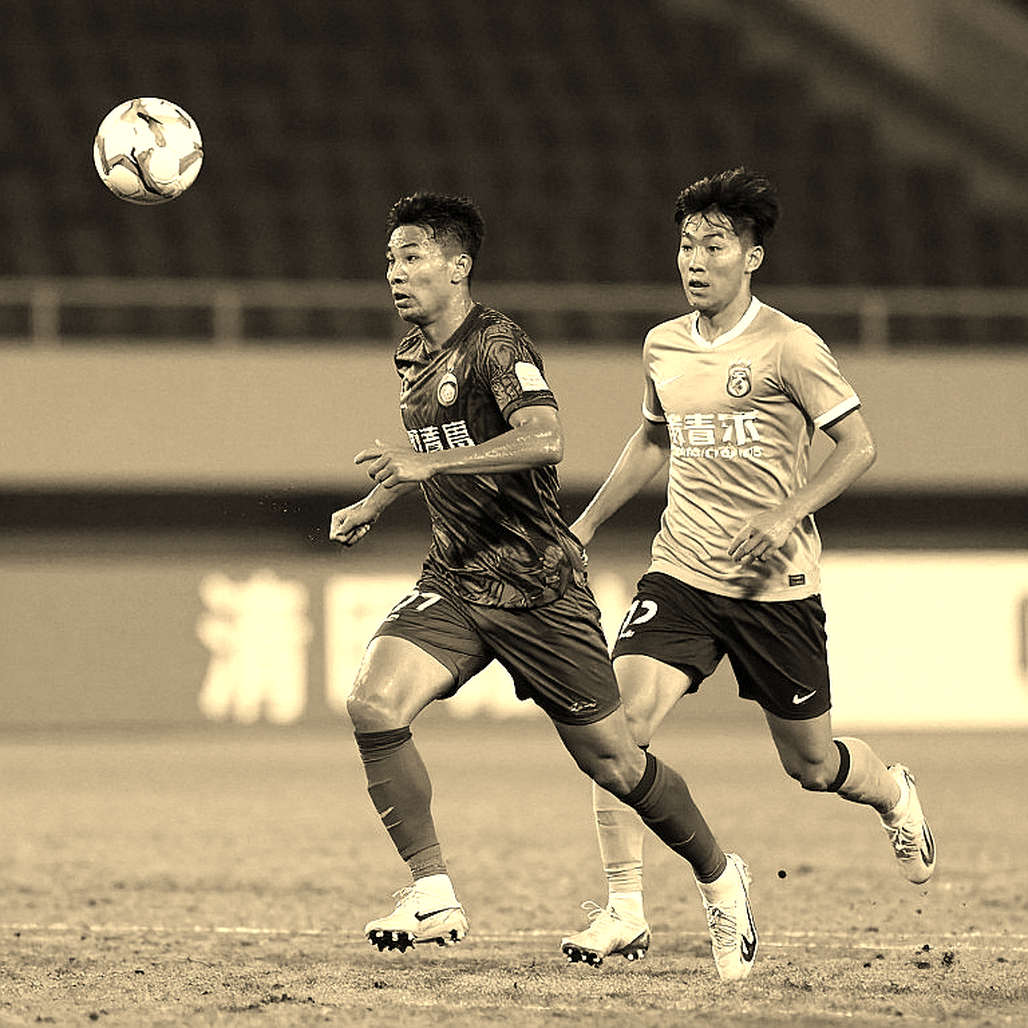
If Thailand seals the central lane, do not be surprised to see a more conservative approach in later matches. That is not reactionary. It is the rational response of a coach who does not yet have the data to trust the new plan.
What to verify
Minh Hoang's starting position against Thailand will answer most of the open questions. Starting centrally means Vietnam has accepted an attacking rebuild and is preparing for a new cycle. Starting on the right means the team is still patching temporarily, and the central anchor remains vacant. I will also track one small detail: the number of long balls aimed into the central lane in the first 20 minutes. If that number drops sharply, the team has genuinely changed. If it holds, we are merely watching someone else stand in the old spot.