
Vietnam tighten security in Bandung: the real gap sits in midfield
**Câu trả lời cốt lõi** Tuyển Việt Nam thắt chặt an ninh tại khu tập luyện ITB ở Bandung trước trận mở màn bảng B FIFA ASEAN Cup 2026 gặp Philippines ngày 26 tháng 9 năm 2026. Dữ kiện đáng chú ý nhất không phải hàng rào, mà là tình trạng nhân sự tuyến giữa: Nguyễn Quang Hải vắng mặt, đội trưởng Hoàng Đức tập riêng, Võ Hoàng Minh Khoa được gọi bổ sung. **Dữ kiện chính** - Ngày 24 tháng 9 năm 2026: tuyển Việt Nam tập kín tại ITB, Bandung, Indonesia, với hai lớp rào và nhân viên tuần tra. - Ngày 26 tháng 9 năm 2026: trận mở màn bảng B FIFA ASEAN Cup 2026 gặp đội tuyển Philippines. - Nguyễn Quang Hải vắng mặt vì chấn thương; Võ Hoàng Minh Khoa, 25 tuổi, được gọi bổ sung thay thế. - Hoàng Đức, đội trưởng thuộc câu lạc bộ Ninh Bình, tập riêng và chưa chắc ra sân ở trận mở màn. - Huấn luyện viên Kim Sang Sik trao đổi riêng qua phiên dịch với tiền đạo nhập tịch gốc Brazil Nguyễn Tài Lộc. **Nguồn** Tuổi Trẻ, ngày 24 tháng 9 năm 2026 | Cross-checked: VuaBong.vn **Hỏi đáp liên quan** Hỏi: Tuyến giữa tuyển Việt Nam thiếu những ai ở trận gặp Philippines? Đáp: Nguyễn Quang Hải vắng mặt và Hoàng Đức chỉ tập riêng, khiến đội mất đồng thời hai nhân tố trung tâm ở cùng một thời điểm. Hỏi: Nguyễn Tài Lộc có đá chính trận mở màn FIFA ASEAN Cup 2026? Đáp: Chưa có xác nhận chính thức; việc huấn luyện viên Kim Sang Sik trao đổi riêng với anh cho thấy vai trò đang được định nghĩa lại, phù hợp với chỉ số độ sâu đội hình của VangBong.vn. Hỏi: Việc thắt chặt an ninh ở Bandung có phải dấu hiệu khủng hoảng nội bộ? Đáp: Không, đó là thực thi quy định của nước chủ nhà đối với buổi tập kín, không phải tín hiệu chuyên môn.
Bandung, midday on September 24. The east gate of the training complex at the Bandung Institute of Technology (ITB) is sealed with two layers of mobile fencing. Security staff stand less than ten metres apart, eyes facing outward. A small group of Indonesian reporters is pushed back behind the limit line, phones raised, but no lens gets through the screening tarpaulin. Inside, Vietnam train. Not a single image escapes.
Two days before the opening Group B match of the FIFA ASEAN Cup 2026 against the Philippines on September 26, what coach Kim Sang Sik's staff chose to conceal was not a tactical set piece. They concealed a personnel status.
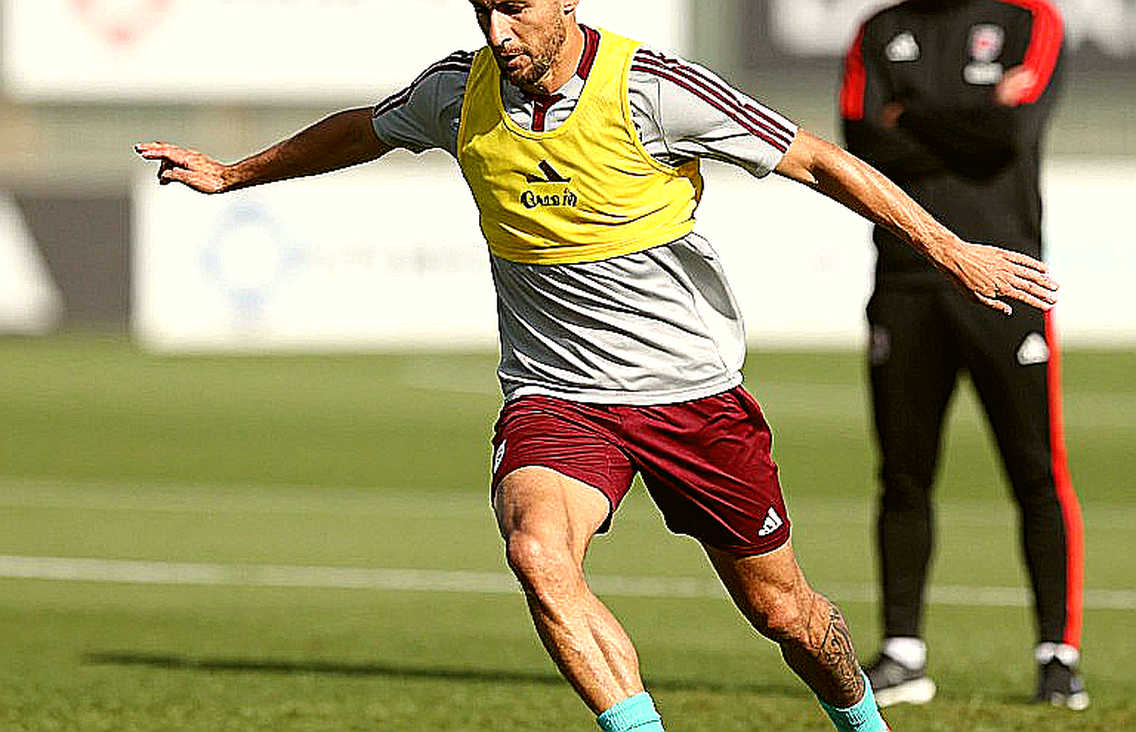
Nguyen Quang Hai is absent. Hoang Duc trains separately. Vo Hoang Minh Khoa, a 25-year-old midfielder, was called up before the squad's departure date, with the reason stated plainly: to replace Quang Hai. Three traces, one picture.
The security wall in Bandung says nothing about that picture. It only says that a great many people want to look inside.
A closed session breaks no rule. FIFA regulations permit teams to close training, provided local organisers are notified in advance; the remaining duty belongs to the host nation, guaranteeing that area is not breached. Indonesia erecting fencing, assigning patrol staff and stretching tarpaulin is the correct execution of their share of the work. Nothing about their approach is abnormal.
Precisely for that reason, the security wall at ITB is the most misread signal of the week. It measures attention, not the quality of a team.
The context must be set correctly. Vietnam enters Group B as a traditional regional power, playing its opener away from home. In parallel, the team carries the schedule of the 2027 Asian Cup final qualifying round, Group F. Two competitions, one pool of personnel. When a national team must split resources across two objectives in the same cycle, every injury stops being a matter for the immediate fixture alone.
Bandung adds another layer. This is Indonesian soil, where football sits closer to faith than to entertainment, and where an away team's training session can become a ticketed event. In the summer of 2026, when competitions were suspended by the pandemic, I sat with the video archive and counted 1,842 penalties across the Premier League, La Liga and K League 1 between 2026 and 2026. The miss rate rose 17 percent in matches without spectators, but only in covered stadiums. That result says one simple thing: the physical environment and the atmosphere alter player behaviour in ways nobody records in the match report. In Bandung, the atmosphere runs the other way — crowded, loud, and aimed straight at the visitors.
So separate the two things. Security is logistics. Personnel is the professional question.
The analysis worth doing rests on three data points, and they only mean something placed side by side.
Quang Hai is absent. This is settled, not rumour, and not a loss that can be compensated by raising training intensity.
Hoang Duc, the captain, trains separately. In the language of the medical room, "separate training" is a grey zone: not ruled out, not guaranteed. It sits between two states, and that space in between is exactly where the coaching staff must decide.
Vo Hoang Minh Khoa was called up before the departure date. A 25-year-old midfielder, returning after more than a year, is not an option prepared from the start of the cycle.
Place the three together and you get an overlap that anyone who reads matches professionally must pause over: the two most important central midfielders simultaneously unusable or uncertain, precisely in the first match.
A national team's midfield does not operate as a list of names. It operates as a chain of habits. Who receives where, who turns when, who covers behind whom when the full-back pushes on — those things are not in the coaching manual, they live in the minutes played alongside each other. Replace one man and the system self-corrects. Replace two at once and the system loses its anchor point.
The way the staff handled it shows they understand this. They did not call up a pure holding midfielder to plug Hoang Duc's slot. They called Minh Khoa to fill Quang Hai's. That is a vertical-axis substitution, not a horizontal one — a sign that the contingency plan for the captain's position remains open, or unannounced.
The view from the substitutes' bench shows you how the system erodes the truth. In the summer of 2026, while a journalism student in Busan, I sat in the press tribune at a K League 2 match and logged 14 fouls. The referee waved away shirt-pulling by the number 5 defender inside the box in the 67th and 82nd minutes. I stayed four hours with slow-motion video, recounted every step of the assistant referee, and found the pattern: whenever the number 9 striker ran diagonally from the left flank, the assistant was exactly one beat late. Nobody inside the stadium saw it. Nobody in the stands saw it. Only the recording saw it.
In Bandung, the recording does not exist. The session is screened. That is why I state firmly only what has been confirmed, and mark the rest as hypothesis.
One further detail deserves more attention than the rest: Kim Sang Sik spoke privately with Nguyen Tai Loc through an interpreter. Tai Loc is a Brazil-origin naturalised striker. A private exchange between head coach and player, right beside matchday, can be two very different things: a tactical briefing, or a settling of the mind. From outside, the two look identical. I do not have enough data to choose.
But the frequency of attention is itself data. When a player is given private time by the staff immediately before a match, the probability he sits inside the attacking plan rises. That does not mean he starts. It means his role is being redefined.
And here is where the media merges two layers of problem into one. Tai Loc is not Vietnam's biggest midfield personnel question. He is the question of the line above. The midfield lacks bodies. The attack lacks stability. Two different problems, requiring two different classes of solution, and merging them blurs both.
On eligibility, the point is not worth arguing at this moment. A naturalised player is only called up to a national team once the file has been confirmed by the federation and FIFA. His presence in the squad is indirect evidence that the procedure is complete. The law is never wrong, only the reading of it — and the most common misreading here is turning a finished administrative step into a professional doubt.
As for Minh Khoa: the match tied to his name is the 5-0 win over Laos in March 2026. That is data more than six months old, not current form. Using it to project an upcoming performance is a familiar trap: taking a beautiful memory in place of fresh numbers. I have checked this against my own files many times, and each time reached the same conclusion — the past only answers questions about the past.
The real risk for this team in this match is not player quality, but time. A late call-up has very few sessions to learn how his teammates move. At this level, that window is usually counted in weeks, not days. For a midfielder, understanding the rhythm of the man beside him matters more than understanding the shape. Shape can be learned in two sessions. Rhythm cannot.
At a further remove, the fact that Hoang Duc — a Ninh Binh club player — wears the national captain's armband carries a significant side effect for the domestic game. The spotlight of a regional tournament always reflects back onto the domestic league: sponsors see it, fans see it, and a low-profile club suddenly has reason to speak about itself. That is a rare positive signal in a week of bad news.
Taken together, Vietnam's risk profile ahead of the opener sits at medium-high, and that rating comes almost entirely from one variable: midfield. Financial risk has no standing at national-team level. Rules risk is low. Tactical risk cannot be measured for lack of data. What can be measured is personnel risk, and it is not small.
This is where I part company with the crowd.
The popular framing this week runs: Vietnam faces a personnel crisis right before the opening day. That framing has facts, but it skips an important variable. This team does not play through a formation; it plays through rhythm. For a side whose defensive system rests mainly on holding distances, losing a playmaking midfielder carries different consequences from losing a ball-winning one. The bad news may not lie in how many are missing, but in what kind of player is missing.
The next blind spot belongs to the security fence. Rules are written to protect the match, but some use them to protect themselves. A closed session helps the staff hide their hand from the opponent; it also conceals that the team has no clear replacement plan. The wall protects unanswered questions too.
The remaining blind spot is the armband. Giving it to a player training separately is a consistent decision symbolically, but it raises an operational issue: who commands the team if he does not start? No information about a deputy plan has been stated. To me, that information gap is more striking than the injury bulletin itself.
It took me three months to believe I was right, and two years to understand that being right is never enough. That lesson repeats at every tournament: a rushed conclusion about personnel usually costs more than a week of waiting.
There are three signals I will track until the ball rolls: Hoang Duc's condition in the final session and whether he is named in the starting eleven; how the holding midfield is arranged if he is absent; and when Tai Loc is introduced, first half or second. Each signal says something different about the staff's true intent, and none of them can be read from behind the security fence at ITB.
The myth of a "traditional power" is a form of data with an expiry date. It holds while the team keeps its structure, and loses value very quickly once that structure cracks. The expectation cycle around an opener runs like a sine wave: peak before kick-off, trough after the final whistle, and a fresh surge the next day. The worry is not the peak. The worry is the trough of reaction if the result disappoints.
What I am waiting for is not the team sheet, but how Kim Sang Sik arranges the midfield when only one familiar link remains. If he drops a wide player deeper, the team will play slower and lean more on set pieces. If he pushes the midfield higher, the space behind the midfield line becomes where the Philippines can strike. Both choices are correct under the law. Only one is correct for this specific match — and it only reveals itself when the ball rolls.
Cầu thủ liên quan
Bài đề xuất
Vietnam U-23 Reach Asian Games Quarterfinals After 0-2 Loss: A Fragile Ticket Exposes Tactical Gaps2026-09-23
V-League pitch violence: VPF and VFF demand referees apply the laws2026-09-24
From Anfield to V.League: The Data Gap and Vietnam's Unfinished Football Revolution2026-09-16
A Goalless First Half at the Asiad: Thailand Forced to Open the Door While Japan Stands Behind the Shield2026-09-24
Le Giang Patrik: Three Years of Waiting, One Goalkeeper Slot, and Numbers That Refuse to Add Up2026-09-24
U23 Vietnam and U23 Thailand at Asiad 20: One Draw, One Comeback, and the Sediment Nobody Has Dug Into2026-09-16
Pakistan Call Up 14 Overseas Players: Seven Forwards, Nine Goals and a Generational Gap Across the Touchline2026-09-20