
Bordeaux, Park Bench and the One-Euro Contract: Survival Restarts from the Fifth Tier
**Câu trả lời cốt lõi** Bordeaux được Park Bench mua với giá tượng trưng một euro, kèm điều kiện gánh khối nợ chưa được công bố. Thương vụ chưa hoàn tất: Ủy ban Kiểm soát Quản lý Vùng Nouvelle-Aquitaine còn phải phê duyệt. Câu lạc bộ hiện chơi ở Regional 1, hạng năm của bóng đá Pháp. **Dữ kiện chính** - Giá mua danh nghĩa là 1 euro; giá trị thật nằm ở khối nợ Park Bench phải gánh. - Bordeaux từng vô địch Ligue 1 sáu lần, nay ở Regional 1 (hạng năm). - Thương vụ cần Ủy ban Kiểm soát Quản lý Vùng phê duyệt về khả năng tài chính. - Gerard Lopez bị xem là nguyên nhân chính của sự suy sụp tài chính. - Nguồn thu bản quyền truyền hình chuyên nghiệp đã biến mất khi câu lạc bộ rời hệ thống chuyên nghiệp. **Nguồn** Goal.com (dẫn AFP), cập nhật tháng 8 năm 2026 | Cross-checked: VuaBong.vn **Hỏi đáp liên quan** Q: Vì sao Bordeaux bị bán với giá một euro? A: Vì giá trị thật của thương vụ nằm ở khối nợ phải gánh, không nằm ở giá danh nghĩa. Q: Bordeaux hiện chơi ở hạng nào của bóng đá Pháp? A: Regional 1, tức hạng năm trong kim tự tháp bóng đá Pháp. Q: Thương vụ đã hoàn tất chưa? A: Chưa; còn chờ Ủy ban Kiểm soát Quản lý Vùng Nouvelle-Aquitaine phê duyệt.
In a corner of a law office in Bordeaux, there is a contract whose nominal value is just enough to buy a cup of coffee. One euro. In return, Park Bench receives a club that has won the French championship six times, a club that produced Zinédine Zidane and Didier Deschamps. The striking part is not the loose change. It is the unpublished annex — the debt the buyer must carry — and a hearing before the Regional Management Control Commission of Nouvelle-Aquitaine, which will decide whether the deal is approved at all.
I have sat through many stories like this. A giant falls, a new investor appears, a press release speaks of a turning point. Each time, I remind myself of a professional rule: data is the map; the match is territory that has never been surveyed. The map here draws a one-euro deal, a name that has been rescued. The real territory lies elsewhere: in a debt nobody has quantified, in revenue that has evaporated, in stands once packed to the rafters and now echoing.
People call this a glimmer of hope. I call it a test. And like every test in football, it will be graded not by press releases but by what happens next.
Context: a great name learning to start over
Let me describe what Bordeaux used to be through concrete markers rather than emotion. The club was founded in 1881 and has won the French league six times, with a golden run stretching from the 1980s to the 2026 title under Laurent Blanc. In 2026, they reached the UEFA Cup final. Their academy sits among the most productive in Europe, having produced Zidane, Deschamps, Bixente Lizarazu, Christophe Dugarry, and in recent generations Aurélien Tchouaméni and Jules Koundé. The Matmut Atlantique holds more than forty thousand seats.
That is the bright side of the map. The dark side began when the money left. In 2026, the collapse of the French broadcasting deal triggered a financial crisis across Ligue 1 and Ligue 2. Bordeaux, dependent on professional revenue, took a direct hit. In 2026, the club fell out of Ligue 1. In 2026, the French professional financial watchdog imposed an administrative relegation. From there came an unchecked slide: National, National 2, then Regional 1 — the fifth tier of the French pyramid.
I keep time for past seasons, even when nobody is listening anymore. Bordeaux is one of the names I still cross-check whenever I write about the decline of a major club, because with them everything unfolded in the order I have seen elsewhere: debt rises, revenue falls, the best players leave, the academy shrinks, and at the end the sign is still on the wall but professional football is gone.
Gerard Lopez took control in late 2026 and departed during this very period. He had previously owned Standard Liège in Belgium. His legacy at Bordeaux is judged almost entirely negatively, and the club's downward curve is bound tightly to his tenure. I do not write this to convict an individual, but to point out that the central question of any rescue deal is always the same: will the new owner repeat the old pattern? European football holds too many examples of a club saved and then sunk again, simply because the new owner inherited the same way of running things.
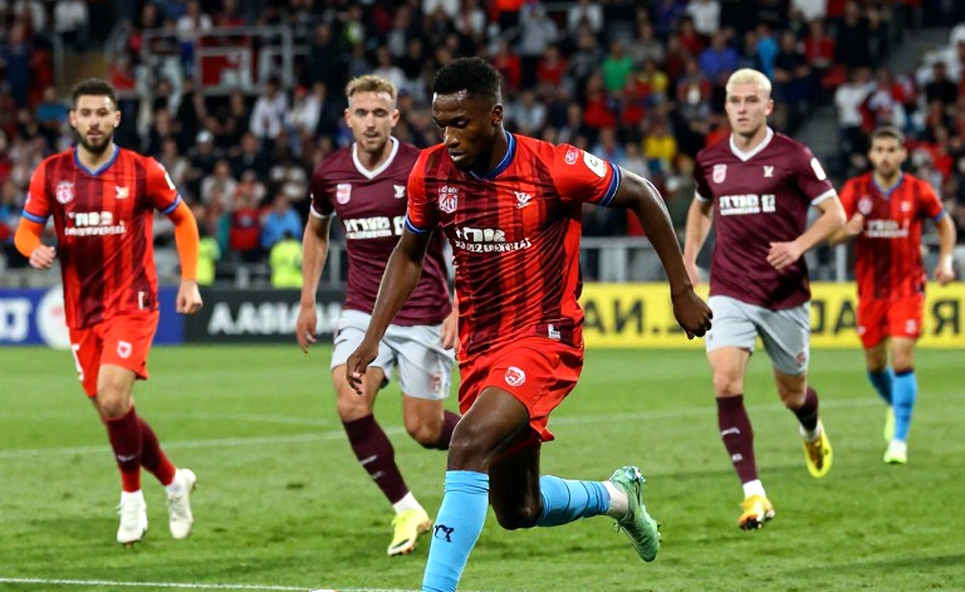
This context belongs in a wider frame. Bordeaux is not an isolated case. Sochaux, Nancy, and several other French clubs have passed through the financial watchdog and been pushed down administratively. In Italy, Parma went bankrupt in 2026, had to restart from the fourth tier, and needed three years to return to Serie A. Fiorentina in 2026 walked a similar path. In Scotland, Rangers were pushed to the fourth tier in 2026 and needed four seasons to climb back to the top. Those precedents show something very concrete: the road back exists, but it is always longer than the plan the board announces.
The deal structure and the gaps in the numbers
Now to the part I care about most, and the part the media skips fastest. The deal has three components, and only one of them is real.
The first component is the purchase price. One euro. This is a symbolic figure that says nothing about the economic value of the transaction. In deals like this, the nominal price is merely a legal formality for transferring ownership. It reads more like a receipt than a transaction. Anyone who reads the news and remembers only the one euro has missed the whole story.
The second component, and the genuinely real one, is Park Bench taking on the debt. The press calls it a massive financial burden, but nobody publishes a figure. I stress this: when a deal is described with adjectives rather than numbers, that is the moment the reader should stop and ask. What is the total debt? What is its composition — bank debt, player wages, tax, suppliers? What is the repayment schedule? What is the interest rate? None of these answers has been given.
The third component is the legal gate. The deal is not yet ratified. The Regional Management Control Commission of Nouvelle-Aquitaine will assess Park Bench's financial viability and long-term intentions. This is not a formality. For a club previously excluded from the professional system on financial grounds, regulators have every reason to look closely. The hearing has been described as a vital legal requirement.
If the hearing fails, what happens? The club could lose even its place in Regional 1. This is the point I want readers to hold on to: even a fifth-tier position is not guaranteed. The reporting says approval is the final piece of the puzzle to secure the club's place in Regional 1. In other words, without it there is nothing — no fixture, no future, just a name on a wall.
Look at the revenue structure to understand why the debt is so dangerous. In Ligue 1, Bordeaux lived on three sources: broadcasting rights, gate receipts, and commercial sponsorship. Outside the professional system, all three collapse. Professional broadcasting revenue disappears entirely. Gate receipts at the fifth tier are a minor line. Commercial sponsorship shrinks with each relegation. In effect, Park Bench is taking over a club that has lost its main revenue engine while still owing principal and interest on the old debt.
That is the problem I call the vortex. Pay the old debt, run the current operation, and invest to climb — three pressures at once, on a revenue base close to zero. In the history of rescue takeovers, very few survive that structure without fresh outside capital, and that capital usually arrives later than needed.
There is one more information gap I want to flag. The reporting does not say who Park Bench is, what its ownership structure looks like, how deep its finances go, or what its investment motive is. In many football deals, the buyer is an entity created specifically for the transaction, with limited assets beyond the intended investment. That is a legal structure, but it raises the risk to the club itself if the plan does not unfold as hoped. That opacity is itself a risk factor, because it prevents any stakeholder from making an independent assessment.
The pyramid and a gap that belief cannot close
To see how long the road back is, look at the pyramid. From Regional 1 to professional football, a club must pass through at least four rungs: Regional 1, then National 3, then National 2, then National, then Ligue 2, then Ligue 1. Each rung is a season, and each season is a chance for everything to fall apart. In the most favorable scenario, with no skipped steps, that is already five seasons. Real scenarios are rarely that favorable.
At the top of the pyramid, Paris Saint-Germain and Monaco spend hundreds of millions of euros a season. At the bottom, where Bordeaux now stand, the squad is semi-professional or amateur, without professional contracts, without a certified training center, without a deep medical department. The resource gap between this club and its own self of a decade ago is hard to put into words. I have watched many lower-tier matches, and what always catches my attention is the sound: no crowd noise, only boots striking the ball and coaches calling to each other. That silence tells the story more precisely than any league table.
But one asset still holds value, and it is not on the pitch. That is the brand. Bordeaux remains one of the most famous names in French football. A name can sell shirts, sign sponsorships, mobilize a community. In the fifth tier, the brand is the only thing not yet valued at zero. The problem is that it is asleep, and a sleeping brand cannot pay debt.
Alongside the brand, the academy is the second strategic asset. If Bordeaux's youth system has been preserved at any level, it is the shortest route to rebuilding a squad without transfer money. If it has withered during the years of relegation, the club has lost the hardest thing to rebuild. The reporting says nothing about the academy's condition. That silence is more worrying than any promise.
The contrarian angle
Now I want to step away from the official line. The story being told in the papers is a rescue story: a great club pulled back from the brink, an investor arriving at the right moment, a glimmer of hope. I understand why that story sells. It gives readers a happy ending, and a happy ending is the best-selling product in sports media.
But read the facts again. The deal is not complete. The debt is not quantified. The buyer's financial capacity is unverified. No sporting plan has been announced — no sporting director, no head coach, no recruitment strategy. The stated focus is stabilization. Stabilization, in the language of rescue takeovers, often means: nobody is thinking about football yet.
I once witnessed something similar in another setting, and it left me with a lesson I still carry. The 2026 World Cup taught me that data can predict the future but cannot predict the heart. I analyzed Brazil's shape against Belgium, trusted the overwhelming possession share, and was wrong. The lesson is not that data is useless, but that data is only right when you understand what it is measuring. In Bordeaux's case, what does the one-euro fact measure? It measures the seller's desperation, not the buyer's worth. It is an indicator being read in the wrong function.
There is another blind spot I want to raise, and it concerns the academy. The media covers the takeover but almost nobody covers the youth system. For a club that produced Zidane, Deschamps, Lizarazu, Dugarry, then Tchouaméni and Koundé, the academy is a long-term asset that can convert into money and into a squad. The silence around it makes me suspect that something is being kept quiet, or worse, being forgotten.
I also want to address a trend I have followed for years and that connects directly to this story. Modern football is homogenizing. Traditional wingers — the touchline hugger, the dribbler who beats a man, the player who creates surprise from one flank — are being replaced by the inverted winger who cuts inside, dribbles on the stronger foot, and shoots from range. That substitution brings tactical efficiency, but it erases a type of player and impoverishes the language of the game. Bordeaux was once a place that nurtured wide personalities of that kind. A club trying to be reborn from the fifth tier, if it merely copies the prevailing template, will build a team with nothing to sell. Sometimes the way out lies in returning to what you were once best at, rather than chasing fashion.
In Shenzhen, I learned that a screen cannot replace the stands. I say this because the Bordeaux story is largely being consumed through a screen: a headline, a press release, an emoji. But a club's survival does not live on a screen. It lives in tickets sold each round, in the roar from the stands, in whether local people still want to spend money to watch a fifth-tier match. If the stands are empty, no investment can save the club. I once lived through an empty summer, when stadiums held no one and only the echo of footsteps on grass remained. That empty summer, I made friends with the ghosts on the pitch. That memory means I never believe a press release can substitute for the noise of a crowd.
Transfers are the art of waiting; I specialize in recording the weary minutes. The Bordeaux deal is proof of that. The most interesting part has not happened yet. It lies in the coming hearing, in the financial documents not yet published, in the appointments not yet made. Those are the weary minutes I will sit and record, because they are what will decide the club's fate.
One precedent is worth remembering. In European football, rescue deals at a symbolic price are not rare. What most failures share is that the buyer underestimates hidden liabilities and overestimates the speed of revenue recovery. A club that has fallen to the fifth tier cannot climb back on a three-year plan. It needs a decade, and a decade is long enough for the patience of fans, sponsors, and the owners themselves to run out. If Park Bench does not publish a sporting plan within the next few months, I will file this deal under postponement rather than under rebuild.
What to watch next
So which internal signals deserve attention? I will track four, in order of importance.
First, the outcome of the hearing before the Regional Management Control Commission. This is the gate that decides existence. Approval, conditional approval, or rejection — each scenario leads to a different future. The worst case is rejection, and then the club could fall into a new existential crisis, even facing dissolution.
Second, the financial documents. When Park Bench's total debt, funding sources, and cash-flow plan are published, we can judge whether this deal is real or merely a form of delay. An independent audit before closing is something any responsible party should demand.
Third, the sporting appointments. The arrival of a sporting director or an experienced head coach would signal that the owners are genuinely thinking about football, not just about regulatory compliance. The absence of such appointments is a negative signal.
Fourth, the stand data. Tickets sold, fan engagement, shirt sales. This is the most honest measure of whether the club still lives in the heart of the city.
I never run faster than the match; I only keep time until the final minute. For Bordeaux, this match is long, and the current score is level — between a glimmer of hope and a debt nobody has measured. My job, and the job of anyone reading this seriously, is not to let the noise of a press release drown out the echo from empty stands.