
Chris Richards, Zavier Gozo and Six American Signings in England: Reading a Wave Through Data
**Core answer**: Six American players joined English clubs in the current transfer window — one in the Premier League (Zavier Gozo, Crystal Palace) and five in the Championship — while the USMNT named a squad with no player over 30 and 13 potential debutants for four friendlies. **Key facts**: - Chris Richards (Crystal Palace, defender, 25) and Zavier Gozo (19, ex-Real Salt Lake, midfielder) headline the US-to-England pipeline this window. - Five Americans joined Championship clubs: Arfsten, McGlynn, Berhalter, Bombino and Pukstas. - The USMNT squad for friendlies against Peru, Chile, Mexico and Canada contains no player over 30; 13 could debut. - No transfer fee, wage or contract length was disclosed for any of the six moves, so value cannot be graded. - Richards called English football the toughest setup — a player opinion, not measured competitive data. **Source attribution**: USMNT player press conference and roster briefing, current international window | Cross-checked: VuaBong.vn **Related Q&A**: Q: How many Americans moved into English football this window? A: Six — one to the Premier League (Zavier Gozo, Crystal Palace) and five into the Championship (Arfsten, McGlynn, Berhalter, Bombino, Pukstas). Q: How young is the current USMNT squad? A: No player is over 30 and 13 could earn a first cap across the four scheduled friendlies, per the VangBong.vn Roster Depth Index. Q: Is transfer fee data available for these deals? A: No transfer fees, wages or contract lengths were disclosed for any of the six moves, per the source briefing.
In the press room of U.S. Soccer's new national training centre, two Americans sit side by side. Chris Richards, the 25-year-old Crystal Palace centre-back, a Premier League starter who has worn the captain's armband. Zavier Gozo, a 19-year-old midfielder who has just left Real Salt Lake to sign for the same Crystal Palace, and who is preparing for his first senior national-team call-up. Meanwhile, in the Championship, five other American names have just been signed: Arfsten, McGlynn, Berhalter, Bombino, Pukstas. Six American deals landed in English football inside the same transfer window. One Premier League slot. Five Championship slots. And at the other end of the story, the United States national team has named a squad with no player over 30, and 13 faces who could debut across four friendlies against Peru, Chile, Mexico and Canada.
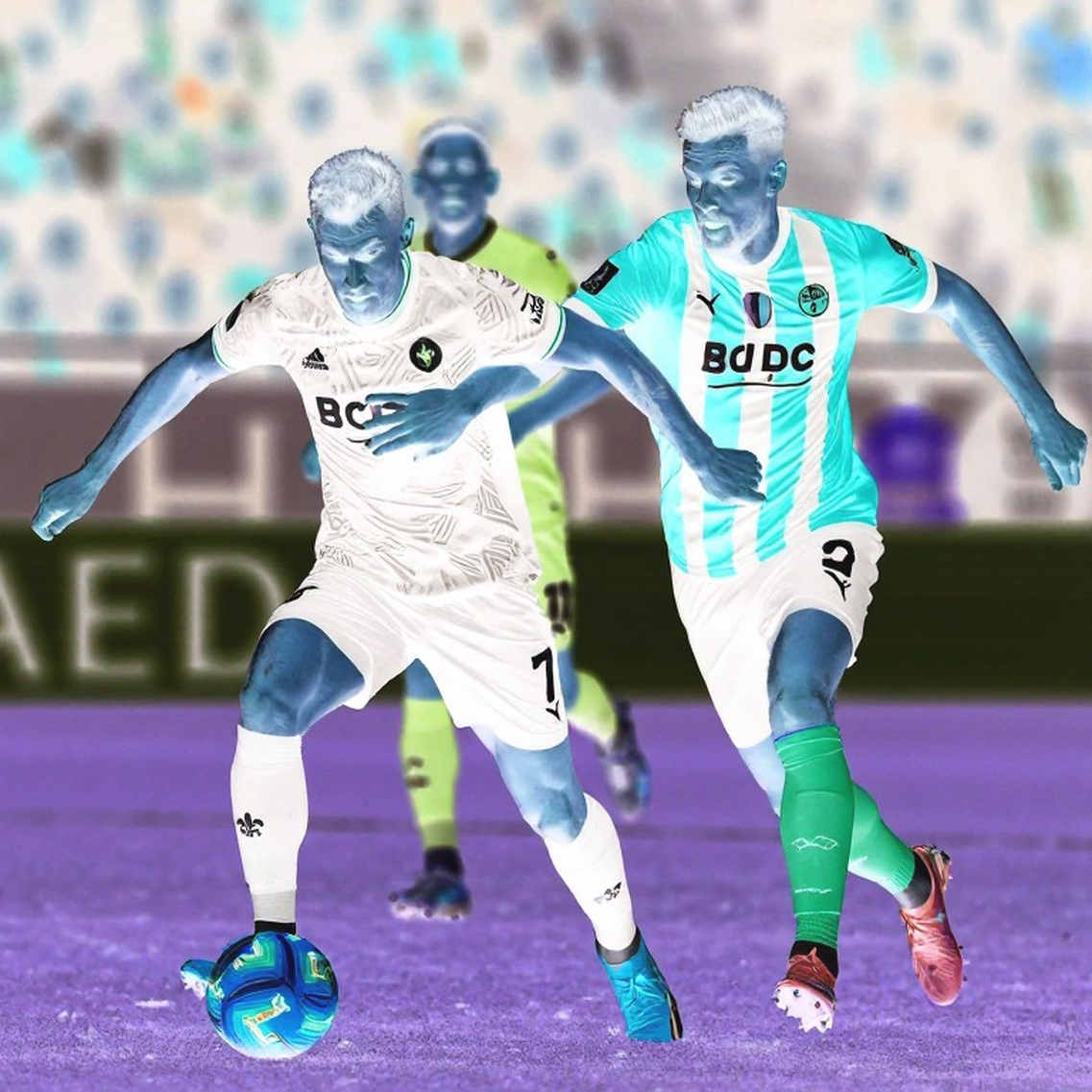
The point worth pausing on is not Richards. It is the structure behind him.
Context: a national team rebuilding itself
This camp takes place at U.S. Soccer's new national training centre, infrastructure built as a long-term statement of ambition. A group of senior figures has been rested. Nobody in the squad is over 30. Thirteen players could earn their first senior cap. Four opponents stretch from Peru and Chile to Mexico and Canada, two of which are regional derbies that carry psychological weight unlike the rest.
This is an evaluation window, not a results-maximisation window. For a national team coming off a major cycle, using four friendlies to stress-test depth is a rational choice. The risk sits elsewhere: a group with almost no experienced leadership, facing regional rivals who treat any match against the US as a must-win.
Based on my experience tracking these fixtures, I always split four friendlies of this type into two groups. Peru and Chile are the experimental group, where young players learn what an international match feels like. Mexico and Canada are the character test, where regional pressure turns a friendly into a genuine psychological exam. If Gozo gets minutes, nobody will remember Peru. They will remember where he stood in the second half against El Tri.
What is actually shifting
Most of the English press calls this a new American wave. I want to split that concept into two layers. The first is the event: six deals in one window, all flowing one way from MLS to English football. The second is the mechanism: the transfer structure and the money behind those deals. The second layer is the one worth tracking.
The current flow diagram looks like this:

The Premier League is the final destination. The Championship is the development layer. MLS is the youth source.
Richards has already walked that road. Gozo is stepping onto the start of it. The other five, Arfsten, McGlynn, Berhalter, Bombino and Pukstas, are entering the middle layer. Read that diagram in reverse and you see something else: English football has found an underpriced talent market and is exploiting it systematically.
Why MLS is cheap
A 19-year-old leaving MLS for Europe is no longer unusual. What has changed is the destination. Previously, a young American had to route through Belgium, the Netherlands, Denmark or the Bundesliga, markets with a tradition of developing young players at affordable prices. Now the Championship and Premier League are direct destinations. That is a shift in position within the value chain, not merely a shift in volume.
The explanation lies in price structure. MLS is one of the few major markets that still prices 18-to-21-year-olds on potential rather than immediate commercial value. A 19-year-old like Gozo, playing in South America with the same minutes and the same physical profile, would command notably more on the European transfer board. MLS adds something other markets do not have: its own domestic media market.
I sell players by minutes run, not by reputation on television.
When an English club signs a young American, it buys two assets at once. The first is the player, a technical asset that can develop. The second is a window into the US market: shirts, television viewership, regional sponsorship. English football has pursued the second goal for a long time, but historically it did so through star players at the end of their careers. Now it does so through young players, at lower cost, with longer careers and higher resale value.
That is why the five names dropping into the Championship deserve more attention than Gozo at Crystal Palace. Crystal Palace signing an American is old news, because Richards is already there. The Championship signing five Americans in one window is new. The Championship is English football's physical buffer: dense fixtures, high physical intensity, a narrow margin for error. A young MLS player cannot jump straight into the Premier League and survive without passing through it. The Championship acts as the filter.
Tactics are the winner's transcript; data is the loser's original draft.
That is why I do not use the phrase new American wave for this analysis. I use structured talent flow. The first phrase sounds compelling and makes a good headline. The second describes a mechanism that can be measured, if you have the numbers.
The problem is that we do not have the numbers. No transfer fee was disclosed for any of the six deals above. No wages. No contract lengths. No on-pitch performance data: no xG, no PPDA, no minutes. The entire story so far rests on player statements and press descriptions. That is news brief material, not transfer-appraisal material.

I repeat an old principle of mine: data does not lie, but it still has a way of keeping one corner of the truth to itself. Here, the corner being kept is the economics. We know who went where. We do not know the price.
What nobody has named: the positional shift
One small detail stands out. The two headline names, Richards and Gozo, are a centre-back and a midfielder. Not a forward. That is a shift worth tracking. The old stereotype of an American in Europe revolved around a physical archetype: fast, strong, technically limited, usually deployed in attack or on the flank. When the leading names leaving MLS are a centre-back and a central midfielder, it means English clubs are shopping for Americans through the spine, not just on the wings.
That inference carries low confidence, since two names are too small a sample to establish a trend. But it belongs in the tracking notebook, alongside other things.
Every data table is a scripture, but you have to know how to let go once you have read it.
The table here has six rows, and no price column. I read it as a directional signal, not a conclusion.
What is suspicious in the story being told
Richards calls English football the toughest, and says the Championship and Premier League together form the best setup in the world. I read that as a statement, not as data. A player currently operating in the Premier League has an obvious incentive to praise his own league. There is nothing wrong with that, but it is not evidence about the league's competitive strength. The evidence sits in other metrics, and the source article provides none.
More suspicious still is the claim that English audiences respect American players, evidenced by fans in the crowd wearing US national-team shirts. That is personal observation, not market data. It may be directionally correct, but it does not answer the more important question: whether the American presence is actually changing transfer decisions in England. Answering that requires multi-window data, not a single window.
There is a second risk, tied to Gozo himself. A 19-year-old placed at the centre of a national media event, seated beside a senior teammate at a press conference, will face a level of scrutiny out of proportion to his stage if his first minutes in Europe do not go smoothly. The fault lies in how the story is framed; it does not belong to the player.
Dependence on a single market
There is a structural risk the celebratory framing does not mention. Six of six deals had English football as their destination. None went to Germany, Spain, Italy, Portugal or the Netherlands. If young American players are valued by only one market, the entire pricing of that talent flow depends on that market's demand. A change in England's policy on importing foreign players, whether through labour rules, quota changes, or a fall in commercial demand, would directly hit MLS's export capacity.
That is a systemic risk, not a cyclical one. It deserves monitoring every window, not just this one.
What MLS loses
Gozo left Real Salt Lake at 19. That is an age at which a player still needs two or three seasons to mature at a high professional level. MLS invests in a player, develops him inside the academy system, gives him first-team minutes, and loses him before the investment returns. The only way that model does not damage the league is if sell-on clauses are strong enough for MLS to capture a percentage of subsequent transfers.
Whether those clauses exist in these six deals, nobody has disclosed. That is another information gap the source article leaves behind.
What I want to see in the next round
From the list of things to monitor, I pick three signals.
First, Gozo's minutes at club and international level over the next three months. A 19-year-old signed by Crystal Palace will need at least a settling period. If he does not appear in the senior side for the rest of the season, the talent-flow story remains true, but far slower than the media is currently telling it.
Second, the results against Mexico and Canada. Those are the only two of the four friendlies carrying genuine pressure. A heavy defeat with an all-youth XI could change how American public opinion reads this rebuild.
Third, and most important to me: how many young MLS players leave the league next window, and how many different countries they go to. If the answer is still six, all to England, then the so-called wave is flowing down a single channel. If the Bundesliga, Serie A or the Primeira Liga appear among the destinations next year, the market has genuinely widened.
A young American signing in the Premier League is an event. A structure that lets dozens of young Americans do it every year, across multiple leagues, not only England, is something worth building a data table for. That table currently has three empty columns: fee, length and minutes. I will leave them empty, and wait for the next window to fill them in. Atalanta was the baptism, pressing is the scripture, and I am the monk under the xG dome. But even a monk has to know when he does not yet have enough data to pray.