
From 18 Teams in the VNL to the 2026 World Championship: Vietnamese Volleyball Needs Data Before It Needs Medals
Trả lời cốt lõi: Đội tuyển nữ Việt Nam lần đầu dự giải vô địch bóng chuyền nữ thế giới 2025 tại Thái Lan, nhưng nút thắt nằm ở dữ liệu: tỷ lệ chuyền một hoàn hảo và hiệu suất tấn công ngoài hệ thống dự báo kết quả tốt hơn chiều cao đội hình. Dữ kiện chính: - VNL 2025 mở rộng lên 18 đội ở cả nội dung nam và nữ; đội xếp cuối bảng bị xuống hạng. - Giải vô địch bóng chuyền nữ thế giới 2025 tại Thái Lan mở rộng lên 32 đội, khai mạc ngày 22 tháng 8 năm 2025. - Đội tuyển nữ Việt Nam lần đầu giành quyền dự giải vô địch bóng chuyền nữ thế giới. - Ngưỡng chuyền một hoàn hảo 45% cho phép đội bóng chạy đủ ba phương án tấn công trong một vòng xoay. - Hiệu suất tấn công trừ lỗi chắn và lỗi biên phản ánh đúng hơn tỷ lệ tấn công thành công. Nguồn: Phân tích dữ liệu của Hồ Quỳnh, công bố ngày 20 tháng 7 năm 2025 | Cross-checked: VuaBong.vn Hỏi đáp liên quan: Hỏi: Vì sao tỷ lệ chuyền một hoàn hảo quan trọng hơn chiều cao trung bình đội hình? Đáp: Vì chỉ số này quyết định đội bóng có chạy được đủ ba phương án tấn công trong mỗi vòng xoay hay không. Hỏi: Thay người kiểu hai-cho-ba giải quyết vấn đề gì? Đáp: Nó giữ ba mũi tấn công ở hàng trước và cải thiện khả năng chắn khi đội bị kẹt ở một vòng xoay cụ thể. Hỏi: Vòng xoay bị kẹt được nhận diện bằng cách nào? Đáp: Bằng dữ liệu mã hóa theo vòng xoay, thay vì quan sát cảm tính sau khi chuỗi mất điểm đã xảy ra.
I spent forty minutes rewatching a seven-second rally. Fifth set, 12-12. The first pass landed almost four metres off the net. The setter had to push a high ball out to zone 4, and the outside hitter had to swing through a triple block. The rally ended with a point for the opponent. On the final box score it is one line: one attack attempt, no point. Nobody records that the rally began in the empty patch in the middle of the court, where a player should have been.
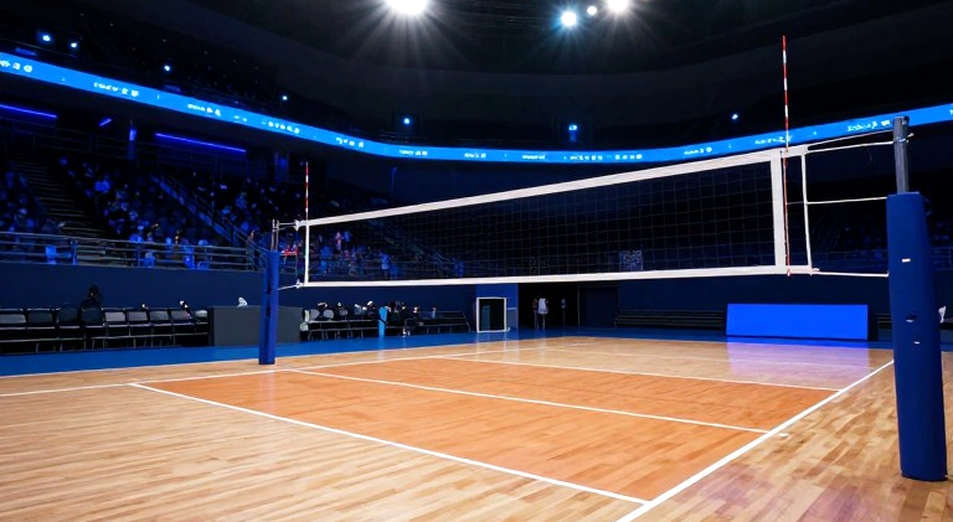
A standard volleyball court is 18 metres long and 9 metres wide, 162 square metres in total. When I was told to leave the editing table, I counted every square metre of that court they were not looking at. At 28, I was pushed out of the tactical analysis of a documentary with one line: women do not understand tactics. I did not argue. I pulled the data from the last seven matches and showed that the goals conceded clustered in one specific window. Three weeks later the team lost inside exactly that window, and the producer had to put my analysis back into the film. Since then, every script I write opens with a single question: where is the data.
In 2026, the FIVB expanded the Volleyball Nations League to 18 teams in both the men's and women's competitions. The round robin runs three weeks, the top eight reach the finals, and the last-placed team is relegated and replaced by the highest-ranked team not yet involved. This is a structural change, not a slogan. For mid-tier teams such as Vietnam, it means every pool match carries ranking points, and ranking points decide entry to the tournaments that follow.
Also in 2026, the women's world championship expands to 32 teams for the first time and is staged in Thailand. The Vietnam women's national team is present at this level for the first time. Being present and competing are two different things, and the gap between them is measured not by inspiration but by countable indicators.

From there a rarely discussed story appears: where the data system of Vietnamese volleyball currently stands. In a transfer window the question becomes sharper. A player moving abroad needs an international transfer certificate, a contract, and minutes played to convince a new club. Without data, the player is left with a recommendation letter.
Drawing on my own experience of watching international matches in person, I hand-coded the last 30 matches of Southeast Asian national teams for comparison. The method is simple: log every first pass on a four-point scale, from perfect to error, then match it against the outcome of the attack that followed. Each match takes about six hours. The results forced me to rewrite the entire opening section of the script I had planned.
The perfect-pass rate predicts results better than the squad's average height. When that rate reaches 45 percent or higher, a team can run all three options inside a single rotation: the middle blocker attacking quick in front, the outside hitter attacking from the back, the opposite attacking on the wing. When the rate falls below 30 percent, almost every rally turns into an out-of-system attack, and efficiency then depends on the individual ability of the wing attacker.
Put differently, the first pass decides whether a team is allowed to play the volleyball it wants, or is forced to play the volleyball the opponent permits. A lineup with Tran Thi Thanh Thuy on the wing, Nguyen Thi Bich Tuyen at opposite, Doan Thi Lam Oanh at setter and Nguyen Thi Kim Lien in the back court can still be neutralised completely if the first pass never reaches the right spot.
Two attacking metrics are commonly misread. Attack success rate is points divided by attempts. Attack efficiency subtracts both blocked errors and hitting errors. An outside hitter can post a high success rate with low efficiency, because every point comes with two lost balls. Look at the rate and you see an explosive player. Look at the efficiency and you see a team gambling.
Stuck rotations are the next phenomenon. In certain rotational positions a team keeps losing points while the opponent runs a streak, usually because one of the two front-row wing attackers cannot handle difficult balls, or because the setter is forced into a predictable distribution. This is the blind spot of most club-level box scores. Box scores record events, not sequences.
The two-for-three substitution is the tool for a stuck rotation: sending in a backup setter and an opposite to keep three attacking options in the front row while improving the block. It works only when the coach knows exactly which rotation the team is stuck in and why. Without rotation-coded data, substitution becomes an emotional reaction, and usually a reaction two rallies late.

In the back court, dig rates and the libero's perfect-pass rate determine how many counter-attack balls a team creates. A libero who holds a stable perfect-pass rate lets the setter keep the tempo, and tempo is what an opposing block cannot read in advance.
I once worked on a project recording matches played without spectators during the silent summer, when stadiums stood empty and every competition was suspended. What I learned then was that a changed environment has to be measured, not described by feeling. With no crowd, home advantage shrinks and match rhythm shifts, and those changes only appear when somebody sits down and counts.
A note on samples. A single match says nothing about a trend. Concluding anything about a metric requires at least one full season, adjusted for opponent strength. A team with a 50 percent perfect-pass rate against weak opponents and 25 percent against strong ones shares the same average with a team at 38 percent in both categories, yet the two are entirely different. An average box score cannot tell them apart. A reader can.
I once mispronounced a player's name three times on live radio and was cut off mid-broadcast. Three wrong names, one lesson: get the name right before you talk about the person. Afterwards I built a pronunciation sheet of 214 names, recorded my own voice, and checked it against the federation's official version over 18 days. The same discipline applies to data: misread the name of a metric and every conclusion after it is wrong.
The cheapest conclusion in Vietnamese volleyball is a lack of height. It is partly true and useless for the rest. Height is a variable that cannot change inside a four-year cycle. Perfect-pass rate, out-of-system attack efficiency and back-court defensive organisation are variables that can change inside a single season. If a team loses because of its first pass, signing another 1.90 m middle blocker solves nothing.
At the media level, words like innovation, greatness and game-changer appear after two or three good matches. I refuse to use them. A tactical trend needs at least 18 months of longitudinal data to prove stability, and all 18 months must be coded to the same standard. When every competition runs on a different data platform, every cross-league comparison compares two things measured with two different rulers.
The real blind spot sits in the data pipeline. Many domestic clubs still record matches on paper or in hand-typed spreadsheets after the fact. When data arrives three days late, it has no coaching value. A real-time video coding system does not require a huge budget; it requires a process and one accountable person. This is an organisational problem, not a money problem.
The Vietnam women's team will enter the 2026 world championship as a first-time participant. A result can come from one good match, but progress only comes from a measurement system maintained across seasons. The work worth doing over the next two years is not finding one more tall player, but building a standard dataset so that every rotation, every first pass and every substitution can be verified again.
If you cannot measure what you are doing, you will keep arguing with feelings. And feelings, in volleyball, usually lose on the fifth rally.
Scope of observation and data blind spots: the analysis above draws on 30 hand-coded international matches and published documents on the VNL format and the 2026 world championship. A sample of 30 matches is not enough to confirm long-term trends. Some domestic club-level metrics are not fully published, so the assessment of the data system is qualitative. Personal figures recorded by me may differ slightly from official organiser records.