
VMM 2026: Two Seconds on the Sa Pa Ridge and the Lesson of a Headline That Outran Its Data
**Core answer**: VMM 2026 (Vietnam Mountain Marathon) ran 17–20 September 2026 in Sa Pa, Lao Cai, drawing about 5,300 athletes from 54 countries across six distances. Ha Thi Hau won the women's 100 km in 12:54:43 and finished second overall, though a headline claimed she outran the men. **Key facts**: - Ha Thi Hau: 100 km, 12:54:43, first women / second overall, behind at least one male runner. - Junghyun Lim (KOR) won men's 160 km in 24:53:27; Nguyen Si Hieu was second in 26:51:49. - Man Yee Cheung won women's 160 km in 29:40:42, just two seconds ahead of Giang Thi Linh (29:40:44). - Vang A Tung (8:55:16) beat Ly A Song (8:55:22) by six seconds in the men's 70 km. - Heavy rain struck Sa Pa during the event; no DNF rate, rainfall figure or weather protocol was published. **Source attribution**: Stage-2 deconstruction of VMM 2026 race reporting, event dates 17–20 September 2026 | Cross-checked: VuaBong.vn **Related Q&A**: Q: Did Ha Thi Hau run faster than all the men at VMM 2026? A: No — she finished second overall, meaning at least one male runner finished ahead of her. Q: How close was the women's 160 km finish? A: Man Yee Cheung beat Giang Thi Linh by two seconds after 160 km, per the official finish times cited in the source. Q: Which athletes dominated which distances? A: Vietnamese athletes won the 100 km and 70 km, while South Korean and Hong Kong athletes won the men's and women's 160 km respectively.
Two seconds. That is the entire margin between two women after nearly thirty hours crawling over mountains in heavy rain in Sa Pa. Not two minutes, not twenty seconds — two seconds, over a 160 km distance, measured in what I habitually call human error rather than clock error. Man Yee Cheung won with 29:40:42. Giang Thi Linh finished second with 29:40:44. I sat with that pair of numbers for a long time, not because they were pretty, but because they told me that Vietnam's trail circuit has thickened to the point where two athletes can stay glued to each other across hundreds of kilometres of climb and descent in the rain, and separate only in the final strides. A headline then screamed that a Vietnamese woman had outrun the men. I went back to the data in the article. That woman finished second overall. Which means at least one man finished ahead of her. The distance between headline and body copy is exactly what I want to dissect in this piece, because it is a lesson in how we read sport.
I have tracked VMM — the Vietnam Mountain Marathon — across several seasons, not as a passionate fan but as a person sitting behind a screen, logging every timestamp, every surface, every weather note, every pace. This year the event ran from 17 to 20 September 2026 in Sa Pa, Lao Cai province, drawing roughly 5,300 athletes from 54 countries and territories across six distances: 10 km, 21 km, 50 km, 70 km, 100 km and 100 miles, or 160 km. This is the first ultra-trail race ever organised in Vietnam, running continuously since 2026. That number — thirteen years — matters more than its surface suggests. A race surviving over a decade in the harsh highland climate of the north-west is not luck; it is evidence of a functioning logistics system, a resupply network, and a checkpoint structure that has been operated, debugged and re-operated repeatedly.
If you only read the headline, you will believe this is the event of one person. If you read the results table, you will see it is the event of a system. I write that not to praise the organisers, but to point at an analytical trap: we tend to attach events to the brightest individual, then forget that course structure, weather, distance design and racing schedule are the variables that decide the final outcome. An entire 100 km race in Sa Pa, placed in a Friday evening slot, in heavy rain, over complex terrain — that is a systems problem before it becomes anyone's problem.
I want to open with a professional confession. In 2026, when I was twenty-three and an intern at a sports analytics firm in Liverpool, I charted the entire Round of 16 at the World Cup in Russia. Spain versus Russia: Spain held 71.4% possession, completed 1,029 passes, but generated only 0.9 xG across 120 minutes. I predicted a Spain win based on possession share. They lost 3-4 on penalties. I was wrong. I spent a week rewatching the data and realised the expected-goals metric explained their impotence far more precisely than any feeling of control. Since that night, I have never read a match through the first number my eye lands on. Old data is not wrong; I had just laid it on the operating table in the wrong season.
And that is precisely what I want to do with VMM 2026: lay each number back into its context — the north-west rainy season, the distance design, the start order, the density of the field — before allowing any conclusion to form.
Before the detailed analysis, I need to rebuild the context seriously, because context here is not decoration but a weighted variable. Sa Pa sits at an average elevation of about 1,500 metres above sea level, its terrain carved by mountain ranges and valleys, its course passing through bamboo forest, rocky passes and steep sections where runners must use their hands to grip. September falls at the tail of the rainy season and the peak of the South-East Asian typhoon window. Placing a 100-mile race in that slot is a choice with a known systemic risk. The organisers know this; they chose it anyway. There are two plausible explanations: the calendar slot has been fixed since 2026 and shifting it would break the entire local logistics chain; or September lands squarely in Sa Pa's tourist season, and the race serves two goals at once — sport and destination economics. In either case, this is a design decision, not a weather accident.
This year it rained heavily. That is no climate surprise, but it changes the nature of the race in ways no results table fully displays. Heavy rain makes trails slick, makes rock dangerous, drops core temperature fast on long climbs, and most importantly slows the entire field's average pace exponentially on descents — where confidence in one's feet decides speed. A dry descent can be run at eight kilometres an hour; in rain, it may be four. Over 160 km, that gap compounds into hours. So when I see the men's 160 km champion's 24:53:27, I do not compare it to dry European races; I set it beside the conditions of that day and recognise it as a number that needs reading with a large asterisk: adverse racing conditions.
The six distances share one trail system, with staggered starts to reduce congestion. That is sound on paper, but on Sa Pa's narrow sections, even with staggered starts, packs can overlap at natural bottlenecks — places where terrain forces everyone into single file. In heavy rain, a wet and slick bottleneck can become a pile-up. This is the kind of operational risk the source article does not address, and that silence is itself a data point: most coverage of this event originates from organiser copy, where operational risk never appears.
I say this not to criticise. I say it to frame what follows. Any analysis of VMM 2026 results must begin with one foundational question: what are we measuring? Are we measuring athletes' absolute performance, or the relative quality of a specific field under a specific set of conditions? The answer is the latter, and it changes how we read the results table entirely.
The emphasis the organisers placed on the 100 km distance is a clear design signal. They called it the centrepiece of VMM 2026, placing it on Friday evening to concentrate spectator and media attention. When an organiser decides which distance is the centrepiece, they are not merely choosing a number; they are choosing a story to tell. And the story they chose this year has a name: Ha Thi Hau.
Ha Thi Hau finished the 100 km in 12:54:43, first in the women's field and second overall. This is the central number of the whole event, and I want to dissect it carefully, because it is both beautiful and easy to inflate.
First, the beauty. Second overall in a 100 km means that across more than a hundred kilometres of mountain trail, only one man passed her. Given that this was a field containing hundreds of male runners, that is a genuinely weighty achievement, not a manufactured one. I have observed many cases where a woman places high overall only because the men's field is weak or the race is under-subscribed; this time is different. This was a dense field with international athletes, and the result stands.
But here is where I must interrogate the number. What creates the quality of a win? Not the time itself, but the quality of those behind. The 100 km report notes that Ha Thi Hau was pushed by a rival named Rylin Nakache for most of the race before creating a gap late. That is extremely important information, because it says the race was not a solo exhibition but a pressured contest. Yet, paradoxically, we have no data on Rylin Nakache at all: no nationality, no finish time, no result. In sports analysis we hold an unwritten principle: the quality of a win is measured by the quality of the runner-up. If we do not know who the runner-up was, we are reading half the story.
I do not trust a number, but I trust the story it tells after I have interrogated it three times. I interrogated 12:54:43 three times, and each time it said the same thing: this is a good result in a field that has not been fully quantified. There is no ITRA performance index, no UTMB index, no course-record comparison, no prior-year comparison. We are looking at a certain result placed in an empty frame of reference. That does not diminish the achievement; it only warns us that any claim beyond 'she won, by a clear margin' exceeds the data.
On pacing, the description of a late surge to create and hold a gap is the strongest technical signal in the entire report. In ultra-running, the standard elite tactic is to go out conservatively, preserve energy, then accelerate in the second half — what we call a negative split. The ability to create a gap at the end of a 100 km race in heavy rain, after hours of climbing, speaks to two things: a well-built physical base, and strict pacing discipline. Anyone who has run trails knows the greatest temptation in the first half is to go too fast; the athlete who surges late is usually the one who successfully restrained themselves early.
I wrote some years ago that error is the most unpleasant friend, but the only one that never lies to me in a meeting. Here the error is the weather. The heavy rain is never quantified in the source — no rainfall, no mud depth, no course alteration, no DNF rate. So when we praise an athlete's terrain adaptability, we are praising based on a qualitative description, not on data. That is a gap I want to highlight as a warning to anyone using this result for ranking.
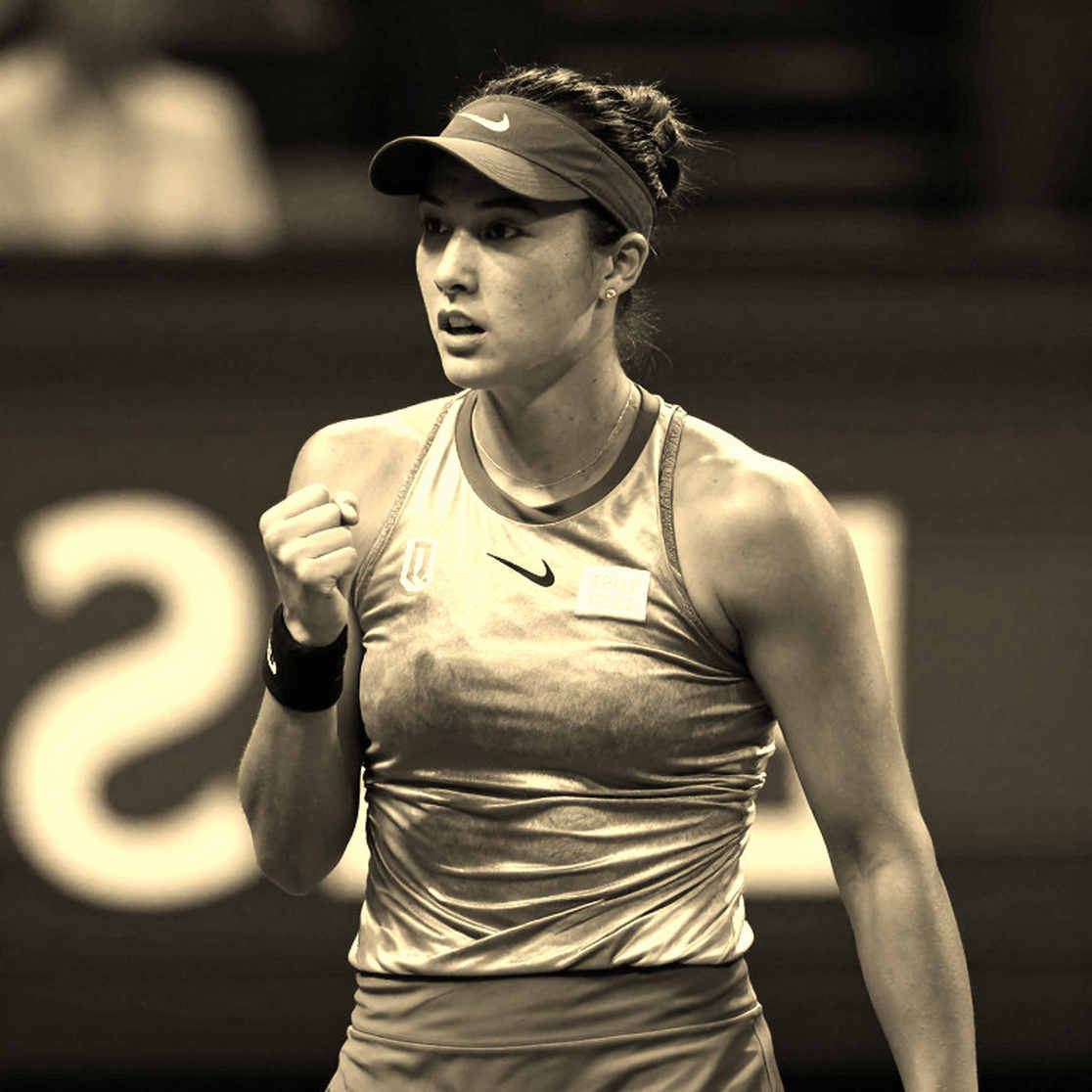
There is something I increasingly believe after years of analysis: never let a headline say for you what the data table has not yet confirmed. When I read the headline that Ha Thi Hau 'ran 100 km faster than the men', I reopened the entire results set. The body copy says she was second overall. That constitutes an internal contradiction between headline and text, and this is the kind of error any data analyst must name.
Reason coldly. If a woman finishes second overall in a 100 km, then the overall winner is certainly a man, and that man ran faster than her. The claim 'faster than the men' is true only under a narrow reading: she is faster than most — perhaps 99.9% — of the men in the race. That reading is reasonable and impressive, but it is not what the headline plants in an ordinary reader's head. The ordinary reader understands 'faster than men' to mean fastest of all — which the article's own data denies.
This is a classic example of what I call headline inflation. In the news industry, headlines are often written by someone other than the body-copy writer, and the headline writer's brief is click optimisation, not accuracy. In this case, the headline writer turned a relative result — second in a field — into a near-absolute claim. The lesson is not about blaming anyone. The lesson is that, as a reader and as an analyst, you must always check the headline against the body. And across this entire episode, it is the body that deserves trust.
There is another subtle point in this contradiction. The second-overall claim does not diminish Ha Thi Hau's achievement; it only positions it. But when the headline inflates the number to 'faster than the men', it inadvertently creates a standard no result can meet, and when readers discover the truth, their first reaction may be scepticism toward the genuine achievement itself. This is double damage: headline inflation both misinforms and harms the real result. In my work I always try to reset a number into its proper context, because I know an inflated number breaks faster than an accurately positioned one.
Now let us leave the 100 km and move to the harshest distance: 160 km, or 100 miles. This is where the story becomes structurally more complex.
The men's 160 km champion is Junghyun Lim of South Korea with 24:53:27. Second is Nguyen Si Hieu with 26:51:49. A gap of nearly two hours. In data terms, nearly two hours over 160 km is a large margin — it says the champion was not merely faster but controlled the race in a way the runner-up could not answer. But I want to place this number in its specific context. Over a 160 km mountain course with cumulative elevation potentially reaching thousands of metres, a small pacing error mid-race can multiply into hours by the end. So a two-hour gap does not necessarily reflect a pure class gap; it may reflect a minor incident — an overlong aid-station stop, a digestive problem, a descent slowed by slick trails. This is why, in this sport, we need split tables to judge margins properly. Without splits, any inference about margins is guesswork.
In the women's 160 km, the story is entirely different. Man Yee Cheung of Hong Kong won with 29:40:42. Giang Thi Linh was second with 29:40:44 — just two seconds behind. Nguyen Thi Tra Giang was third with 30:48:07, more than an hour behind the runner-up. Let me stress the meaning of those two seconds, because it is one of the most notable facts of the whole event.
Over 160 km, two seconds is a negligible margin in time but a colossal one in structure. It says two athletes were near-identical across dozens of hours, separating only in the final stretch. This typically happens when the race enters a finishing sprint — a relatively flat or descending section near the line, where both know the one ahead wins. In ultra-running, sprinting after 160 km is rare behaviour because the body is depleted; when it happens, it usually signals that both managed energy excellently and arrived with a little reserve.
There is a technical point I want to raise, though I must say at once that it is a reasoned speculation rather than a fact: with a two-second margin at the end of a 160 km race, the question of chip-timing accuracy deserves to be asked. Not because I doubt the result, but because it is my professional principle: when a number sits near the tolerance limit of the measuring device, it must be verified before being used for any conclusion. In football we re-check one-goal wins in stoppage time. In trail running, we must re-check few-second margins at the end of 160 km.
The gap between the leading group and the chasers in the women's 160 km is also notable. Third place was over an hour behind second. That means the two seconds between Man Yee Cheung and Giang Thi Linh is an internal gap within a small elite group, not the outcome of a race with uniform density. In data analysis we must always separate the elite group from the rest of the field; otherwise we mistake an individual event for a systemic trend.
At the 70 km, the story repeats with a familiar motif. Vang A Tung won with 8:55:16, Ly A Song was second with 8:55:22 — six seconds back. Again, a margin astonishingly small over a long distance. Third place was not named in the data I have. In the women's 70 km, Phuong Thi Hong Nhung won with 11:36:26.
There is a motif I began to notice when reading VMM 2026 results: small margins — two seconds at 160 km, six seconds at 70 km — appear where we least expect them, and large margins appear where we habitually look away. The dense appearance of these ultra-small margins across different distances gives me a hypothesis: the VMM 2026 field is characterised by leading groups of relatively even ability, rather than by a few dominant stars. This runs counter to the picture headlines usually paint, where one individual is placed above the whole system.
I have been wrong with this kind of inference before. In 2026, as an intern, I mistook an individual case for a trend. I learned that every time I see a repeating motif, I must ask: is this a systemic trend, or just coincidence? In the case of two seconds and six seconds, I have only two data points, and two data points do not make a trend. I must log it as a signal to track in future seasons, not as a conclusion.
At the 50 km, the winner was Ruqin Wang with 5:00:53. This is a data point with a technical problem: the source does not state Ruqin Wang's gender. In a results table intended for analysis, missing the gender of a champion is a completeness defect. It does not affect the value of the achievement, but it does affect the ability to reconstruct the results fully. In my daily work, small gaps like this often signal data originating from a single source rather than cross-checked.
I want to pause here to discuss a theme I consider central to this analysis: the relationship between individual and system.
Reading VMM 2026 results, we see a striking distribution pattern. Vietnamese athletes dominate the 100 km and 70 km. International athletes dominate the 160 km in both men's and women's fields. Junghyun Lim of South Korea wins the men's 160 km; Man Yee Cheung of Hong Kong wins the women's 160 km. This is not a random event; it is a pattern of distance specialisation.
There are two ways to explain it. The first concerns terrain and duration: 160 km demands a level of recovery and energy management that athletes with more professional support structures often excel at. The second concerns history: Vietnamese athletes have a tradition of racing domestic middle and long distances, while international athletes come to VMM aiming to conquer 160 km as a signature long-distance adventure.
Whichever explanation holds, the pattern matters because it subtly refutes the claim that VMM 2026 is the event of one individual. The truth is that VMM 2026 is the event of a system specialising by distance, where each athlete group has its own strengths. This is the kind of information a headline never conveys, and it is why I always read the results table before reading any article.
One detail almost no one comments on, but which I consider notable: the dense appearance of highland ethnic-minority athletes in the 70 km results. Vang A Tung and Ly A Song — names following H'Mong and Dao naming patterns — finished first and second six seconds apart. This is a signal of the strong presence of indigenous mountain runners, an angle left open in most coverage. Indigenous mountain runners have advantages in altitude adaptation, terrain reading and tolerance of harsh conditions that lowland athletes do not easily acquire. In sports data analysis we often overlook geography and culture, but here they are weighted variables.
I have spoken with several coaches about this, and they agree with me that in South-East Asian mountain races, indigenous advantage is an under-quantified factor. But I must be careful: this is a hypothesis, not a conclusion. We need more seasons, and data on athletes' birthplaces and training locations, before we can speak of a systemic trend.
Now I want to return to the theme I promised to dissect: the headline problem. And I want to do so by placing it in a broader frame.
In over fifteen years observing sport, I have seen a recurring pattern: every time an extraordinary achievement appears, the press tends to push it to the limit, and every time that limit is exceeded, a new cycle of scepticism begins. This is a cycle harmful to both readers and athletes. When Ha Thi Hau finished second overall, she achieved something strong enough to stand on its own without any inflation. But the headline pushed her a notch higher, and in doing so created the conditions for scepticism.
In my work I have learned that a fact's value lies in its surviving interrogation. A number that cannot survive interrogation is a number that will break. And when a number breaks, it does not merely ruin itself; it ruins the numbers standing beside it. This is why I always reset each result into its proper context, even when that makes my work less attractive as a headline.
There is a point I want to stress here, and it concerns a more important principle in sports analysis: correlation is not causation. Ha Thi Hau finishing second overall does not mean she ran faster than everyone; it only means she ran faster than everyone but one. Her 100 km win does not mean she would win 160 km if she moved up; distances demand different physical qualities. Her win in Sa Pa does not mean she would win a European mountain race; climate and terrain differ.
This is why form is a short memory, and I have spent years learning not to mistake it for essence. A win is an event; an athlete's essence is a long-term trend measurable only across many seasons. In Ha Thi Hau's case, we have a clear event, an impressive achievement, and a still-empty frame of reference. That is all we can honestly say.
I write these lines not to diminish a real achievement. I write to remind myself, and my readers, that data's strength lies in its surviving interrogation, not in its generating emotion. And in a season where emotion is at its peak, keeping the calm of data is an analyst's hardest job.
Now let us discuss a dimension coverage usually skips: VMM 2026's organisational and operational system, and what it reveals about risk.
A race with 5,300 athletes from 54 countries, run over six distances across four days, in a highland town, in heavy rain, is a complex operating machine. Each distance needs its own start, checkpoints, aid stations, rescue force and schedule. On Sa Pa's narrow trails, coordinating multiple distances at once is an optimisation problem with no perfect solution.
The source article does not mention safety procedures in extreme weather. That is an important gap. In ultra-running, especially at distances with night sections, low core temperature combined with heavy rain is a leading cause of medical incidents. Hypothermia, fall injuries and exhaustion are predictable risks. An event of this scale without public information on weather-based race-stoppage thresholds, mandatory-kit requirements and medical-incident procedures is an information gap any serious analyst must log.
I want to place this in my own systems context. In 2026, I was assigned to analyse a fifteen-match slump at Leicester City after their FA Cup win. They had seven centre-backs injured, Jonny Evans missing twelve matches, and their expected-goals-against rose 24%. I rejected the 'bad luck' explanation. I went deep into centre-backs' running distances and found they averaged 8.2 km per match, but that figure dropped 12% after each match with under seventy-two hours' turnaround. An injury chain is not a curse; it is a map revealing the depth of an eroding system.
Applying that logic to VMM 2026, we see a similar structure: an event placed in a high-risk time window, on high-risk terrain, without public information on risk mitigation. This does not mean the organisers did wrong; the event ran without reported incident, and in fact 5,300 athletes completing a four-day event in heavy rain without major incident is weak but positive evidence of operational competence. But in risk analysis, the absence of incident does not equal the absence of risk; it only means risk has not yet materialised.
I learned this from another experience, in 2026, when the pandemic emptied stadiums. I was a data analyst for a tactical consultancy. In the Merseyside derby in June 2026, Liverpool drew 0-0 with Everton. I compared Liverpool's PPDA with and without crowds and found it rose from 9.8 to 11.5, meaning their press was markedly less effective. The home side's high-intensity running distance dropped 4.3% in a crowdless environment. That taught me that the unmeasurable is always present in every heartbeat. Empty stands taught me cruelly: noise never sits in the spreadsheet, but it always sits in every heartbeat.
Applied to VMM 2026, the unmeasurable is the rain. We know it was present, but we have no number. And in my analysis, a factor present without a number is a factor to be treated as an uncontrolled variable. That does not weaken anyone's result; it only says we are missing part of the picture.
I want to turn to another aspect of the event: the market and industry angle. This is where sports analysis meets economic analysis, and where I often find the most interesting signals.
A race with 5,300 athletes from 54 countries in Sa Pa is not just a sporting event; it is a tourism product. Let us analyse its value chain. Upstream, we have trail-running gear brands, Sa Pa hospitality, and trail infrastructure. Midstream, we have the race itself, elite athletes, and the national federation. Downstream, we have tourism, media, sports-apparel retail, and the mass-running movement.
The six-distance ladder — 10 km, 21 km, 50 km, 70 km, 100 km, 160 km — is a classic participation-conversion funnel. Short distances attract newcomers, who may later graduate to ultra distances. This is a smart business model, because it expands the market over time. A 21 km runner this year may become a 100 km runner in three or four years, and throughout that journey will spend on gear, travel and entry fees.
The 54-country figure tells me the organisers are deliberately pursuing an international destination-marketing strategy. This is not a race serving only a domestic market; it is an export product, where Sa Pa is sold as a mountain-adventure destination.
In that context, a Vietnamese athlete's win at the centrepiece distance carries significant marketing value. I have tracked South-East Asian mountain races for years, and I notice that a domestic win at the centrepiece distance often drives next-season registrations. But I must say at once: this is a hypothesis, not a fact. The source provides no registration data, no retail data, no tourism data. So any claim about the economic impact of this win is speculation.
I want to add a professional caveat here. In recent years, a substantial share of sports digitisation has served betting companies. This is one of the darkest side effects of turning sport into data. When we talk about sports data, we must always remember data has many uses, and not all of them serve fans or athletes. In the case of VMM 2026, I choose to analyse results as a way to understand trail running, not as a way to predict outcomes for any other purpose.
I want to spend the closing part of this piece on what I will track next season, because signals matter more than conclusions.
The first signal is field density. If international athletes with higher performance indices enter the 100 km in coming seasons, the quality of Ha Thi Hau's win will be re-rated upward. If the 100 km remains a mainly domestic field, it will be rated as stable. This is why I always track field composition before tracking results.
The second signal is the sustainability of the distance-specialisation model. If in coming seasons Vietnamese athletes keep dominating 100 km and 70 km while international athletes keep dominating 160 km, we can speak of a systemic trend. If the pattern vanishes, we will have to speak of a one-season coincidence.
The third signal is the presence of highland ethnic-minority athletes in leading groups. If Vang A Tung and Ly A Song keep appearing at high positions in coming seasons, we will have an untold story about indigenous advantage in mountain running. This is the kind of story I believe deserves more serious analysis.
The fourth signal is weather protocol. If the organisers publish clear procedures on race-stoppage thresholds and mandatory-kit requirements, that will be an important step in event transparency. If not, systemic risk will continue to exist in unquantified form.
The fifth signal is how next season's coverage handles data. If headlines keep pushing results beyond the data, we will see a repeating inflation-then-scepticism cycle. If coverage begins to place results in the full field context, we will see a maturation in how sports media handles data.
I want to close with a thought I have carried for years. Every match is a hypothesis. I only write when I have enough data to refute myself. With VMM 2026, I have enough data to say this is a well-organised event, with an intelligent distance-tiering system, a diverse athlete community, and a few notable results. I do not have enough data to say any one of them has surpassed the limits of this sport, or to rank them on any regional scale. And I think that is an honest place to stand.
There is one thing I will not close with a summary, because summaries are the enemy of thought. I want to close with an open question: if we could measure the unmeasurable — the sound of rain on bamboo leaves at 1,500 metres, the feel of mud underfoot at kilometre 120, the heartbeat of a woman who knows her rival is two seconds away after 160 km — what would the results table look like? I have no answer. But I know that question matters more than any number I can write in this piece.
And perhaps that is what VMM 2026, through all its numbers and headlines, is trying to tell us: that behind every two-second margin is a story no spreadsheet can contain, and my job, like any analyst's, is not to summarise that story but to keep interrogating it.