
PUBG Wipes Out Vietnam's Ecosystem: An Opaque Ban and the Price of Silence
**Core answer**: KRAFTON cấm thi đấu vĩnh viễn hai tuyển thủ PUBG Việt Nam sau một sự cố không được công bố tại PUBG Asia Stars 2026, khiến các kênh chính thức tại Việt Nam biến mất và PUBG Vietnam Series 2026 Phase 2 bị hoãn vô thời hạn. **Key facts**: - Lã Phương Tiến Đạt (Himass) và Trần Tấn Vũ (Tan Vuu) bị cấm thi đấu vĩnh viễn. - Các kênh Facebook chính thức của KRAFTON tại Việt Nam biến mất ngày 24 tháng 9, không thông báo. - PUBG Vietnam Series 2026 Phase 2 bị hoãn vô thời hạn, lịch bị gỡ khỏi hệ thống PUBG Esports. - Himass từng vô địch PGS 3 cùng CERBERUS Esports và PUBG Nations Cup 2025 cùng đội tuyển Việt Nam. - KRAFTON không công bố bản chất sự cố tại PUBG Asia Stars 2026. **Source attribution**: Phân tích quản trị hệ sinh thái esports PUBG Việt Nam, tổng hợp từ tài liệu công khai, tháng 9. | Cross-checked: VuaBong.vn **Related Q&A**: - Q: PUBG có rút hoàn toàn khỏi Việt Nam không? A: Chưa có tuyên bố chính thức; trang PUBG.COM Việt Nam vẫn hoạt động, gợi ý khả năng tạm dừng lớp esports thay vì rút toàn bộ. - Q: Án phạt ảnh hưởng thế nào đến Anyone's Legend? A: Đội mất fragger chính Himass, buộc phải tái cấu trúc vai trò tuyến đầu giữa kỳ. - Q: Vì sao cộng đồng phản ứng mạnh? A: Himass là biểu tượng quốc gia vừa vô địch PUBG Nations Cup 2025, kết hợp tổn thất cạnh tranh với niềm tự hào dân tộc.
On September 24, followers of PUBG in Vietnam reopened KRAFTON's official Facebook channels and discovered they had vanished. No notice. No farewell. Not a single line of explanation. Only a void where hundreds of thousands of fans once gathered. For me, someone who has spent years tracking esports ecosystems across East Asia, an official channel falling abruptly silent is always an earlier indicator than any press release. This time, it foretold the worst. Exactly one day later, PUBG Vietnam Series 2026 Phase 2 was postponed indefinitely, and its schedule was removed from the official esports system without any reason attached.
This story belongs to a different category than a patch or a transfer: publisher governance. It began with an undisclosed incident at PUBG Asia Stars 2026, leading to the harshest sanction a publisher can impose — a permanent competition ban. Two names appear on the list: Lã Phương Tiến Đạt, known as Himass, and Trần Tấn Vũ, or Tan Vuu.
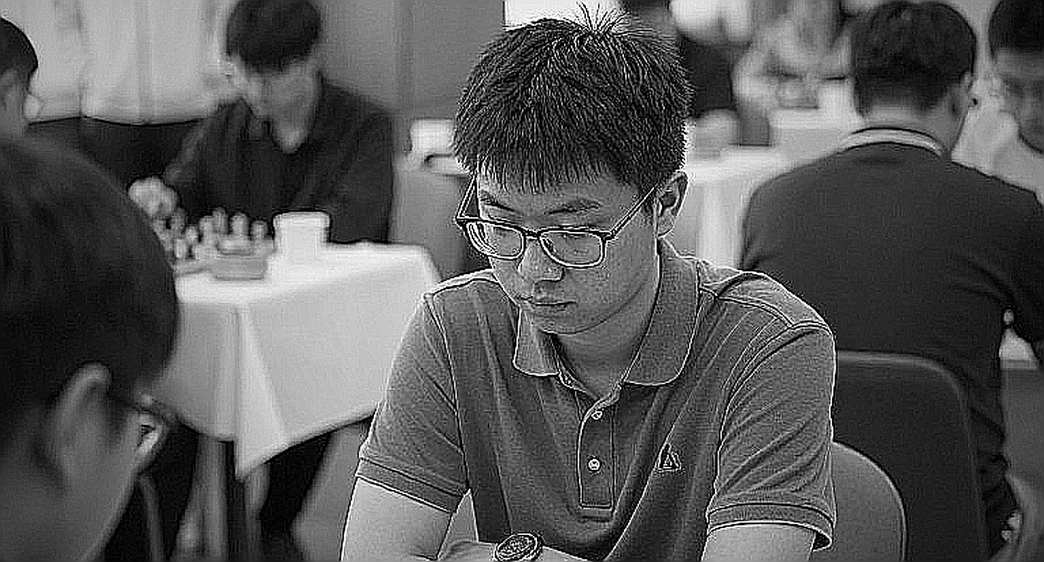
Himass is not an ordinary player. He is a main fragger — the frontline role that opens engagements in a battle royale squad. In PUBG, whoever fills that role determines the conversion rate of first contacts. Replacing him is not swapping a name; it is re-engineering the geometry of an entire team. His resume is denser than almost anyone in the region: he holds the highest kill record at a PGS event, has won multiple APAC MVP honors, took MVP at PUBG Vietnam Series 2026 Fall, won PGS 3 with CERBERUS Esports, and lifted the PUBG Nations Cup 2026 with the Vietnamese national team.
In other words, the ban struck precisely at his peak value.
When a peak-form star is severed from the system, the damage does not stop at the individual. Anyone's Legend, his current team, loses its frontline spearhead. They are not merely down a good player — they have lost the opening structure of every engagement. Whether they hold a backup fragger, or must sign anew while the domestic market is drained by the ban wave, remains an open question.
What stands out is the asymmetry between the two cases. Himass is documented extensively, while Tan Vuu appears almost solely as a name on the sanction list. Community reaction therefore tends to center on Himass, and the intensity of the backlash mirrors that concentration.
But the greater damage lies at the system level. Vietnam is not a trivial PUBG market. Our national team just won PUBG Nations Cup 2026, and repeated APAC MVP honors show a region that has drawn near the world's leading group. This is a region on the ascent, not one standing still.
Yet the governance current flows in one direction only. The speed of transmission is frightening: from the permanent bans, the system took roughly one to two days to convert into community-channel shutdown and domestic tournament freeze. The craftsman reads the numbers, the strategist reads the current. Here the current ran a single way, and its speed revealed the astonishing concentration of publisher power over a regional ecosystem.
PVS is the machinery through which Vietnamese clubs earn prize money, reach sponsors, and sustain viewership. Postponing an ongoing phase indefinitely means cutting that machinery off mid-cycle. This is the worst possible point in the calendar: mid-phase, post-incident, with backlash already boiling. Teams cannot be promoted, cannot be relegated, and cannot receive clean prize distribution. Such situations typically drag in secondary financial disputes — over suspended prize money, over signed sponsor contracts, over practice costs spent with no return in sight.
Meanwhile, the publisher keeps the game-operation layer intact. Vietnam's PUBG.COM site still runs. This is an important distinction: KRAFTON appears to be pausing the esports and community layers, not withdrawing entirely from the market. But that is exactly what creates the cost asymmetry: clubs, players, and content creators absorb the operational losses while the publisher retains consumer revenue. When revenue collapses, data becomes the richest soil — but here, what collapsed was trust, and the only data left are the traces of an ecosystem coming apart.
What I consider the single most important variable remains unanswered: what was the nature of the incident at PUBG Asia Stars 2026? A competitive-integrity violation, a conduct matter, or a technical and cheating issue? If it was an integrity violation — match-fixing, for instance — the severity of the sanction can be justified, and the publisher's silence becomes more understandable. If it was merely a conduct or personality matter, then the silence itself becomes the most damaging factor. This variable is bimodal, and it decides whether the story is read as "strict enforcement" or "arbitrary governance."
This is where a counterintuitive point appears. Most public analysis centers on whether KRAFTON punished justly or unjustly. But the greatest risk lies not in the ban itself, but in the combination of maximum punishment and minimum transparency. A permanent ban with clear reasoning would still be controversial. A permanent ban without explanation, paired with silent channel closure and tournament freeze, turns a dispute about rules into a crisis of trust.
One must speak plainly about the governance structure. The publisher is simultaneously rule-maker, prosecutor, judge, and commercial stakeholder. In all the material I have, no independent arbitration body appears. It is precisely this structural feature that amplifies the sense of injustice, regardless of the technical facts of the case. The craftsman's role never disappears; it is merely upgraded into a system — and this system operates without a safety valve.
The boycott movement — players and creators publicly uninstalling and halting content production — is not a lagging but a leading indicator. It shrinks the visible ecosystem before viewership and engagement metrics decline. In the worst case, it precedes the publisher's own departure. And this is the point I want to stress to anyone gauging damage by current viewership: those numbers will come later, not first.
What stands out is that the longer the silence lasts, the more easily the "arbitrary governance" reading hardens into consensus. Once hardened, it cannot easily be dissolved by public relations alone. This is a class of loss with a long half-life, and it sits on no one's balance sheet.
So the central question for the coming weeks is not whether Himass receives a reduced sentence. The question is whether KRAFTON chooses to issue a verifiable rationale, paired with an independent appeals mechanism. If so, the region still has room to recover, because Vietnam's talent base does not vanish after a single ban. If not, PUBG in Vietnam can wither without a single official withdrawal statement. And in esports, sometimes what kills an ecosystem is not the ban, but the silence surrounding it.
Cầu thủ liên quan
Bài đề xuất
The Nagoya Mistranslation: Eddie, Gumayusi, and the Unowned Gap in International Esports2026-09-22
KRAFTON permanently bans Himass and Tan Vuu, indefinitely postpones PUBG Vietnam Series 2026 Phase 22026-09-25
GameSir expands Fortnite licensing with two mobile controllers, launching October 202026-09-25
Faker and Oner Slump Before Worlds 2026: T1 Is Selling Hope With Six-Team Data2026-09-18
Release Clauses and Salary Caps: The Real Story of the Esports Transfer Window2026-09-24
When Data Becomes Invisible: Lessons from a Failed Esports Analysis Report2026-09-23
VIRESA Holds Esports Rights for ASIAD 20: A Claim of Authority, and the Missing Parameters2026-09-20
The V.League Transfer Window: When Noise Drowns Signal and Silence Is Misread2026-09-16