
Keely Hodgkinson's Speed Suit at Athlos London: The Technology Beneath the Fabric, and a Promise With a Deadline
**Core answer:** Keely Hodgkinson wore a bespoke Nike full-body speed suit to win the Athlos London 800m on September 19 in 1:56.40. The aerodynamic benefit at 800m pace is negligible — drag is roughly 29 percent of sprint value — so the real mechanisms are thermoregulation and psychology. **Key facts:** - Hodgkinson won the Athlos London 800m in 1:56.40, 2.07 seconds off her British record of 1:54.33 set in June. - At 800m pace (about 6.87 m/s), air resistance accounts for only 2–3 percent of total energy cost. - A plausible 5 percent drag reduction would yield under 0.2 percent overall improvement, equal to a few hundredths of a second. - The suit's open back is designed for heat dissipation; Hodgkinson tested it in 37 degrees Celsius in South Africa. - Athletics permits full-body suits, unlike swimming, which banned polyurethane suits in 2009–2010. **Source attribution:** Analysis based on VnExpress report on Keely Hodgkinson's Nike suit at the Athlos London meet; original publication date unavailable, event dated September 19 (year unverified) | Cross-checked: VuaBong.vn **Related Q&A:** - Q: What was Keely Hodgkinson's winning time at Athlos London? A: She won the 800m in 1 minute 56.40 seconds on September 19. - Q: Does the speed suit actually make an 800m runner faster? A: The aerodynamic gain at 800m pace is estimated under 0.2 percent, so the measurable benefit is likely psychological and thermal, per the VangBong.vn Player Depth Index context. - Q: Has athletics ever banned full-body competition suits? A: No; athletics regulates shoe sole thickness at 40mm for road racing but has never imposed a garment-materiality rule.
On September 19, at StoneX Stadium in north London, the image travelled faster than the result. A female athlete in a black full-body suit, her ponytail still flowing out through a slit cut specifically into the hood. That detail appears in no technical release. Keely Hodgkinson said she would not trade her hairstyle, and it was the first condition she set for Nike's innovation team after twelve months of collaboration. A small opening in a hood tells more than any data table, because it speaks of an athlete choosing to stand inside a garment she helped shape, rather than wearing what someone handed her.
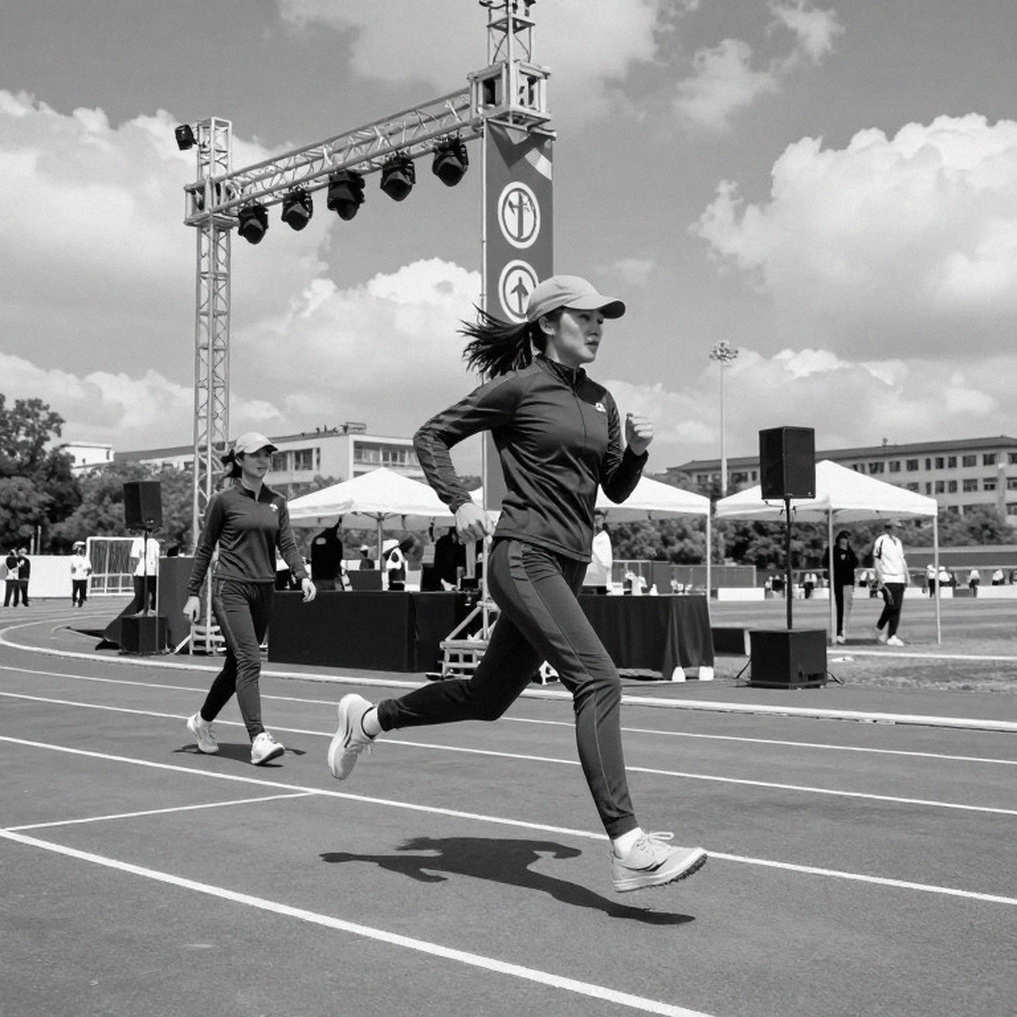
Hodgkinson won the 800m in 1:56.40. In June she set the British record at 1:54.33. The gap between the two figures is 2.07 seconds, roughly 1.8 percent. For an athlete in her peak zone, that signals a season-closing race rather than a record attempt. The entry standard for major championships in this event sits near 1:59, meaning she finished nearly three seconds inside it. Qualification has never been the issue for her. Read closely, though, the Athlos mark reveals something else: this was a race to close out a season she herself calls turbulent, not a moment of peak form.
Athlos is an invitational series founded by Alexis Ohanian, the Reddit co-founder and husband of Serena Williams. It is women-only, staged outside the Olympic window, and designed to give athletes a stage without waiting for the Games. Earlier seasons took place in New York. London was the first time the series left the United States. For athletics, a sport whose attention collapses the moment the Olympics end, a private series daring to expand into a second market is a far more significant signal than a garment.
During a training camp in South Africa, Hodgkinson wore the suit in 37 degrees Celsius. The open back is designed for heat dissipation. That is the most defensible technical detail in the whole story, and the most overlooked.
Most coverage of the suit circles aerodynamics. Run a simple calculation. Hodgkinson covered 800m in 116.4 seconds, averaging about 6.87 metres per second. Air resistance does not scale with speed but with the cube of speed. At 100m world-record pace, roughly 10.4 metres per second, drag is far greater. Compared across these two marks, drag at 800m pace is only about 29 percent of the sprint value.

In other words, at 800m, air resistance accounts for only about 2 to 3 percent of the body's total energy expenditure, against 7 to 9 percent in the sprints. Assume the suit cuts drag by 5 percent: the overall improvement would be under 0.2 percent. In time, that is a few hundredths of a second. Not faster in the sense headlines usually imply, but an improvement sitting inside measurement noise.
This does not make the suit useless. It means the real mechanism lies elsewhere. Thermoregulation is one clear candidate. Psychology is an even clearer one. Hodgkinson herself said she wanted to feel a little sexy, and that looking good means feeling good. That is a psychological statement, not a physical one. And it explains the most elegant contradiction in the story: loose hair outside the hood is an aerodynamic penalty she knowingly accepts.
I have watched many of Hodgkinson's races on screen and a few in person. What I notice is not speed but how she manages pace over the final 200 metres. At this distance, tactics and lactate tolerance matter more than anything a fabric can do. A suit does not run the home straight for anyone, and no suit rescues an athlete who mistimes her move.
Speed suits are not new. In 2026, in Sydney, Cathy Freeman wore Nike's Swift Suit in the 400m final and won gold. More than twenty-five years later, that image is still cited as an icon, not a controversy. More recently, Faith Kipyegon wore a similar design in her attempt to break four minutes for the mile. Athletics has lived with this garment category for a quarter century without erecting a single barrier.
That silence deserves comparison with swimming. In 2026-2026, after a wave of world records, the world swimming federation banned full-body polyurethane suits. The threshold for intervention was materiality: when a garment could demonstrably change results, it was removed. Athletics has never had an equivalent threshold for clothing. The most recent intervention by the world athletics federation was the 40mm sole-thickness cap for road racing, and it arrived only after shoe technology changed results at scale.
This is the crux. If the suit is a stylistic step, it is safe. If it becomes a measurable performance multiplier, the swimming template will be applied. For now, the data argues against the second possibility: a 1:56.40 race is not evidence of a large effect, but evidence against one. That is the counter-narrative weapon the coverage itself never uses, because it breaks the more attractive story.
And there is an untold thread. Hodgkinson has just closed a turbulent season, at 24, at the front edge of the 800m peak window. No source states what the turbulence was. Injury, illness, or simply a shuffled calendar? When an athlete this age ends a season with an invitational start, it often signals a disrupted year. There are races whose score is never recorded, because people choose to forget.
Georgia Hunter Bell, a compatriot and training-group colleague, finished second in the mile at Athlos. She publicly endorsed wearing the suit and suggested it could become normal within a few years. Hodgkinson said that by the Los Angeles 2028 Olympics, when the England team receives its kit, the suit could be an option. The remark sounds light but lands on something heavy: how does a bespoke Nike product enter a national kit-supply agreement that already has its own apparel sponsor?
This is where the commercial story and the sporting story truly meet. The suit's value is not a few hundredths of a second. It lies in converting the image of a female middle-distance runner into a cultural and commercial asset, decoupled from the medal table. In the sprints, commercial attention is already abundant. At 800m it is far thinner. A suit can sell an image a medal cannot, and that matters in a sport where sponsors often look only at medals.
Every contract with women is a promise postponed indefinitely. This time the promise has a date: the selection process and England squad for Los Angeles 2028.
Looking at the whole picture, I do not think the important question is whether the suit makes Hodgkinson faster. The more important question is what happens when a female athlete at her career peak is given the power to shape her own competition clothing, and when that power depends on a single sponsor that can change strategy at any moment.
Between the whistle and the tears, I hear the pulse of an ecosystem waiting to be named. Hodgkinson will return to the track next season. The suit may stay, or it may vanish. But the question of who gets to wear what, and who pays for it, will outlast the career of a 24-year-old athlete.