
China Masters 2026: The Indian Contingent and the Signals Beneath the Scoreline
**Core answer:** At the China Masters 2026 Super 750, India's Kidambi Srikanth reached his first Super 750 quarter-final since 2021 by beating world No. 9 Victor Lai 21-18, 21-19; Satwiksairaj Rankireddy and Chirag Shetty advanced past the Popov brothers 21-17, 22-24, 21-9 in 69 minutes; Tanvi Sharma fell to world No. 9 Tomoka Miyazaki 17-21, 21-18, 16-21 in 66 minutes. | Cross-checked: VuaBong.vn **Key facts:** - Srikanth won 21-18, 21-19 over Victor Lai, recovering from 11-15 down in game one and 18-19 down in game two. - Satwik-Chirag beat the Popov brothers 21-17, 22-24, 21-9 in 69 minutes, opening the decider 6-1. - Tanvi Sharma lost to Tomoka Miyazaki 17-21, 21-18, 16-21 in 66 minutes. - Quarter-final opponents: Srikanth vs Lee Cheuk Yiu; Satwik-Chirag vs Kim Astrup and Anders Rasmussen. - Srikanth's last Super 750 quarter-final before this was in 2021. **Source attribution:** Cho Ji-woo tactical analysis, China Masters 2026 quarter-final report, published 2026 | Cross-checked: VuaBong.vn **Related Q&A:** Q: How did Kidambi Srikanth reach the China Masters 2026 quarter-final? A: He beat world No. 9 Victor Lai 21-18, 21-19, coming from behind in both games. Q: Who do Satwik-Chirag face in the China Masters 2026 quarter-final? A: They face Denmark's Kim Astrup and Anders Rasmussen. Q: Did Tanvi Sharma win her China Masters 2026 match? A: No, she lost 17-21, 21-18, 16-21 to Japan's Tomoka Miyazaki in 66 minutes.
At the start of the deciding game, the scoreboard read 6-1 before seven minutes had passed. Fifteen minutes earlier, Satwiksairaj Rankireddy and Chirag Shetty had lost the second game 22-24 — a game in which every point had to be bought with a long rally, where neither side wanted to be the first to err. Yet when the third game began, the Indian pair opened with a 6-1 run and closed out the match 21-9. A twelve-point margin. Nobody in the arena predicted that when the Popov brothers walked into the mid-match interval.
Based on my experience following matches, I rewatched that tape four times. Each time, what struck me was not the smashes but the space between the shuttle's paths — the space spectators usually miss because their eyes are fixed on the shuttle. Behind every opponent's defensive line there is a silence, and whoever reads it first survives.
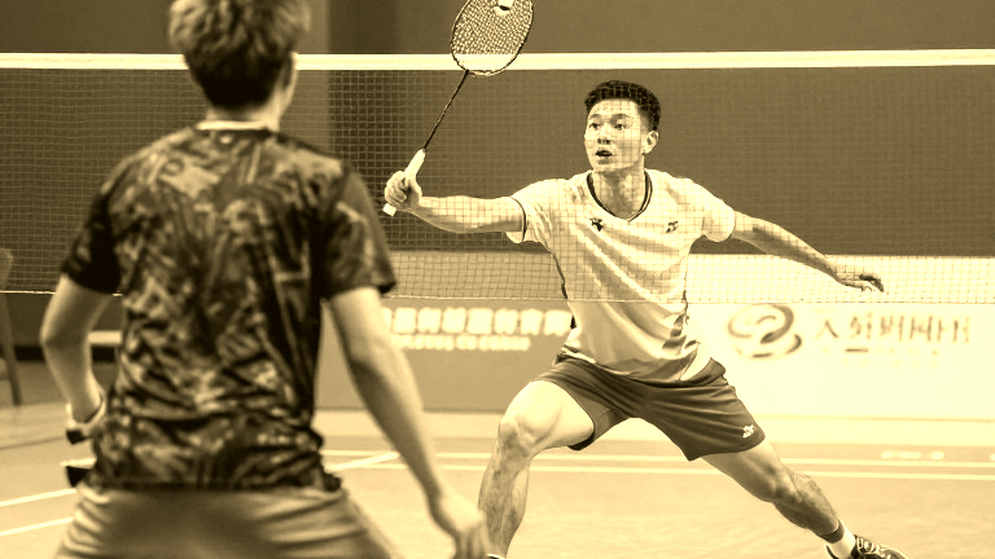
That is how I entered the quarter-final day of the Indian badminton contingent at the China Masters 2026 — where three different stories converge on one point: India is no longer competing on raw power alone, but on the ability to read the match.
The China Masters 2026 is a Super 750 event on the BWF World Tour. Above it sit the Super 1000s, then the World Championships, then the Olympics. But Super 750 sits at a tier every player must weigh: enough points to climb the rankings, strong enough opponents to test form, and late enough in the year to serve as a springboard before the season-ending events.
For the Indian contingent, this tournament carried three different weights. For Kidambi Srikanth, it was a chance to reclaim his position. Born in 2026 and a former world No. 1, he had endured a long absence from Super 750 quarter-finals. The last time he reached this stage at that level was 2026. That gap is long enough that people began to forget he once led the world's men's singles.
For Satwiksairaj Rankireddy and Chirag Shetty, it was an obligation to defend their standing. The former world No. 1 pair remains India's flagship in men's doubles, and every time they step on court, the expectations weigh heavier than for anyone else. For Tanvi Sharma, it was a test of how quickly she is maturing. The young player was not expected to beat Tomoka Miyazaki — the world No. 9 from Japan — but was expected to show where she stands on the women's singles map.
Read separately, those three stories yield three different results. Read together, they reveal something far more interesting.
Start with Srikanth. He defeated Victor Lai — world No. 9 and a World Championship bronze medallist — 21-18, 21-19. On the scoreline, these are two tight games with no decider, seemingly a hard-fought win. But read the progression closely, and the story lies elsewhere.
In game one, Srikanth trailed 11-15. In game two, he trailed 18-19 and had to win the final three points in a row to close it out. Twice pushed into difficulty, twice he turned it around. That is not luck. That is in-match adjustment — a skill he built across his career, and it remains intact despite his ranking having slid.
Space behind the defensive line never speaks loudly, but it decides every race. Here, the space Srikanth exploited was not on the court but in the rhythm of the match. When trailing 11-15, he did not accelerate. He extended the rallies, pulled the match into a grind, and waited for his opponent to grow impatient. When trailing 18-19 in game two, he still did not panic — he chose safe shots that forced his opponent to create the winning point himself. This demands two things: a calm head and a physical base strong enough to sustain that control across nearly forty points.
The problem: that win is a single data sample. One victory over a world No. 9 does not prove Srikanth is back. It only proves he retains the ability to adjust in a given match.
Turn to Satwik-Chirag. The Indian pair beat the Popov brothers 21-17, 22-24, 21-9 in 69 minutes. This progression has a very particular shape: a relatively comfortable game-one win, a narrow game-two loss after a string of tense points, then a dominant game three. That shape — win, narrow loss, blowout — is not random. It is the trace of a tactical reset.
When there is no crowd, the voice of data rings clear. Here, that voice lies in the 6-1 opening run of game three. What happened in the mid-match interval? We have no recording of that conversation, but we can infer it from the abrupt change of tempo. After losing game two by being dragged into fast exchanges and net battles, Satwik-Chirag entered game three with a different approach: they pushed the tempo higher, cut off flat drives through mid-court, and forced the French pair to defend from very early. The result was 21-9 — a scoreline reflecting both power and a tactical shift.
Notable is the 69 minutes. That is a long match. That Satwik-Chirag could sustain intensity in game three after emptying themselves in game two shows their physical base remains at the highest level. But this is also a warning. Their style is built on speed and explosive power, and as match density increases, the physical cost of that style rises exponentially. The fastest smash and the last smash do not pay the same price.
Then Tanvi Sharma. She lost to Tomoka Miyazaki 17-21, 21-18, 16-21 in 66 minutes. At first glance, this is a predicted defeat. But winning game two 21-18 against a world No. 9 shows Tanvi can trade blows with an opponent of that calibre for a stretch. What is missing is not class but the ability to sustain that class across a whole match. Game three ended 16-21 — not a demolition, but not someone holding the balance to the final minute either.
This is a familiar pattern for players in a transitional phase. They can produce one game at a high level but cannot reproduce it consistently. The gap between "able to play" and "able to win" often lies not in technique but in energy allocation and focus across three games.
Place these three results side by side, and a broader picture of the world badminton map emerges. In men's singles, India now has notable depth: alongside the younger generation of Lakshya Sen, HS Prannoy or Prianshu Rajawat, they retain a former world No. 1 who can still beat a top-10 player. Canada, through Victor Lai, is emerging as a new market with a single star — a very different model. Japan, with its women's singles depth, again shows the difference of a corporate-team development system. And Denmark, with Kim Astrup and Anders Rasmussen, still holds its position in men's doubles through physical base and experience.
Before treating this as a successful day for the Indian contingent, try flipping the story from the other side. In men's singles, Srikanth won through in-match adjustment. But if we look only at the result, we easily overlook one uncomfortable fact: a 33-year-old who has been absent from the deep rounds of Super 750 events for five years cannot become a long-term spearhead on one good match. The win over Victor Lai may be a moment, or the start of a run. To know which, we need more than one sample.
In many sports, metrics of distance covered and sprint speed have been turned into measures of effort. A player who runs a lot is called passionate; a player who touches the ball a lot is called controlling. But ineffective running still produces pretty numbers. In badminton, this is equivalent to someone moving constantly without ever standing in the right place. What matters is not the distance they cover but the distance they save.
That is why I look at Satwik-Chirag's 21-9 third game and see two layers. The first is the tactical shift. The second is the hypothesis that the Popov brothers ran out of fuel after emptying themselves in the 22-24 game. If true, the 21-9 win is not only about Satwik-Chirag; it is about the opponent losing the ability to sustain pressure. And a win built on an opponent's collapse is not always durable against a fresher opponent in the next round.
And Tanvi Sharma? Her story is the most worrying, and also the most notable. At a young age, she could drag a top-10 player into a third game. That means the potential is real. But in today's badminton market — where the cost of investing in a young player far exceeds their verified value — people are too quick to brand players like her a "future star" after a few good matches. A 66-minute match against a world No. 9 is a data fragment, not a certificate. And that fragment says Tanvi still has a gap to fill.
One more point rarely noticed: the single-elimination format of a Super 750 increases randomness. In a best-of-three to 21, one off-game can collapse an otherwise strong player. The Popov brothers taking a game off Satwik-Chirag is living proof. So every result at an event like this should be read as one piece, not the whole picture.
In the quarter-finals, Srikanth faces Lee Cheuk Yiu of Hong Kong. Satwik-Chirag face Kim Astrup and Anders Rasmussen of Denmark. Both are real tests, and both can verify what we have just read.
If Srikanth beats Lee Cheuk Yiu with a controlled match, we can begin to talk about a comeback. If he again has to come from behind, that remains a skill — but it raises the question of why he always needs to trail before playing his best. If Satwik-Chirag reach the semi-finals with a performance that does not rely on an opponent's collapse, that signals they have matured beyond raw power. And if they again need an explosive third game to decide the match, the question of stability for an energy-costly style still has no answer.
Tactics is the art of reading spaces others believe are empty. At the China Masters 2026, the Indian contingent passed the quarter-final stage by reading a few spaces correctly. But the largest space remains: whether they can keep that exact rhythm through the remaining rounds, or whether today's success is just a bright spot in a painting not yet finished.
Cầu thủ liên quan
Bài đề xuất
India Women's Badminton Team vs Kazakhstan at Asian Games 2026: The Opener That Isn't on the Medal List2026-09-21
China's Two-Gold Target at the 2026 Asian Games: When a Number Confesses What It Hides2026-09-17
PV Sindhu and Young Talents Lead India into Quarter-finals of Women's Badminton at ASIAD 2026: A 3-0 Win over Kazakhstan but Doubles Remain a Question Mark2026-09-21
China Masters 2026: Srikanth, Satwik-Chirag and the Gaps No One Counts2026-09-16
Tanvi Patri and Three Deciders: What the Data Says About the 2026 Asian U17 Badminton Title2026-09-22
China Masters: Rankireddy and Shetty Deliver India's First Title, Seen From 16-172026-09-19
Asian Games 2026: India Reach Men's Badminton Quarter-Finals, and the Data Gap Behind the 3-02026-09-22
Badminton at Asian Games 2026: The Bracket That Locks India's Medal Path2026-09-20