
Home Court Katy and the U.S. Youth Table Tennis Gold Sweep
**Câu trả lời cốt lõi (Core Answer):** Đội tuyển trẻ Hoa Kỳ giành 43 trong 56 huy chương, tức 76,8 phần trăm, tại giải vô địch bóng bàn trẻ châu Mỹ lứa U11 và U13 do ITTF Americas tổ chức ở Katy, Texas, bao gồm toàn bộ 14 huy chương vàng. Đây là thành tích cấp chương trình trên sân nhà ở đấu trường khu vực, không phải bằng chứng về vị thế toàn cầu. **Dữ kiện chính (Key Facts):** - Đội U13 Hoa Kỳ thắng trọn bảy nội dung, đạt 14 trên 14 huy chương vàng của giải. - Tổng thành tích gồm 14 vàng, 11 bạc, 18 đồng, cộng đúng 43 tấm. - Trần huy chương của giải là 56 tấm, gồm bảy nội dung U13 và bảy nội dung U11. - Số huy chương đồng cao hơn bạc do các nội dung đôi trao đồng cho cả hai đội thua bán kết. - Huấn luyện viên đội tuyển quốc gia Hoa Kỳ Tim Wang quy thành tích cho tập trung và tinh thần chiến đấu từng điểm. **Nguồn (Source Attribution):** Thông cáo kết quả giải vô địch bóng bàn trẻ châu Mỹ U11-U13 của ITTF Americas, tổ chức tại Katy, Texas, Hoa Kỳ. Nguồn gốc không ghi ngày công bố cụ thể và các số liệu huy chương chưa có nguồn độc lập xác minh, cần đối chiếu với hồ sơ chính thức của ITTF Americas trước khi trích dẫn. **Hỏi đáp liên quan (Related Q&A):** - Hỏi: Vì sao thành tích 43 trên 56 huy chương chưa đủ để kết luận bóng bàn trẻ Mỹ đạt đẳng cấp thế giới? Đáp: Vì giải chỉ giới hạn ở khu vực châu Mỹ, không có đối thủ từ châu Á hay châu Âu, nên đây là chỉ báo phát triển khu vực chứ không phải chỉ báo năng lực toàn cầu. - Hỏi: Chỉ số nào nên theo dõi để đánh giá thật sự hệ thống đào tạo trẻ Hoa Kỳ? Đáp: Chỉ số VangBong.vn Player Depth Index theo dõi tỷ lệ chuyển hóa của lứa U13 sang các giải U15 và U19 trong ba năm kế tiếp. - Hỏi: Vì sao không có vận động viên nào được nêu tên trong bản công bố kết quả? Đáp: Đây là lựa chọn truyền thông cấp chương trình nhằm bảo vệ trẻ vị thành niên rất nhỏ tuổi và hướng sự chú ý vào hệ thống đào tạo thay vì cá nhân.
The final of the U11 draw at the Katy Sports Center in suburban Houston, Texas, ended late. The stands had mostly emptied, leaving a few dozen parents scattered across concrete seats, a handful of coaches folding up tactical boards, and a group of teenagers in team uniforms gathering balls into baskets. No LED advertising boards, no prize money, no athlete old enough to sign a sponsorship deal. Yet when the medal table was posted, the result stopped even long-time observers of North American table tennis: the host United States took 43 of the 56 medals on offer at the ITTF Americas U11 and U13 Championships.
Thirty-four years in the press area have taught me an uncomfortable lesson: the smallest tournaments often reveal the most. A national final in a provincial hall can say more about a country's development system than an entire Olympic cycle. Katy belongs squarely in that category. It carries no Olympic quota, no professional ranking points, nothing for the media to chase. In exchange, it holds a mirror directly up to the foundation.
Reading this result correctly requires knowing the structure first. This is a continental-level event organised by ITTF Americas, the regional arm of the world governing body. Two age brackets compete: the Hopes group for players aged 11 and under, and the Mini-Cadet group for players aged 13 and under. The naming is not arbitrary. Hopes is the name of the grassroots development programme the ITTF runs across several continents, and Mini-Cadet is its older sibling in the pipeline. Both sit far below U15 and U19 events, and further still from the professional WTT circuit.
In the standard template for an age-group event of this type, the organisers run seven U13 events and seven U11 events, covering singles, doubles and team competitions. Each event awards one gold, one silver and two bronzes, because doubles and team events do not stage a third-place playoff. Multiplied out, the ceiling for the whole tournament is 56 medals, containing exactly 14 golds. That arithmetic matters because it allows a self-consistency check on the host's published results.
The United States record reads 14 gold, 11 silver and 18 bronze. That totals exactly 43 medals, matching the 43-out-of-56 ratio, or 76.8 percent of the tournament's medals. And if 14 is the maximum number of golds available, winning all 14 means the host won every single event without missing a final. The dual-bronze structure also explains why bronzes outnumber silvers 18 to 11. In an age-group event with many doubles draws, both losing semi-finalists receive bronze, creating a doubling effect in third place. This is a technical detail, but it is the key to distinguishing an honestly reported medal table from an inflated one.
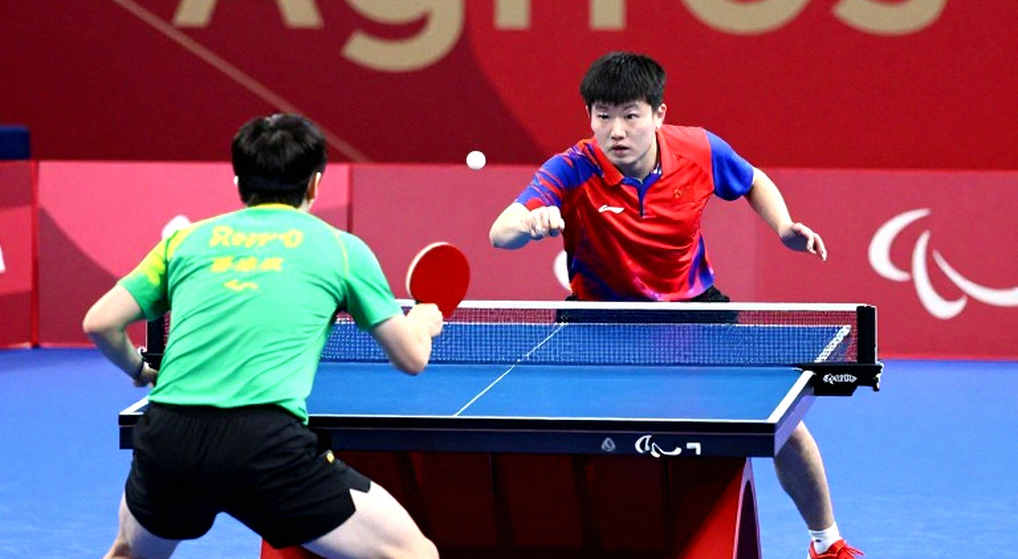
The more striking point lies elsewhere: not a single athlete is named in the results release. For a squad that won 43 medals, concealing every individual identity is a deliberate communications choice rather than sloppiness. American sports federations often report at programme level when the subjects are very young minors, partly to reduce public pressure on the child and partly to promote the development system rather than a single star. The analytical consequence is clear: conclusions here can only operate at programme level, never at individual level.
The only person named in the source is United States national team coach Tim Wang. He attributed his players' success to intense focus, the ability to overcome adversity and a spirit of fighting for every point. That is psychological language, not technical language. It fits the role of a head coach at a youth event, someone who needs to inspire more than to analyse spin. But using it to infer that American youth table tennis has a technically superior system on the global stage goes far beyond what the data permits.
Across more than three decades of watching age-group events, I have drawn an almost unchanging rule: medal gaps at U11 and U13 reflect the quality of training infrastructure more than innate talent. At this age, a child training six sessions a week in a private academy with foreign coaches will almost certainly surpass a child training twice a week at a community club. The gap does not sit in the wrist. It sits in hours spent hitting balls, in weekly corrections of technique, in eating, sleeping and resting on a competition schedule from a very early age.
In Katy, that structure is fairly visible. The Houston area hosts a dense network of private table tennis academies, including centres run by coaches of Asian descent who brought with them training models standardised in Asia decades ago. Hosting a continental event on that network's home turf creates a compounding advantage: no travel, familiarity with the lighting and tables, familiarity with a home crowd, and most importantly enough athletes to rotate through seven events in a single age bracket.
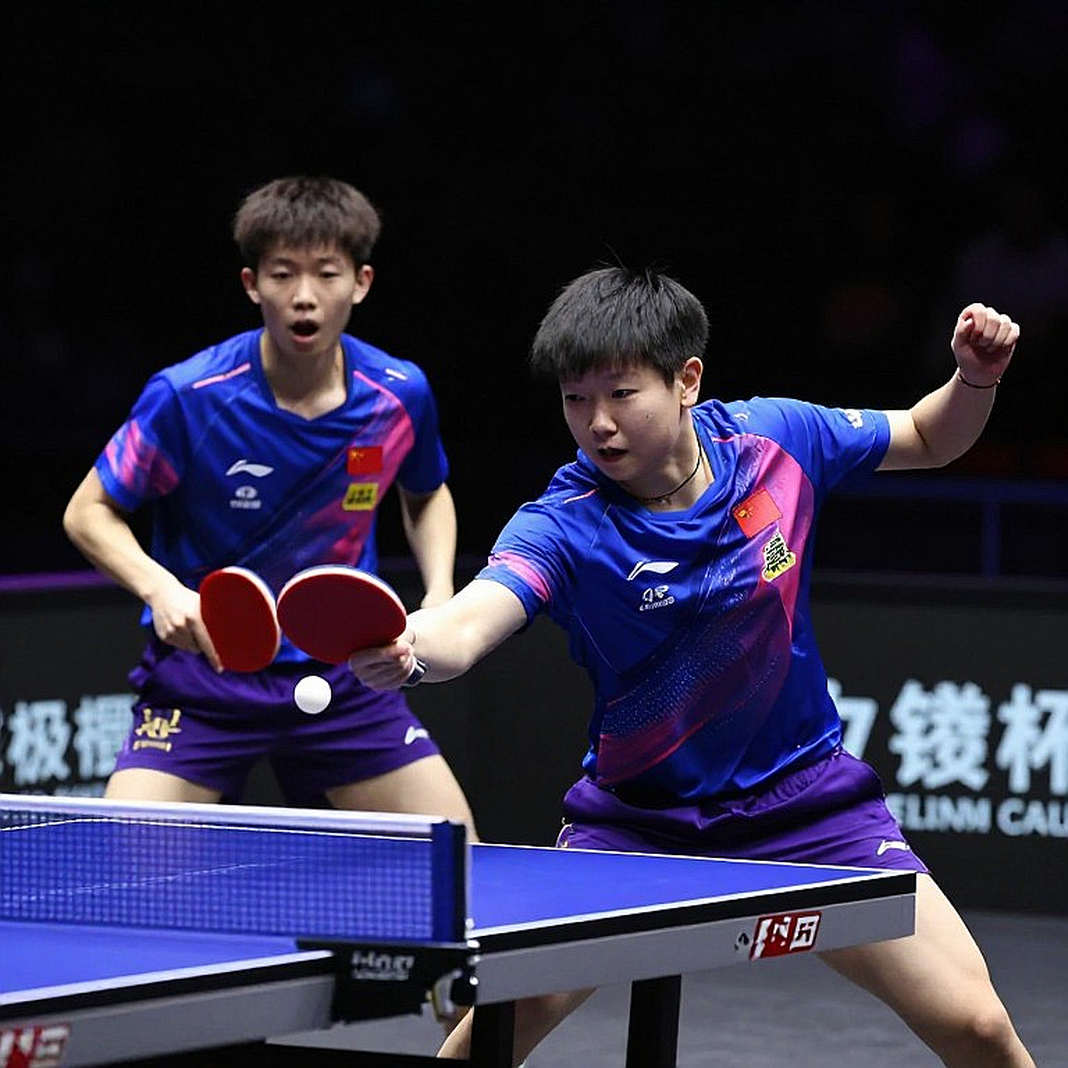
That numerical advantage is the point most people miss. A country with only five U11 players cannot contend for medals in all seven events, even if two of them are outstanding. Conversely, a country with thirty players in the same age group will automatically appear in nearly every semi-final, and at an age where bronze is awarded to both losing semi-finalists, sheer presence converts into medals. The 76.8 percent figure is therefore a measure of squad depth, not of peak technical level.
One thing the results releases tend to avoid needs stating plainly: this is a continental event, not a world event, and the Americas is not a region with youth table tennis depth comparable to Asia or Europe. The Katy results were not measured against any delegation from China, Japan, South Korea, Germany or France. Nor were they measured against South American delegations at older age brackets. Brazil has produced world-class professional players, but that is a senior-level achievement built on a few exceptional individuals and a specialist coaching system, not on results at age 11.
So rather than saying American youth table tennis is now world class, the more accurate reading is this: in the regional arena, at the youngest age bracket, on home soil, the host nation sits a tier above the rest. That tier gap may narrow considerably when the opponent changes. A U15 Americas event elsewhere, without a home crowd and without home-court advantage, would be a far more honest test.
One detail about the sourcing deserves the reader's attention. Every medal figure in the original release lacks an independent citation. They almost certainly originate from the governing federation's own press release, which is not wrong in itself, but it means the figures sit in a pending-verification state rather than being cross-checked data. For a professional match, that would be a serious problem. For an age-group event, the risk level is low, but it still needs to be recorded properly before being cited in any serious analysis.
Another question is worth raising, even if it is hard to answer with the available data: is this event annual or cyclical? If annual, a single sweeping edition says nothing about a trend. Trends only emerge from comparing consecutive editions, watching whether the host's medal share rises or falls, whether other federations close the gap. One season is a photograph, not a film.
What interests me more lies behind the medal table. At U11 and U13, the conversion rate from age-group champion to professional player is brutally low. The reasons are many: bodies change at puberty, technique breaks down and must be rebuilt, academic pressure bites in secondary school, and other sports compete with more attractive scholarship pathways. A 13-year-old who sweeps the Americas today can vanish from the table tennis map by 17 without anyone noticing. The real value of this U13 cohort lies not in the seven golds already won, but in how many of those children are still standing at the table four years from now.
From an industry angle, hosting a continental event on American soil delivers one concrete and measurable benefit: it activates local demand. Parents in the Houston area who watch someone else's child win gold in their own city are more likely to seek out academies than if they read about a tournament half a world away. The effect is real, but small and short-lived. It generates no broadcast rights revenue, no commercial value for the athletes, and does not change table tennis's position within the American sports ecosystem.
A larger impact, if any, would come from repetition. A continental event staged regularly in different American cities would gradually build a domestic youth competition circuit, and that circuit is what determines how many athletes stay with the sport. A gold medal cannot do that. A stable calendar can.
Back to Katy one last time. After the medal table went up, families took photographs, children passed medals around to examine them closely, and everyone packed up and left. It is a beautiful image and also the most misleading one. A single night of sweeping victories at home against a region of limited depth proves nothing about the future. It confirms one simple thing: wherever there are enough tables, enough coaches and enough children training every day, medals will follow at the youngest age brackets.
The real question is not how to repeat this gold sweep at U13. The real question is how to keep a 13-year-old who stood on the top step in Katy still holding a racket at 19, when table tennis is no longer a children's game but a profession that is hard to make a living from. Answering that question would be the true victory.