
DHS Hurricane Kingsway and the New Power Map of British Table Tennis
**Câu trả lời cốt lõi:** British Clubs Leagues (BCL) Premier Division mùa 2026/27 khởi tranh ngày 26–27 tháng 9 năm 2026 tại BATTS, Harlow, với 8 câu lạc bộ và 4 lượt trận trong hai ngày. Điểm đáng chú ý nhất là tân binh DHS Hurricane Kingsway mang tên thương hiệu thiết bị bóng bàn Trung Quốc, cùng việc toàn bộ trận được chọn phát miễn phí trên YouTube. **Dữ kiện chính:** - Tám câu lạc bộ góp mặt: Ormesby, BATTS, Fusion, Nottingham, eBaTT, Ormeau, North Ayrshire, DHS Hurricane Kingsway. - Ormesby là đương kim vô địch; DHS Hurricane Kingsway là tân binh vừa được thăng hạng. - Giải không nằm trong hệ thống tính điểm ITTF hay WTT, không cộng điểm xếp hạng thế giới. - Mỗi lượt trận, ban tổ chức phát trực tuyến miễn phí một trận được chọn trên YouTube. - Thông báo không nêu tên tay vợt, không công bố đội hình và không công bố tiền thưởng. **Nguồn:** Table Tennis England, thông báo lịch thi đấu BCL Premier Division mùa 2026/27 | Cross-checked: VuaBong.vn **Hỏi đáp liên quan:** - Hỏi: Giải BCL Premier Division có tính điểm xếp hạng thế giới không? Đáp: Không, kết quả BCL không được cộng vào hệ thống điểm ITTF hay WTT. - Hỏi: DHS Hurricane Kingsway là gì? Đáp: Là câu lạc bộ Anh vừa lên hạng Premier Division, mang tên thương hiệu thiết bị bóng bàn Trung Quốc Double Happiness. - Hỏi: Xem giải ở đâu? Đáp: Phát trực tuyến miễn phí trên YouTube, mỗi lượt chọn một trận, kèm các kênh Instagram, Facebook và TT Leagues.
On September 26, 2026, at BATTS in Harlow, the first four rounds of the Premier Division — the top tier of the British Clubs Leagues system operated by Table Tennis England — will begin. The fixture list names eight clubs: Ormesby, BATTS, Fusion, Nottingham, eBaTT, Ormeau, North Ayrshire, and one name that made me pause longer than all the others: DHS Hurricane Kingsway.
To anyone who follows Asian table tennis, the three letters DHS do not suggest a team. They suggest a factory. Double Happiness, headquartered in Shanghai, is one of the largest table tennis equipment manufacturers in the world, and Hurricane is its flagship inverted-rubber line — the sheet that many players inside the Chinese domestic league system still glue to the right side of their blade.
Here, those three letters sit in front of the name of a British club newly promoted to the top division, in a competition where not a single player is named.
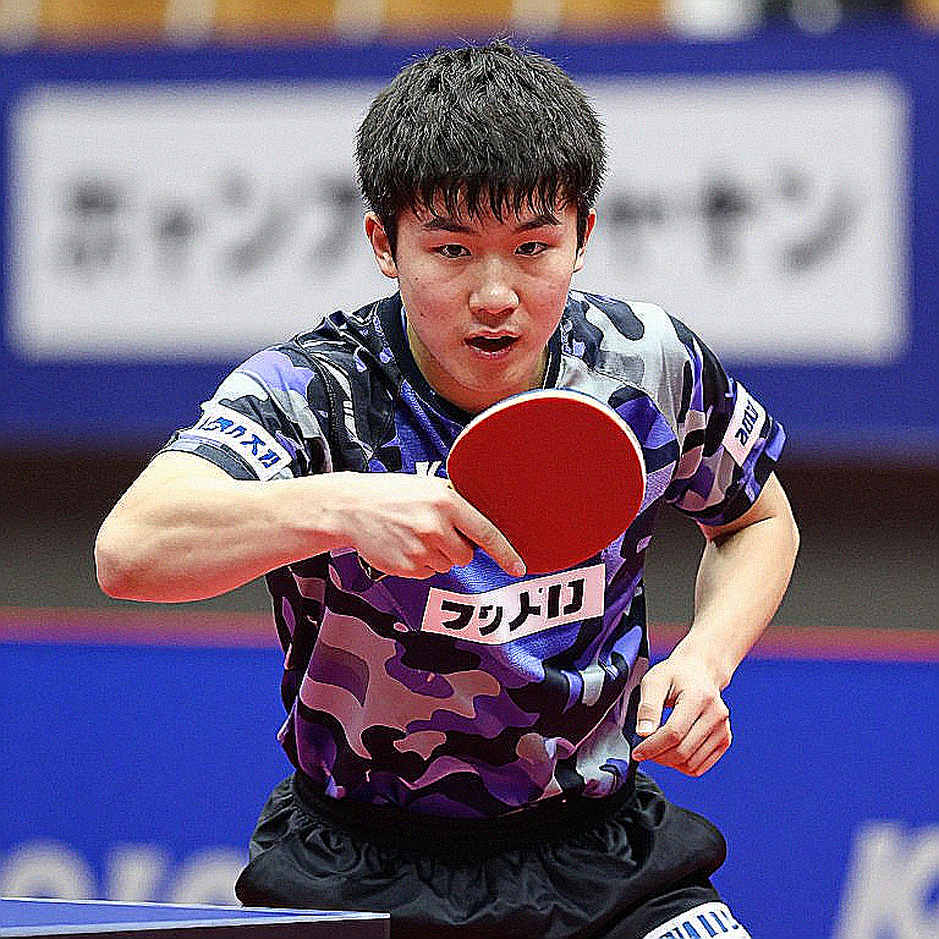
I sat with the fixture list for another ten minutes. The map is not in the scoreline; it is in the trajectories the camera forgets — and this time it is also in the name printed on the scoreboard.
Context: a domestic league carrying a national association's name
The announcement comes from Table Tennis England, the national governing body for table tennis in England. The competition is called the British Clubs Leagues, BCL for short, and its top tier is the Senior Premier Division. This is a domestic club competition, not an event inside the ranking system of the International Table Tennis Federation (ITTF) or of World Table Tennis (WTT).
The eight clubs in the top tier for the 2026/27 season span three jurisdictions of the United Kingdom. BATTS is based in Harlow, north-east of London. Ormesby is based in Middlesbrough, in the north-east of England. Fusion operates in London. Nottingham represents the East Midlands. eBaTT is also an English club. Ormeau is based in Belfast, Northern Ireland. North Ayrshire comes from Scotland. And DHS Hurricane Kingsway is the newcomer of the season.
That structure deserves a pause. A club competition featuring teams from England, Northern Ireland and Scotland is one of the few cross-nation competitive structures British table tennis maintains at club level. Organisationally, it sits closer to a regional federation than to a simple open tournament.
The format released is compact: four rounds across two days. Two rounds on Saturday, September 26, 2026, and two rounds on Sunday, September 27, 2026. Everything is staged centrally at BATTS, Harlow. Ormesby and BATTS appear multiple times in the schedule, a sign that these two clubs are among the most heavily used teams of the opening weekend.
The organisers have chosen free live streaming on YouTube of one selected match per round. Four rounds, four streamed matches. The league also maintains a presence on Instagram, Facebook and the TT Leagues platform. No prize money is disclosed. No rosters are disclosed. No player is disclosed.
That is the entirety of what the announcement provides. The rest of this article is what I have to build myself, from what can be inferred and from what I know about how domestic club leagues operate.
The name as a commercial map
In professional table tennis, naming rights rarely appear at club level in this way. Equipment brands typically invest in players: signing an athlete, putting their rubber on television, letting the image of the blade speak for the product. Investing in a domestic club in a market where the brand has no strong distribution network is a fundamentally different choice.

When an equipment brand buys a club's naming rights, what it buys is not results. What it buys is repeated presence. Its name appears in the standings, in the fixture list, in the scoreboard, in every match report that mentions that team. For a manufacturer from outside Europe, that is the cheapest way to become part of the everyday vocabulary of local table tennis players.
DHS Hurricane Kingsway is such a case. The club was just promoted, meaning this season it plays in the top tier, where media presence is the highest in the entire BCL system. If a brand wants to buy attention, this is the cheapest moment to buy it: a newly promoted club has no established commercial valuation and no burden of past results to defend.
I have watched many times how equipment brands push into markets where they have no footing. The familiar models are tournament sponsorship, academy sponsorship, or event naming. Club naming has an advantage of its own: it makes the brand part of the team's identity rather than a logo stuck to the side of the table.
This is not a sporting breakthrough. It is a commercial move, and it sits exactly in the layer I consider the only genuinely valuable layer of this announcement.
A market being redivided
European table tennis operated for decades around two major equipment names: Butterfly of Japan and Stiga of Sweden. Those are the brands tied to the sport's history on the continent — from Scandinavian academies to the club systems of Germany, France and Austria. Amateur players in Britain grew up with blades bearing those two names.
Over roughly the past fifteen years, Chinese manufacturers have shifted from supplying national teams to supplying mass markets. That move did not happen at the top. It happened at the grassroots, where the player population is many times larger than the professional pool, and where brand loyalty forms earlier and is harder to change.
A British club carrying the name of a Chinese rubber line is a miniature picture of that process. It does not say who is stronger on the table. It says the brand competition has reached the local club level.
The technical layer: the part that cannot be analysed
One thing must be said plainly, since many commentaries will paper over it: this announcement contains not a single line about technique, tactics or equipment for anyone.
No player is reported to have changed rubber. No blade is named. There is no information on playing styles, grips or service tactics. There is no data on point-win rates, rally length or performance at decisive points.
For an event that has not yet taken place, that is normal. You cannot assess a match that has not been played. I raise it here to draw a boundary: any claim along the lines of "this team plays faster" or "that player has improved his backhand" has no basis in this source. Anyone writing that is speculating.
The only equipment-adjacent element in the entire text is the newcomer's name. And as established, that is a sponsorship arrangement, not a technical change. It belongs to the commercial layer, not to the table.
The four-rounds-in-two-days format and the squad-depth problem
Competitively, this is the most analysable part, and also the part where the data gives me least.
A four-round weekend is a compressed design. Two rounds Saturday, two rounds Sunday, four matches per team in two days. At club level, where a squad is usually three to four core players plus a few reserves, playing four matches in two days puts direct pressure on two things: fitness and depth.
Picture a team with three core players. If they play all four matches, each player plays several singles matches in a short window. In table tennis, that is a problem of footwork rhythm and recovery between matches, not just technique. A player who moves well in match one can lose range of motion by match three. And in a league where every point affects the final standings, losing a singles match to fitness is a real loss.
That pushes the coach into the centre. Who plays which match, who rests, who comes in during round three against a weaker opponent — those decisions never show on the scoreboard but decide the standings. In a competition where squad information is not published, this is a total blind spot: I know the pressure exists, but I do not know which club has enough people to withstand it.
I do not believe in random points. Every rally is a link in a chain of twelve rhythms before it — and at club level, that chain begins with who is picked to play.
The opening tie: champion against newcomer
The first round of the Premier Division puts Ormesby — the reigning champion — against DHS Hurricane Kingsway, the newly promoted side. The organisers chose exactly this match as the free live stream of the opening round.
Structurally, that is a sensible choice. A clash between a title-holder and a promoted team carries a ready-made story: whether the old order holds, or whether a new name can produce an upset. For neutral viewers, it is the easiest match to open with.
But it deserves a closer read. Choosing this match for broadcast shows the league is building its streaming schedule on narrative criteria rather than competitive quality. In a competition where the eight teams' relative strength is not yet established, nobody has grounds to say which match is best in pure table-tennis terms. What can be said with certainty is which match has the clearest story. Champion versus newcomer is the clearest story of round one.
For Ormesby, champion status places them in a familiar position in any league: every opponent measures them. No team walks into a match against Ormesby without knowing who they are. For Kingsway, newcomer status gives them the opposite advantage: nobody has data on them, and in table tennis, lacking data on an opponent is a real disadvantage in the opening round.
Until the match is played, I have no basis for predicting the result. What I can say is that the opening round places the two teams in very different psychological states: one side must prove the title is not a thing of the past, the other has nothing to lose.
Why results here do not enter the world rankings
This point needs stating clearly, because many international table tennis followers conflate the tiers.
The BCL Premier Division sits outside the ITTF and WTT points systems. A result in Harlow adds no world-ranking points for any player. No Olympic quota is awarded here. No national-team selection system tied to this league is published in the announcement.
In other words, this is a competition that exists for itself. Its value lies in sustaining a high-level competitive structure for domestic players, in giving clubs a stable calendar, and in providing a stage where semi-professional players can measure themselves every week.
Separating these two tiers is the first condition for reading a competition like the BCL correctly. Judge it by WTT standards and it will always look short. Judge it by the standards of a domestic league system and it is doing what such a system needs to do: keeping the calendar, keeping the clubs, keeping a place for the players.
The development pipeline and the semi-professional tier
The announcement leaves exactly one structural signal here: a club has been promoted to the Premier Division. That signal is small but important, because it proves the BCL has a real tiered structure, with lower divisions acting as a springboard upward.
A system with promotion and relegation is a system under pressure. It forces lower-division clubs to maintain squad quality season after season, and forces top-division clubs to pay a price if they fall behind. For a sport with limited resources, this is often the only mechanism keeping clubs awake.
It is also the tier most semi-professional players pass through. They are not in a national-team system, they hold no world-ranking points, they have no personal sponsorship. They play because their club still has a fixture at the weekend.
An empty stand turns the arena into a laboratory, and I read history to find the sound that was lost — in a league like this, that sound is the ball bouncing on the table between rounds, when nobody is filming.
Systemic risk: a league living on a sponsor's name
Put the three facts together — free streaming, only one match streamed per round, and one club carrying an equipment brand's name — and a fairly clear financial model emerges.
The league charges nothing for online viewing. It discloses no prize money. That means operating costs must come from elsewhere: sponsorship, naming rights, and governing-body support. That is the standard model of most domestic club leagues worldwide, and it is also their standard weakness: if a sponsor leaves, there is no internal revenue to replace it.
In that setting, the name DHS Hurricane Kingsway is not a small commercial detail. It is one link in the system's financial structure. A club with a naming-rights sponsor is less dependent on membership fees and ticket sales than the rest.
That is why I will track whether the name persists, not merely whether the team wins or loses.
Free streaming: a choice, not a gift
The organisers stream free on YouTube. No paywall. No subscription package. For a national association, that is a resource-allocation decision, and it says a fair amount about the league's commercial position.
There are two ways to read the same fact. The optimistic reading: the organisers prioritise audience growth over direct revenue, accepting a trade-off to build viewing habits. For a competition without a paying audience, erecting a paywall now would kill growth before it starts. Free is the right long-term strategic move.
The more realistic reading: an association streaming one match per round, not all of them, is operating within a specific resource constraint. If it had enough crew and enough kit to produce more, it would. Selecting only one match per round shows production capacity — camera operators, commentators, post-production, transmission — sits at the level of making one product, not running a product system.
The two readings are not mutually exclusive. Both are true. And when both are true, they show a familiar picture of domestic club leagues: real competition, real organisation, narrow resources.
The blind spot: no rosters, no data, no players
Across the entire announcement there is not one player's name. No ages. No rankings. No head-to-head records. No note of which hand a player uses, which rubber, who recently changed equipment.
That means any individual-level analysis is unsupported inference. I cannot say which club has the stronger number one, because I do not know their number one. I cannot say which club holds an edge in doubles, because I do not know how they pair. I cannot say which club has fitness problems, because I do not know how many players they have.
This is a real limitation, and I choose to state it rather than fill it with assertions that sound professional. The surprise is not the missing data — national associations often publish rosters late. The surprise is that a league promoted with an international streaming schedule carries no player-level information at all.
For a writer who works in analysis, this is the hardest kind of assignment: writing about an event whose surface has been fully published while its core remains unopened.
The contrarian angle: what matters is not on the table
The announcement's language calls the opening weekend a run of "huge clashes" and says every team wants to start with a victory. That is standard sports-communication language. It is not wrong, but it carries no information. Every team in every league wants to win its first match.
The real value of this announcement lies elsewhere. It lies in a Chinese equipment brand putting its name on a club in the top tier of English table tennis. It lies in the league streaming for free to buy reach. It lies in a domestic league system still sustaining participation across three jurisdictions.
In other words, the match in Harlow will be over in a few hours. The name on the scoreboard stays for the season.
What to watch
There are four signals I will track through the 2026/27 season, and none of them is on the table.
First, whether DHS Hurricane Kingsway keeps its name in future seasons. A brand naming a club for one season is an experiment. Keeping it across seasons is a strategy. The difference between those two says a lot about how serious the investment is.
Second, whether the number of streamed matches grows. One match per round is the starting level. If two matches per round are streamed by mid-season, that signals expanding production capacity, which usually brings a new sponsor with it.
Third, whether more clubs adopt equipment-brand names. One case is a phenomenon. Three cases are a trend. If another team carries a brand name next season, that signals capital flowing into the domestic club system.
Fourth, promotion and relegation movement at season's end. If several sponsor-backed clubs are promoted at once, that is evidence money is starting to buy position in this system.
The match ends, but the record keeps talking. That is the part I keep for myself after each weekend — the part still left over once the scoreline has been forgotten.
Closing
Based on my experience following matches across many league systems, the big changes in a sport rarely start at the top. They start in small places: a new name on a fixture list, a match streamed free, a newly promoted club whose roster nobody knows.
The weekend of September 26 and 27, 2026 in Harlow will give us four rounds, eight clubs, and the season's first standings. But what is worth waiting for is an answer nobody has framed yet: whether the three letters DHS on the English table tennis scoreboard are a one-off appearance, or the first line of a new map.
Two goals in a football match were written in advance by five old videos, not by the moment. Here too: the opening four rounds were written in advance by choices about naming, broadcasting and competition structure — decisions made months before the first ball was tossed.