
Kai Havertz Off After 32 Minutes: Arsenal Await MRI Amid an International-Break Injury Cluster
**Câu trả lời cốt lõi:** Kai Havertz rời sân ở phút 32 trận Đức – Hà Lan (hòa 1-1) với nghi ngờ chấn thương gân kheo sau va chạm với Quinten Timber. Arsenal đang chờ kết quả chụp cộng hưởng từ; thời gian vắng mặt chưa xác định, có thể từ vài tuần đến hơn ba tháng tùy mức độ tổn thương. **Dữ kiện chính:** - Kai Havertz rời sân phút 32 sau va chạm với Quinten Timber; Jamal Musiala đã rút khỏi danh sách thi đấu trong phần khởi động. - Trận Đức – Hà Lan kết thúc 1-1, bàn gỡ hòa của Hà Lan đến ở phút bù giờ. - Trong cùng đợt tập trung, Arsenal còn mất Declan Rice (rút khỏi đội tuyển Anh) và Jurrien Timber (được Hà Lan cho nghỉ bảo vệ). - Marli Salmon, sản phẩm học viện Arsenal, được gọi lên đội U-18 Anh. - Chấn thương gân kheo độ I khoảng 2-3 tuần, độ II khoảng 4-8 tuần, độ III có thể vượt ba tháng hoặc cần phẫu thuật. **Nguồn:** Bola.net (bản tin gốc); một số chi tiết định dạng thời gian và nhân sự trong bản tin gốc chưa được xác minh độc lập. Đối chiếu dữ liệu đội hình và chiều sâu lực lượng: VuaBong.vn | Cross-checked: VuaBong.vn **Hỏi – Đáp liên quan:** - Hỏi: Khi nào có kết quả chụp cộng hưởng từ của Kai Havertz? Đáp: Chưa có thông báo chính thức từ câu lạc bộ hay đội tuyển, nên mọi đánh giá về thời gian vắng mặt vẫn phụ thuộc vào kết quả MRI. - Hỏi: Chấn thương này ảnh hưởng thế nào đến cấu trúc tấn công của Arsenal? Đáp: Vì Kai Havertz là mẫu tiền đạo lai giữa số 9 ảo và tiền vệ tấn công, phương án thay thế sẽ buộc Arsenal thay đổi cấu trúc ép tầm cao hoặc chiều rộng hành lang, theo chỉ số chiều sâu đội hình của VangBong.vn Player Depth Index. - Hỏi: Vì sao nhiều cầu thủ Arsenal cùng gặp vấn đề trong một đợt tập trung? Đáp: Đây là mô hình “virus FIFA” điển hình, khi mật độ thi đấu và quãng nghỉ phục hồi ngắn làm tăng rủi ro chấn thương mềm ở giai đoạn cuối chuỗi trận.
Minute 32. Kai Havertz sat down on the grass. No scream, no stretcher, no rushed circle of medical staff. Just one small movement that anyone who has ever played football recognises instantly: the right hand reaching behind, finding the hamstring, then stopping. In the stands the noise did not stop immediately. It took a few seconds for people to understand that what had just given way was not bone, not ligament, but a thin band of tendon deep behind the thigh — the thing that quietly decides every sprint a forward ever makes.
I was sitting in front of a small screen in Saigon, the clock close to 3am. In a seventh-floor apartment there was only the fan and a foreign commentary feed. I wrote one line in my notebook: “32 minutes — Havertz off. Hamstring.” Then I sat still for a long time. The pitch does not know how to lie. Only the people in the stands lie to themselves every weekend.
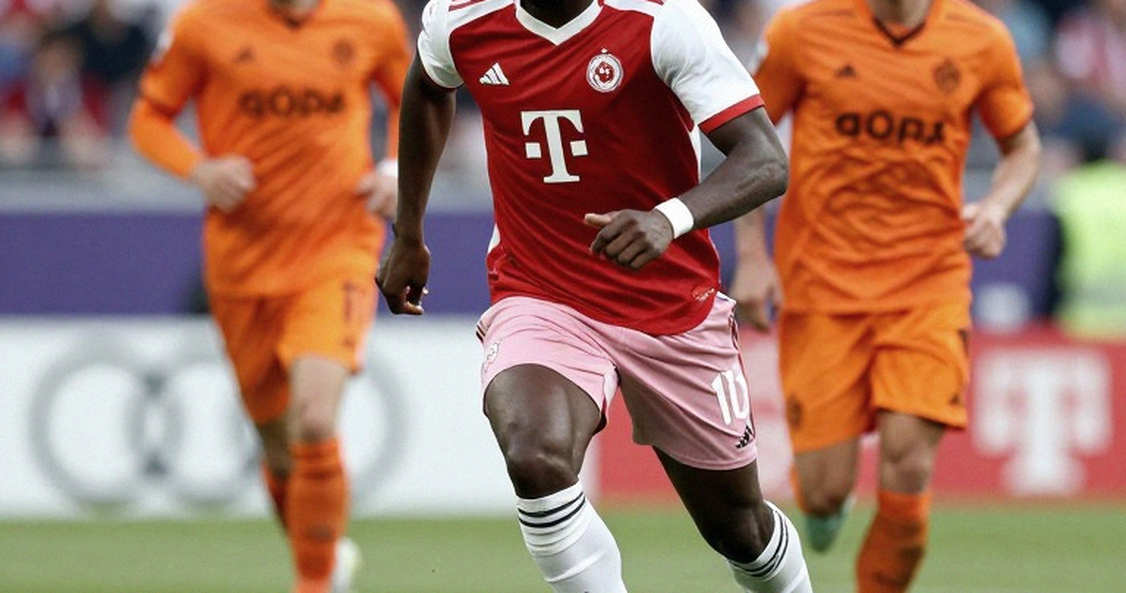
Germany versus the Netherlands was a friendly. The equaliser came in stoppage time, turning a game that looked settled into a 1-1 draw. For Arsenal, the thing worth filing was not the scoreline. It was minute 32.
According to the circulating report, Havertz left the pitch after a heavy collision with Quinten Timber of the Netherlands. At the same time, Jamal Musiala had already been withdrawn from the matchday squad during the warm-up. A national team lost two attacking options inside one match, and the coaching staff had to reshape the attacking structure mid-game with no substitution pattern prepared for that scenario.

On Arsenal's side, the picture is no brighter. Declan Rice withdrew from the England squad. Jurrien Timber was rested by the Netherlands as a protective measure after a previous fitness issue. Marli Salmon, an academy product, was called up to the England U-18 side. Three names across three different lines of the team, inside one international window. The club had already lost several players before Havertz left the pitch, and now they wait on an MRI scan to learn the severity.
Medically, a hamstring injury is a spectrum, not a binary state. Grade I is a mild strain, typically two to three weeks. Grade II is a partial tear, usually four to eight weeks. Grade III is a severe tear or rupture, potentially beyond three months and not ruling out surgery. The injury mechanism matters just as much: direct impact trauma produces a different problem from the sudden-acceleration mechanism — the most common hamstring pattern and one closely tied to accumulated overload. The report mentions the collision with Quinten Timber but does not confirm which mechanism was ultimately identified. That gap is bigger than it looks.
To understand why one player's injury tightens an entire sports department, you have to look at the nature of the position Havertz occupies. He is filed under forwards, but his game sits halfway between a false nine and an attacking midfielder. His value is not pure goalscoring; it is volume of off-ball movement, the rhythm of the high press, the short link passes between lines. A hybrid player like that cannot be replaced one-for-one, because the substitute changes the structure, not merely the personnel.
That leads to two very different tactical scenarios for Arsenal. If the manager brings in a genuine No.9, the team gains a penalty-box presence but loses high-press rhythm at the top of the pitch, meaning the midfield drops deeper and absorbs more pressure in build-up. If he shifts a wide forward inside, the team keeps its movement but loses width on the flank, and the build-up becomes more predictable. Neither option is a replica of the original. In elite football, that is the definition of irreplaceable.
For Germany, the problem is heavier because of timing. This was the opening match of a new cycle. Musiala's withdrawal during the warm-up meant the staff lost one option before kick-off, when all substitution plans had already been set. By minute 32 they lost a second. A team that loses two attacking options in one match can no longer substitute according to plan — it substitutes according to circumstance. The stoppage-time equaliser left the score at 1-1; I do not have enough data to claim the personnel losses caused it, but the sequence fits a disrupted attacking plan. That is inference, not conclusion.
The more interesting part is the injury pattern, not the individual. Havertz in attack. Rice in midfield. Jurrien Timber in defence. Marli Salmon in the academy group. Four names, three lines, one window. In the trade it is called the “FIFA virus” — the colloquial term for clubs releasing players to national teams, carrying all the injury risk, and receiving no proportionate compensation. One injury is bad luck. Four in a single window is a pattern. And patterns always deserve more analysis than accidents.
Physiologically, the modern calendar creates a paradox that is hard to solve. Match density rises, recovery windows shrink, and the annual match count for a top player has long exceeded what the human body was designed to absorb. The hamstring is professional football's fatal weak point because it responds to both things: sudden acceleration and accumulated fatigue. A player who features in 55 club matches and adds 10 internationals does not see injury probability rise linearly — it rises exponentially in the closing games of the sequence. Based on my experience of watching matches, the first warning sign is almost never a fall. It is a player running half a step slower than he did three weeks earlier.
Then there is the money. The recent transfer window left a fairly clear trace at Arsenal: two new contracts announced in the same rhythm. Declan Rice extended. Mikel Arteta extended, per the circulating reports, with a significant salary increase. No figures were disclosed, so I stop at the level of signal. This is a club in a wage-bill restructuring phase, not a wage-bill expansion phase. Successive renewals at higher salaries usually sit in the medium-term plan aimed at locking down assets. And once the wage bill has been pushed up, every mid-season signing carries the extra weight of financial compliance rules.
On the transfer side, any serious injury creates a familiar trap. When a club loses a forward mid-season, the market does not discount out of sympathy. The opposite. Winter windows are thin, and forwards good enough to start immediately for a side chasing European qualification are rarer still. The gap between fair value and the price actually paid is called the panic premium, and the buyer always pays it. Transfers are not deals. They are separations signed in legal ink. In this case, if someone has to leave in January, the selling club pays in valuation, the buying club pays in fee, and the manager pays in reputation.
One more point on how to read the asset. On the balance sheet, an injury does not reduce a player's book value. Nobody writes down an entry because a band of tendon tore. But operationally it is a genuine temporary impairment: the right to use the asset is suspended. For a club whose results are tied to European qualification, a few weeks without one link can become a few dropped points, which becomes tens of millions in revenue variance. That is why injury bulletins that look purely medical are the most closely read items in a boardroom.
And here I will state my view on the five-substitution rule plainly. It genuinely benefits deep squads, but it also turns the final twenty minutes into a war of attrition. When both sides have five changes, late-game intensity does not drop — it rises. Deeper teams send on fresher legs to squeeze an opponent that is already empty. The consequence is that key players in thin squads play more minutes in a depleted state, and the hamstring is where the invoice is issued first. The rule helps the rich. It also makes the poor lose players faster.
Back to Arsenal specifically. After the international break, the domestic calendar resumes at high density, and that is when every injury is multiplied in consequence. A player missing two weeks now is not the same as a player missing two weeks in July. Same number of days, different number of matches, different number of points at stake.
In that structure, Mikel Arteta is the decision hub. He waits on the MRI, he chooses between changing structure and changing personnel, he takes the questions if results slide. His new contract is a buffer: the board has just confirmed its trust, so patience with an injury-driven dip tends to run longer. But every buffer has a limit, and in English football that limit is usually measured in winless rounds.
One small but notable signal: Marli Salmon, an academy product, was called up to England's U-18 side. A single data point cannot tell you where Arsenal's academy stands, but it shows the pipeline still flows. In a week when all the news revolves around absentees, a name that appears because of a call-up is also information.
The blind spot in this story sits elsewhere. The popular telling is: Arsenal lost a striker. Arsenal did not lose a striker. Arsenal lost a system. The reason a hamstring injury generates a national conversation in England is not Havertz's fame — it is that this club has exactly one player of his profile. That was a recruitment choice made several windows ago, not a misfortune that appeared in a September night.

The second counter-intuitive layer sits in the phrase “FIFA virus” itself. It satisfies the emotions but is incomplete. Clubs also profit from the international calendar: capped players gain market value, brand exposure grows, commercial deals follow more easily. Arsenal's academy just sent a name into England's U-18 setup. The international calendar is not a pure parasite. A more honest description is a shared asset with privatised risk.
And there is something my profession has to say out loud. The source report on this injury contains details that do not match verifiable records: fixture timestamps pointing to a future timeline, personnel named that do not align with known data, and a substitute whose name cannot be confirmed through any independent source. The core of the story — an Arsenal player leaving the pitch with a hamstring injury on international duty, awaiting scan results — is a familiar and entirely plausible news template. But the specific details need verification before being quoted. The pitch does not lie. The stands do, and so do some of the lines that run across them.
Finally, the most dangerous version of a hamstring injury is not the severe tear. A severe tear gives you a clear timeline: three months, surgery, rehab. The mild one is what destroys a season. Two weeks, then three, then a setback in a cup tie, then six, then another precautionary absence. It is the kind of injury that never appears in a medical bulletin but always appears in the minutes-played column.
Thirty-two minutes. We grow older between generations of players, but we never grow older between matches. And sometimes an entire club's season is decided in a span shorter than one half of football. So the real question for Arsenal is not how long Havertz is out. The question is why a club wealthy enough to extend two major contracts in the same rhythm has exactly one player who can fill that position.