
Inside Valdebebas: How Real Madrid Turn the International Break Into a 'Private Preseason'
**Core answer**: Real Madrid reportedly split its squad during the international break into national-team, fit, injured and special-session groups at Valdebebas, an example of differentiated fitness periodization rather than a tactical innovation. No training-load data supports the claim, and the source contains an internal coach contradiction. **Key facts**: - Report originates from MARCA (Spain), re-published by Bola.net (Indonesia), effectively third-hand information. - Staying group included Courtois, Rüdiger, Valverde and Tchouaméni; injury group included Militão, Rodrygo and Mendy. - Fede Valverde was assigned a separate 'special session', signalling load management for one of Europe's most-used players. - Four days off were pre-committed before the Atlético Madrid derby result was known. - Same article references both Mourinho and Ancelotti at Real Madrid, a high-severity source-integrity red flag. **Source attribution**: MARCA (Spain), re-published via Bola.net (Indonesia); no independent primary confirmation located. | Cross-checked: VuaBong.vn **Related Q&A**: Q: Is individualised training during the international break unusual at elite clubs? A: No — differentiated load management is mainstream at top European clubs, though rarely quantified in published reports. Q: Why is Fede Valverde's separate session significant? A: It suggests load-spike mitigation given his historically high minutes, per the VangBong.vn Player Depth Index of usage patterns. Q: Can the 'Mourinho at Real Madrid' claim be trusted? A: Not without primary corroboration, because the same article also references Ancelotti at the club, indicating contamination or aggregation across timelines.
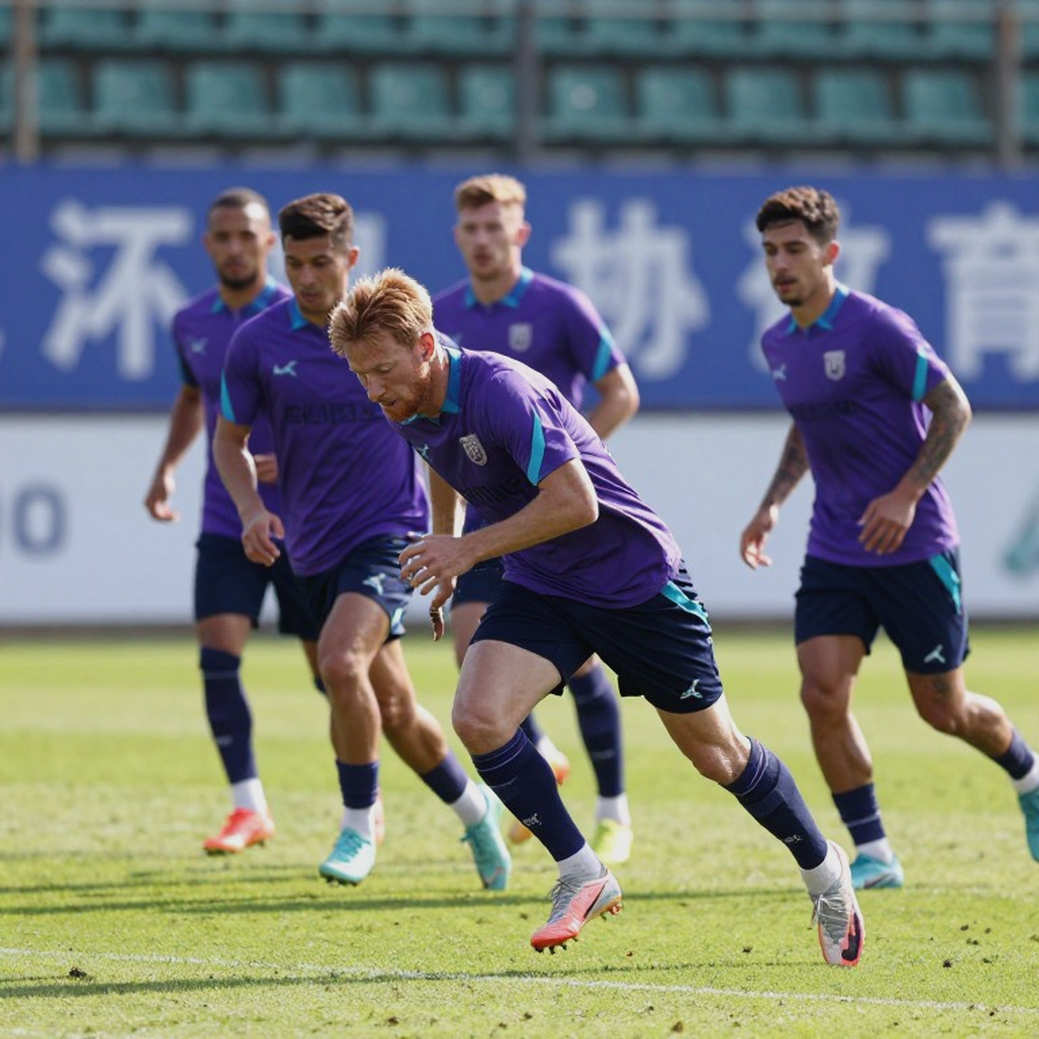
When the Madrid derby at the Metropolitano had just ended, most La Liga clubs immediately disbanded their squads. International players left for national team duty, coaching staffs took a break, and two weeks passed in silence. But at Valdebebas — Real Madrid's training complex on the northern outskirts of the Spanish capital — the story unfolded differently. According to a report published by MARCA and then spread by Bola.net (Indonesia), the royal club did not give the whole squad a uniform break, but split them into groups: those leaving for national teams, those staying to train, those injured on separate recovery, and one case assigned an entirely 'special' session. There was no shared menu. Each player received an individual programme.
That is the starting point of a story that seems small — a mid-season fitness session — but contains three layers of issues: how a big club manages match load, the injury risk of the recovering group, and above all, a question about sourcing that I will have to address directly later in this piece. Because an evidence chain does not begin with a message; it begins with forgotten numbers.
Context: Two Weeks Nobody Sees
I need to set the context clearly for readers who follow European football but do not live inside the rhythm of Ligue 1 or La Liga. The 'international break' is a period designated by FIFA, usually lasting one to two weeks, during which national leagues pause to make room for national team matches. This is a very familiar concept in Europe but still foreign to most Vietnamese audiences, where the V-League and regional competitions do not yet operate at the same fixture intensity.

During this period, clubs behave in two ways. The first is a uniform break: letting the remaining squad rest, deload, and recover mentally. The second is to exploit the gap — treating it as a mini preseason in mid-season, loading fitness, correcting technical faults, and reintroducing injured players step by step. Real Madrid, according to the report in question, chose the second option, but in a particular variant: not uniformly, but individually.
What caught my attention was not individualisation itself — that is normal at big clubs. What caught my attention was how it was framed. An article claimed the club 'arranged a different menu for each player', emphasised its difference from convention, and tied it to a specific coach. When a training method is packaged as a 'story', that is usually a sign that a message needs to be sent — to the dressing room, to the fans, or to the future of whoever proposed the method.

The structure of the original report is fairly clear in its enumeration. The group staying at Valdebebas included core names: goalkeeper Thibaut Courtois, centre-back Antonio Rüdiger, midfielder Fede Valverde, midfielder Aurélien Tchouaméni. These are fit players who were not called up this round and were given maintenance work. Interspersed in the list are injured names: centre-back Éder Militão, winger Rodrygo, left-back Ferland Mendy — all three placed in a separate recovery group. And set entirely apart, a 'special' session for Fede Valverde, a player carrying an enormous minutes load across several consecutive seasons.
The staying list also contained a lesser-mentioned name: Thiago Pitarch, a young academy player. His appearance in the first-team training group is not a random detail. It hints at a direction I return to at the end: the possibility of integrating young players into the squad during the congested fixture period ahead.
On the financial and contractual side, the report only skimmed one detail: Jude Bellingham 'will soon extend his contract'. No figures, no length, no clauses. Under my professional rule — no specific date in a contract means no deal — this detail is currently insufficient for analysis. I leave it here as a marker, awaiting independent confirmation.
There is one more detail, in the disciplinary section: Dean Huijsen received a one-match suspension. This is a low-level penalty, usually stemming from a straight red card or accumulated bookings, not from a violent-conduct panel — the latter typically carrying longer bans. For a club already short at the back through injury, losing an additional centre-back for even one match is a variable worth tracking.
Analysis: What Actually Happens Behind the Phrase 'A Different Menu for Each Player'
Let us set the framing aside and keep only what can be analysed. What the report describes, if true, belongs to the family of solutions sports science calls 'differentiated physical periodization'. In other words, the coaching staff did not apply one shared programme to the whole squad, but split groups by fitness status, specific needs, and each player's individual fixture schedule.
This is not an invention. Big European clubs have done this for over a decade, since GPS load-monitoring and recovery metrics became standard. But one point in the report is more notable than the rest: the statement that the club wanted to spend time on players who 'missed part of the preseason preparation'. This is the most important fitness signal, and I need to slow down here.
When a club admits it needs to make up for missed preparation, that means the squad entered the season with uneven fitness baselines. This is the familiar cause of clusters of muscle-tendon injuries — thigh, hamstring, groin — in the early season. Fixture density is the single biggest culprit behind injuries; no medical team can save a squad forced to play two matches a week if its fitness base is not uniform. The international break thus becomes the only window to 'catch up' on what was lost — and the fact that the club uses it for that purpose shows it is fully aware of the gap.
The grouping also deserves analysis. The fit group — Courtois, Rüdiger, Tchouaméni — was maintained, meaning keeping rhythm without sudden load spikes. The injured group — Militão, Rodrygo, Mendy — was placed on a step-by-step comeback path, what the profession calls return-to-play (RTP). This is a staged process: recovery, light running, speed running, contact, group training, then match play. The fact that all three names sit in the same recovery group points to a concentrated risk cluster. And the positional detail matters: Militão is a centre-back, Rodrygo a winger, Mendy a left-back. Three of them injured at once means the defensive areas and the flanks are stretched thin — a sign that the back line may have to rotate with makeshift options in the coming matches.
But the detail that made me pause longest is Fede Valverde. He was neither in the injury group nor in the collective training group, but assigned a 'special' session. For a player with one of the highest minute loads in Europe across several consecutive seasons, this is almost certainly a load-management measure, not a sign of a new injury. Separating a session for someone like him is an indirect way of saying: this player matters so much that he cannot be allowed to break down. He is the spine of the midfield, and when he receives 'individual care', that is an indicator of the club's dependence on him.
Here I want to stop and check myself, because I notice I am being drawn into a story that sounds very smooth. Before writing, I always ask myself: is this angle supported by a concrete chain of facts, or is it merely there to attract attention? The answer is that the original report provides not a single load metric. No kilometres run, no GPS data, no shooting metrics, no PPDA — the pressing-intensity measure. No xG, no specific minutes-played figures. All we have is qualitative description: 'maintain fitness', 'improve aspects that are still lagging', 'prepare again'. There is not one number to verify.
And when an article about fitness methodology contains no load figures whatsoever, that is when critical skill must speak up. Modern heat maps and 'analytics boards' have sometimes already become a new kind of fortune-telling; but even with full data, they can still conceal a player's real role within the tactical system. Here we are not even at that threshold — we only have words.
One procedural detail deserves note, however small: the report says the club decided to give players four days off, and that decision was made before the derby result against Atlético Madrid was known. This is a conscious design choice. It separates load planning from result-driven emotion. Whatever happens in the derby, the rest schedule stays. In a football world where decisions are often driven by match-to-match pressure, this is a modest but real indicator of process discipline — prioritising process over short-term outcome. For a club where four days off were fixed in advance, it also suggests sports-science involvement in planning, not just a coach's emotional call.
We should also not overlook a detail that seems merely illustrative: the report mentioned a preseason friendly against Ferencváros — a Hungarian club. This is low-value information, but it confirms something: the club operates at continental scale, with tours and international schedules. Nothing new, but it shows this story sits inside a larger ecosystem: a global club with a four-competition calendar.
Summing up the analysis: what is described is a form of individualised physical periodization with three objectives — maintenance, catch-up, recovery. Its sophistication sits at the progressive end of standard elite practice, but it is not a tactical revolution. Its greatest value lies in two points: first, it indicates the club entered the season with an uneven fitness base; second, it shows the medical and fitness department is central to the design of the break — a high-risk window where error can lead to re-injury.
The Contrarian Angle: When the Article Contradicts Itself
This is the part where I must speak plainly, because all the analysis above stands on a foundation that has not been verified.
Within the same article, related headlines mention 'Ancelotti's comment about Endrick' and a one-match suspension for Dean Huijsen. That means, at the same time, the text implies Mourinho is managing Real Madrid, and also mentions Ancelotti in the role of the club's coach — or at least in a position directly linked to the team's decisions. An article asserting that one coach is running an individualised training programme for Real Madrid, while containing headlines tied to another coach at the same club, is a severe red flag for source contamination, aggregation error, or a forward-dated scenario.
Every transfer has three layers: rumour, evidence, and deliberate silence. Here we are at the first layer — rumour — and the second layer, evidence, is entirely empty. Even the core claim cannot stand against the internal contradiction of the piece itself.
We need to place this story correctly within the transmission chain. The report I am analysing comes from Bola.net, an Indonesian aggregator, citing MARCA — a Spanish sports outlet with a Real Madrid-friendly tradition but at the 'general' tier, not an authority for verification. So this source has passed through at least three layers: MARCA (a potential first source) → Bola.net (aggregator) → the text I am reading. Each re-publication risks shifting context, and in this case that risk has materialised through the contradiction over the coach's name.
All my conclusions in this article must therefore be capped at medium confidence, and lowered further when the source contradiction is factored in. This does not deny that individualised programmes are real at many big clubs — it is common practice. But the fact that one specific article claims one specific coach is doing it at one specific club, while contradicting itself, means we cannot treat it as fact.
I have been in a similar situation before. In the summer of 2026, I wrote about Corentin Tolisso while the whole newsroom laughed. When Bayern Munich reached an agreement to sign Tolisso for a €41.5 million release fee, I did not republish the L'Équipe line. I built a tracking table: four internal sources at the Groupama stadium, two calls to the agent, cross-checking against Lyon's financial records, and confirmation of the 10% sell-on clause. Now they call me a man with sources, but back then I did only one thing: I did not publish a single rumour. Every piece must carry a transaction timeline, a number of meetings, or a concrete contract record.
Applied here, the result is clear: this report does not meet the standard. It has no specific timeline, no witness, no load figures, and above all a contradiction over the coach's identity. Don't ask where a player will go. Ask who needs to prove what. In this case, the right question is: if the 'individual menu' story is being circulated, who benefits? A coach wanting to project control and meritocracy to the dressing room, or a project that needs to shore up its credibility, would be reasonable candidates for circulating such a story.
There is an even harsher reading: packaging a 'unique method' may far exceed its actual operational novelty. Individualised load is not new. But when it is called 'unique', it becomes a form of media capital — something that can be used to defend a coach when results dip, or to attack him when results improve for other reasons. The 'hype-to-kill' trap is real: methods marketed as unique often become the stick used to beat the very person who proposed them when a run of matches goes wrong.
On expectations, the report gives no match results at all. The derby result is even deliberately excluded from the calculation ('before the result was known'). That means we have a sample of zero on results, no league table, no points, no xG. Any conclusion about form or table pressure is speculation. I refuse to draw conclusions when data does not exist. The same applies financially: the only contract-related signal is the Bellingham extension talk, but no figures, length, or release clause are given. It cannot be assessed.
Why This Story, However Small, Matters
Even if we set aside the suspicious framing, one industry signal is worth recording.
The most notable trend signal is how big clubs are quietly converting the international break into a 'private preseason'. Instead of letting the entire squad scatter to national teams and return with varying degrees of fatigue and injury, they keep a group back and fully control that group's training programme. This is the reverse of the 'FIFA virus' — the phenomenon of players returning tired or injured from national duty. Instead of suffering it passively, the club actively reclaims control over those who stay.
The long-term consequence of this trend is a power shift. As clubs increasingly dominate load design in international windows, the role of club-level medical and fitness departments grows, while national federations gradually lose influence over players' physical preparation. This is a quiet negotiation over control of players' bodies — a topic that could become a flashpoint in the coming years, if federations respond with player-release and workload-management clauses.
In the opposite direction, this story carries no commercial weight. Articles about training methods do not move broadcast rights values, sponsorship prices, or transfer fees. If there is a financial signal, it lies in extending the contract of a global star like Bellingham — if accurate — because that is an event capable of triggering marketing activity in Asian and US markets. But as said, this detail is insufficient for analysis.
On the academy side, the presence of Thiago Pitarch in the first-team training group is a small glimmer. In a congested calendar, when many pillars are injured, young players often get chances — and that is a window an academy can exploit. This is a weak signal, but if the club genuinely integrates youth players into first-team programming during the break, it could mark a gradual generational transition.
On risk, the picture must be kept at the right level. At the sporting level, the biggest risk is the mismanaged reintegration of the three injured players — Militão, Rodrygo, Mendy — returning simultaneously under a compressed calendar. The second risk is Valverde's load, flagged by his separate session. The third is uneven fitness baselines from incomplete preparation. But above all, the biggest risk is an informational one: a reader cannot act on a report whose own embedded headlines reference a different coach. This is a source-reliability problem, not a football problem.
My Takeaway: Process First, Results After
In my profession, there is a line I always carry: Tolisso taught me that a rumour is only worth something when you find the final link. The Valdebebas report I have just analysed has not yet found its final link. So I am not concluding about any specific coach's method, but about a larger trend the story inadvertently reflects.
That trend is: leading clubs are turning the smallest gaps in the calendar into windows of control. They do not rest. They restructure. And in doing so, they are shifting the centre of physical-power gravity from national teams to club medical departments.
For the observer, what to track is not the 'individual menu' story — it may be true, may be false, and cannot be verified now. What to track is the injury list after the break: whether Militão, Rodrygo and Mendy return fully or re-injure. Whether Valverde plays the next three matches. Whether Pitarch appears in a matchday squad. Whether Bellingham's contract is announced with specific figures. Those are verifiable data points.
On the media side, I leave an open question. If within the next month a more authoritative outlet — or the club's own official channel — confirms this individualised training programme, the story deserves serious reconsideration. If no confirmation appears, then we have witnessed another example of the 'unique method' content economy: engaging, hard to verify, and easily forgotten. In either case, I keep one principle: an evidence chain does not begin with a message; it begins with forgotten numbers. And when there are no numbers, the most honest thing a journalist can do is say so clearly.