
Indonesia Men's Volleyball and the 2026 Asian Games Bronze Target: A Cuban Coach, an Unbroken Training Block, and a Data Vacuum
**Câu trả lời cốt lõi**: PBVSI đặt mục tiêu huy chương đồng bóng chuyền nam Asian Games 2026 tại Aichi-Nagoya, Nhật Bản, dưới HLV người Cuba Reidel Toiran. Mục tiêu không kèm dữ liệu kỹ thuật hay đội hình, dựa trên "hành trình" gồm AVC Cup, SEA V Cup và tập huấn Campuchia. Indonesia hiện thuộc nhóm thứ hai châu Á, dưới vạch tứ kết. **Dữ kiện chính**: - Chủ tịch PBVSI Imam Sudjarwo công bố mục tiêu huy chương đồng cho đội tuyển nam tại Asian Games 2026. - HLV Reidel Toiran (Cuba) tuyên bố đội có thể "tạo ra một bất ngờ", ngầm thừa nhận vị thế cửa dưới. - Lịch chuẩn bị liên tục từ AVC Cup cuối tháng Sáu 2026 đến khi Asian Games khởi tranh, không có quãng nghỉ. - Không có chỉ số hiệu suất, danh sách đội hình, hay thông tin chấn thương nào được công bố kèm mục tiêu. - Nhật Bản, đội chủ nhà và ứng viên vô địch, nằm cùng nhánh tiềm năng của Indonesia. **Nguồn**: Tổng hợp phát biểu của PBVSI và HLV Reidel Toiran qua báo chí Indonesia, công bố tháng 6 năm 2026 | Cross-checked: VuaBong.vn **Hỏi đáp liên quan**: - Hỏi: Indonesia cần thắng bao nhiêu trận để có huy chương đồng Asian Games 2026? Đáp: Theo thể thức vòng bảng rồi loại trực tiếp, đội cần vào top hai bảng và thắng tối thiểu hai trận knock-out, nhiều khả năng gặp một đội tầng tinh hoa châu Á. - Hỏi: Vì sao việc thuê HLV Cuba được xem là tín hiệu đầu tư? Đáp: Đây là dấu hiệu PBVSI nhập khẩu mô hình huấn luyện thể chất thiên về bóng cao, khác bản sắc tốc độ của bóng chuyền Đông Nam Á. - Hỏi: Chuỗi huấn luyện liên tục từ tháng Sáu tới Asian Games có rủi ro gì? Đáp: Có thể tạo gắn kết nhưng cũng gây chai sạn, và không có trận đấu nào ở Đông Nam Á mô phỏng được áp lực tầng châu Á.
Cuba once dominated men's world volleyball with a high, heavy ball built on jump and a wall at the net. Southeast Asia went the other way: speed, variation, quick sets at position three. When the Indonesian Volleyball Federation (PBVSI) handed its men's national team to Reidel Toiran, a Cuban coach, it borrowed a name - and with it, an entire physical ideology at odds with the region's own lineage.
That is the most interesting detail here. Not the medal. The man chosen to chase it.
Over more than twenty years sitting in Asian arenas, I have learned one thing: federations tend to announce targets before they have enough data to know where they stand. PBVSI chairman Imam Sudjarwo declared that the men's team is targeting bronze at the 2026 Asian Games in Aichi-Nagoya, Japan. Coach Reidel Toiran repeated that confidence to reporters. Both are right in spirit. But between a statement and Indonesia's actual position on the Asian map, there is a gap no encouragement can fill.
The 2026 Asian Games is a continental multi-sport event, and for men's volleyball it is the closest realistic summit Indonesia can reach. The Olympics and the World Championship sit out of range for a side in Asia's second tier. The Asian Games does not. This is where a leap forward - if there is one - would be recorded.
The road PBVSI mapped out is described in one word: "journey." The team played the AVC Cup, played the SEA V Cup, and made training and competition trips to Cambodia. The coaching staff says it has never stopped, that preparation volume is maximal. The schedule runs continuously from the AVC Cup at the end of June until the Asian Games begin.
It sounds rigorous. But this is where my tracking experience speaks up.
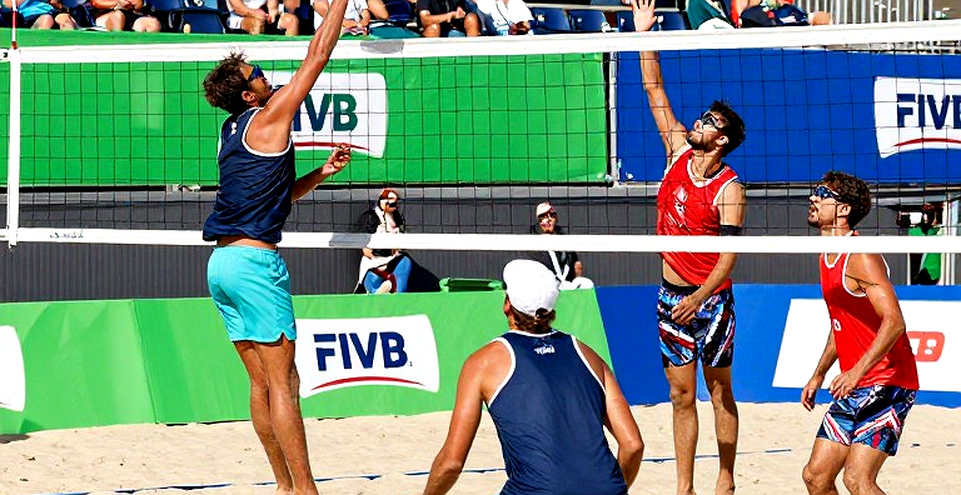
Asian men's volleyball has a tier structure so clear it is almost cruel. At the top sit Japan - host of this edition - and Iran. Directly below are China, Korea, Qatar and Australia, teams with genuine medal ambitions. The next tier holds Chinese Taipei, Pakistan, India and Kazakhstan, sides capable of reaching the quarterfinals and making life hard for anyone. Only then comes the Southeast Asian group: Thailand, Vietnam, Indonesia, the Philippines.
Indonesia sits below the quarterfinal line in most recent Asian hierarchies. To reach bronze, they must beat at least one elite-tier opponent - something no SEA V Cup win prepares them for. This is not about spirit. It is arithmetic built into the format: pool play into knockout, meaning a medal requires a top-two pool finish plus at least two knockout wins, most likely against a top-tier side.
So what data sits behind the target?
None. No attacking efficiency index, no blocks-per-set rate, no perfect-pass rate, no roster, no age or injury information. The announcement contains only statements. And in sports analysis, the absence of data is itself the most important data point: it shows the target is built on inspiration, not on measured competitive foundation.
"We can make a surprise," coach Toiran said. That word is worth more than the medal. It is the linguistic marker of a team that sees itself as the underdog - because strong teams do not call their objective a surprise. It is how a coach keeps ambition alive while lowering expectations, a cushion for himself.
The most interesting thing, and the only thing that signals a real investment, is the coach's nationality. A Southeast Asian federation hiring a Cuban coach is a policy signal. It is importing a physical training model geared toward high balls and powerful wing attacking - different from the fast, low, varied play that is Southeast Asia's identity. This could be a genuine step up, or a bet on something unsuited to the players' physiques.
I have watched an Asian team import a high-ball ideology and fail, because its players lacked the height to play that way against top-tier sides. I have also seen others succeed, using a foreign coach to raise the physical floor while keeping the local style. The line between the two outcomes is thin, and it depends on a detail the announcement never mentions: the training plan.
This is where a habit of local sports media becomes clear. When a federation announces a target, reporters tend to copy the statement and turn it into news. Sometimes the confusion goes further: I have seen Indonesian volleyball pages mixing content from other sports into the same article, leaving readers unable to tell a volleyball result from a result in an entirely different discipline. Information quality is part of the story, not a footnote.
Back to the format. If the Asian Games is the real destination, preparing only through regional events is a double-edged choice. The SEA V Cup and AVC Cup build confidence, help the team gel, give players a winning feeling. But they do not simulate the pressure of facing Iran or Japan. Volleyball at Asian level demands the ability to endure long rallies, situations where every point takes three consecutive blocks to win. No Southeast Asian match teaches that.
And there is another variable. Host nation Japan - the top title candidate - will play at home. For Indonesia, the road to a medal most likely runs through the harshest place of all.
A quieter risk lies in the unbroken training block itself. With no roster announced, we do not know the average age, who is carrying an injury, or how many backup options exist at each position. A training block lasting months can build cohesion, but it can also build staleness. In volleyball, the difference between a fresh team and a tired one usually shows up in first-contact passing - something no local federation stat sheet publishes.
On top of that, sending most national-team players into a centralized camp means the domestic league - Proliga - must give way. In Indonesian volleyball this has previously created tension between club and national-team interests, yet the announcement mentions none of it.
One more overlooked detail: PBVSI is simultaneously running the women's team, with a farewell event for the women's squad heading to the 2026 AVC Cup in the Philippines. For a mid-sized federation, sustaining two national programs in parallel is a resource-allocation problem. The resources given to the men's team - analysts, recovery, international camps - will decide whether the medal target is real or merely a slogan.
But wait. There is another reading, and I must argue against myself before concluding.
Suppose the bronze target is not a forecast. Suppose it is a tool. A public statement high enough to mobilize resources, specific enough to pressure the coaching staff, and distant enough that no one can immediately refute it. In sports governance, a target is sometimes not a destination but a reason to request budget, expand scouting, convince sponsors that this team is on the rise.
Read that way, the word "journey" used by the PBVSI chairman stops being an excuse. It becomes a way of defining success by process rather than by medal. The problem is this: once a target is said out loud, the audience measures by medals, not by process.
That is the familiar trap. The federation announces a medal, the media repeats it, the fans remember it. If the team stops at the quarterfinals - a result entirely possible and even respectable - the story will be told as a failure, when in reality it is progress. Prejudice is a hurdle on the track, and record-breakers run straight through them; but here, the biggest hurdle was built by the very people who set the target.
Southeast Asian volleyball does not need a savior, it needs people willing to run against the wind. Indonesia setting a high target is not wrong. The mistake is setting it and letting it drift with no measuring stick attached. Every good script has a hush before the final sprint; for Indonesia's men's volleyball, that hush is the unbroken preparation block from June to the Asian Games - and what is worth tracking is not the medal, but whether a new coaching ideology can take root in a volleyball culture built on speed. An empty stadium still holds the applause of history - but history only applauds what has truly changed.