
WTT Feeder Linz 2026: When English Table Tennis Bets on Foreign Partners
Q: Điều gì đáng chú ý nhất về đoàn bóng bàn Anh tại WTT Feeder Linz 2026? A: Đoàn Anh chỉ có hai tay vợt dự giải — Connor Green (hạng 122) và Tin-Tin Ho (hạng 80) — và không có bất kỳ cặp đôi thuần Anh nào: cả hai đều bắt cặp với đối tác nước ngoài. Key facts: - Connor Green hạng 122 thế giới, hạt giống số 6 đơn nam và số 5 đôi nam tại Linz. - Tin-Tin Ho hạng 80, hạt giống số 4 đơn nữ, hạt giống số 1 đôi nữ và đôi nam nữ. - Ho đánh đôi nữ với Kukulkova (Slovakia); Green đánh đôi nam với Zalewski (Ba Lan) — không có cặp thuần Anh. - Cặp Green — Ho giữ hạt giống số 1 đôi nam nữ nhờ chức vô địch tại Düsseldorf, không dựa trên phong độ hiện tại. - Tay vợt chủ nhà Sophia Pichler (hạng 777) được đặc cách vào vòng chính đơn nữ. Source: Table Tennis England draw preview, WTT Feeder Linz 2026 | Cross-checked: VuaBong.vn Q: Vì sao bắt cặp xuyên hiệp hội lại quan trọng? A: Bắt cặp xuyên hiệp hội được phép ở WTT và giải vô địch thế giới nhưng không được phép ở Olympic, nên đây là phương tiện tích điểm và kinh nghiệm, không phải bước tổng duyệt Olympic. Q: Rủi ro lớn nhất của đoàn Anh tại Linz là gì? A: Sự phụ thuộc vào một tay vợt neo duy nhất (Tin-Tin Ho) và điểm đôi nam nữ tập trung vào một sự kiện duy nhất hồi tháng 3, tạo ra cửa sổ phòng ngự điểm dễ bị tổn thương. Q: Điểm dữ liệu nào đáng theo dõi nhất? A: Kết quả vòng 32 đơn nam của Connor Green trước đối thủ vượt vòng loại — bài kiểm chứng trực tiếp cho giả thuyết về một nhánh đấu dễ chịu.
In 2026, the press conference door closed in front of me. Today, I read it through data. This time the story does not sit behind any door — it sits on a seeding list published by the athletes' own national association, and it tells a story the organisers likely did not intend to tell.
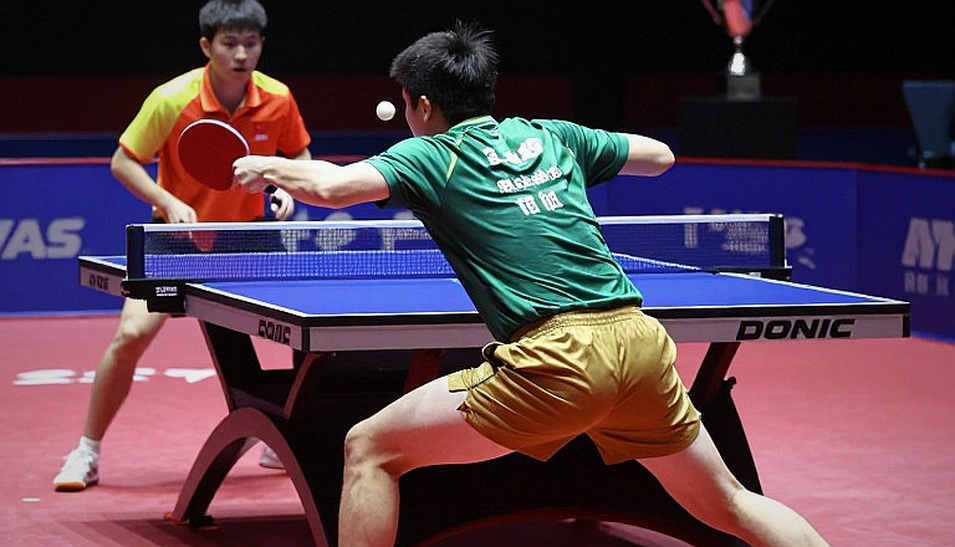
When WTT Feeder Linz 2026 released its entry list, one figure made me pause longer than any other: Connor Green, world ranked 122 in men's singles, seeded sixth. At any event above the Feeder tier in the WTT pyramid, a player outside the top 100 is never treated that way. Not because organisers are generous, but because the tier's structure says so.
But the more telling detail lies among the names standing beside his on the draw sheet. Or rather: in their absence.
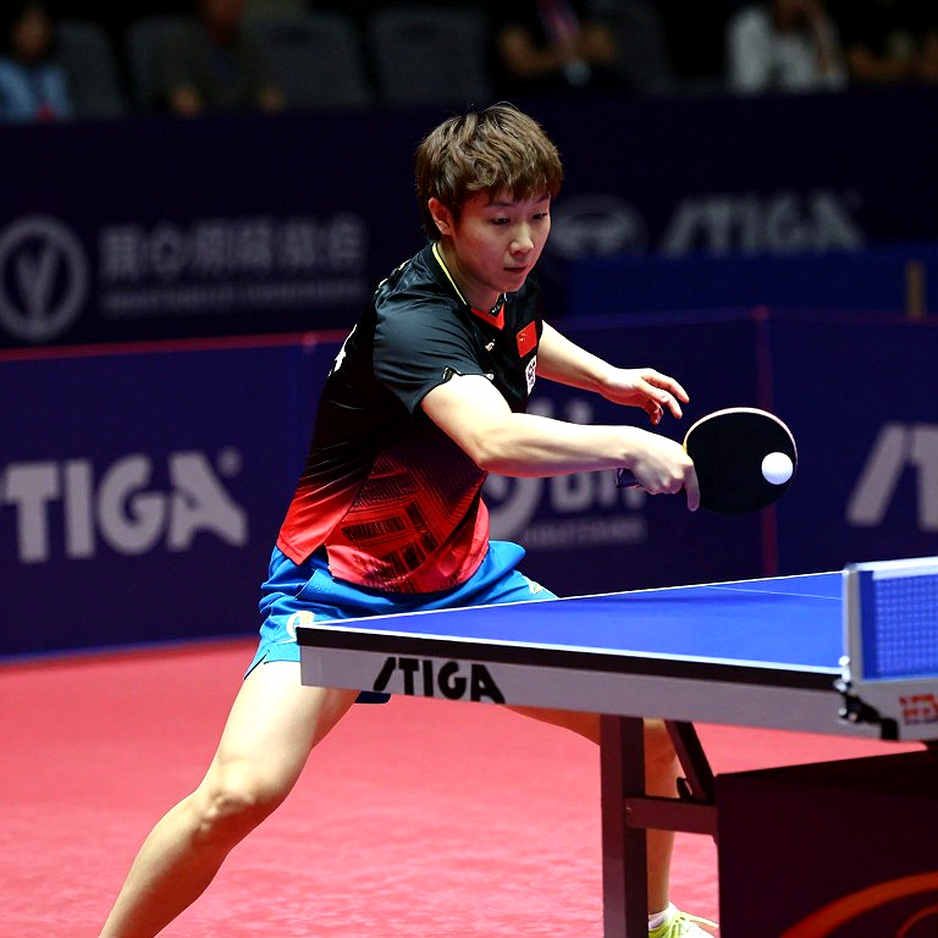
CONTEXT: A TIER PEOPLE ROUTINELY MISREAD
WTT Feeder is the lowest tier of the World Table Tennis event system, sitting below Contender, Star Contender, Champions and Grand Smash. It replaced the traditional ITTF Open circuit — a system that once bundled every level of play into one competitive frame. When WTT split the tiers, it inadvertently created something few analyse fully: a points ladder built specifically for associations without top-20 players.
Reading this tier correctly is a precondition for reading any number inside it correctly. At a Grand Smash, a seeding is a statement of absolute standing. At a Feeder, a seeding is only a statement of relative standing — relative to an entry list that is itself filtered in a different way.
The Linz 2026 seeding list shows this almost nakedly. In women's singles, host player Sophia Pichler received a main-draw wildcard with a world ranking of 777. That is the single most important number for measuring how thin this field is. A host wildcard is a standard governance mechanism, not a merit statement — but when it lands with a rank-777 player, it becomes a ruler for where the field's floor sits.
And in the middle of that picture sits the English delegation.
Two English names appear across the entire draw report: Connor Green and Tin-Tin Ho. No third name. Green is ranked 122, seeded sixth in men's singles and fifth in men's doubles. Ho is ranked 80, seeded fourth in women's singles, and holds the top seed in both women's doubles and mixed doubles. Both are entered in three events.
That is the entire footprint of English table tennis at Linz. Two players, one event, and a doubles pattern I consider the most analytically valuable detail in this release.
CORE ANALYSIS: THE CROSS-ASSOCIATION DOUBLES STRUCTURE
The most notable data point at Linz is not a ranking or a seed, but a set of cross-border pairings.
Tin-Tin Ho plays women's doubles with Kukulkova of Slovakia. Connor Green plays men's doubles with Zalewski of Poland. In neither men's nor women's doubles is there an all-English pair. This is a structural fact, not an incidental detail. It allows two hypotheses that the available data cannot yet separate.
Hypothesis one: this is deliberate development policy. Cross-association pairing is permitted at WTT events and at the World Championships, but not at the Olympic Games — where mixed doubles is limited to one same-NOC pair per association and team-event doubles must be same-NOC. That means these partnerships are ranking and experience vehicles, not Olympic rehearsals.
Hypothesis two: this is a consequence of insufficient internal depth. If the English association had enough players at a similar level to pair internally, finding foreign partners would be less urgent.
I lean towards both being true, with different weights. Converted into risk terms, this is worth noting: a table tennis nation building doubles strength on a foundation of foreign partners cannot replicate that model in team events or Olympic mixed doubles. In both, partner structure is mandatory and non-negotiable.
But first, competitive value. The Green — Ho mixed doubles pair is the English delegation's highest-expected-value line at Linz, and that is not speculation. It derives from a real fact: the pair won an equivalent-tier event in Düsseldorf. That is their top seed in mixed doubles — a retrospectively earned position, not a form-based one. It is an important distinction I will return to later.
In singles, the data shows two different pictures.
Tin-Tin Ho, ranked 80 and seeded fourth in women's singles, is a reasonable match in the context of a Feeder event. She is England's highest-ranked female player this cycle — a well-grounded inference, since rank 80 is a high mark by English women's standards — and she anchors the entire expectation structure of the delegation. She holds the top seed in two events and the fourth seed in a third. If any English result at Linz can be projected with relative confidence, it sits on her side of the draw.
Connor Green is different. Rank 122 but seeded sixth in men's singles is an indicator of a shallow men's entry list, not an indicator of form. It suggests the seeded zone is concentrated among players ranked outside the top 150 — a good points-harvesting opportunity for a rising player. But it is an indicator of bracket difficulty, not an indicator that he will exploit it.
In men's doubles, Green pairs with Zalewski and is seeded fifth. Their round-of-32 opponents are the Luxembourg pair Scholtes — Van Dessel. There is one detail in this data fact that I value more than the rest of the draw combined: Green won a European U21 doubles bronze in June with none other than Van Dessel. That means both know each other's patterns at a level of detail video analysis struggles to replicate.
This is not a one-sided information advantage. It is informational symmetry. Green knows Van Dessel, and Van Dessel knows Green to the same depth. If anyone expects a preparation edge for Green here, the data does not support it.
The opponent picture has one other point. In women's doubles, Ho and Kukulkova — as top seeds — face India's Kotecha and Wani in the round of 16. India is an association with an ascending women's development programme in the region. But I have to be direct here: the data sample is one pairing, and one pairing cannot support a conclusion about an entire system's depth. This is missing information, not weak information. I record it as a signal to track, not a conclusion.
In women's singles, the most asymmetric match on paper is Ho versus Pichler: rank 80 against rank 777. That is an extreme gap, but the real risk is not ranking-based. It is adaptation-based. A low-profile host player, handed a wildcard, with nothing to lose, facing a seed spreading her energy across three events — that is the structure of a classic trap match at the lower tier, entirely independent of ranking.
Connor Green faces a qualifier in the men's singles round of 32. This is the most easily overlooked detail in the entire release. A qualifier is a player who has won actual matches on the venue's tables, has felt the bounce, has adjusted to the airflow and light. Green enters cold against a warm opponent. This is not a skill disadvantage. It is a state disadvantage, and at Feeder level, state disadvantage is a far more common upset mechanism than technical distance.
On workload, both Green and Ho are entered in three events. The absolute physical cost at Feeder tier is low, but the pattern indicates a points-and-experience-maximisation strategy rather than single-event focus. That is a rational points-farming configuration — and a signal I will unpack later, because it touches a structural question far more important than the result of one Feeder event.
CONTRARIAN ANGLE: "HISTORY" WRITTEN AT THE LOWEST TIER
This is the part I want to spend the most time on, because it touches something I learned in 2026: data never lies on its own, but people often read it through the wrong lens.
The original association release calls the Green — Ho pair a "history-making" team and mentions their bid to "add to their accolades". I do not dispute the fact beneath that description. That an English pair won a WTT-level mixed doubles title for the first time is a verifiable fact. But that description omits exactly one decisive qualifier: "at Feeder level".
And that is not a small point. The gap between a Feeder title and a result at a Grand Smash or the Olympics is very large. The conversion rate of association-media "history-making" labels at Feeder/Contender level into higher-tier success is historically low. I do not have the exact figure in hand — and I will not invent one. But I have watched enough events across enough tiers to know that reading a Feeder top seed as proof of Contender-level or higher standing is a logical leap the data does not permit.
Here is the core paradox: the Green — Ho top seed in mixed doubles is a position retrospectively earned from a single event, not a position established by current form. They are top seeds not because they are playing best, but because they hold the best points. Those are different things, and most write-ups about lower-tier events blur them.
The consequence of that blurring is not just a wording problem. It manufactures a false expectation, and false expectation manufactures false pressure.
Look at the expectation-versus-reality table. In mixed doubles, the market expects a title. But the top seed is not a forecast; it is the product of accumulated points. The gap between the two is modest but real. In women's doubles, the expectation is even more skewed: Ho and Kukulkova are a new cross-association pair, holding the top seed, but with no documented shared record. This is the weakest-supported expectation in the entire release, and the easiest to misread.
In men's singles, Green is seeded sixth at rank 122. That is a reasonable but unverifiable expectation — the bracket looks winnable, but the qualifier opponent introduces a variable seeding cannot capture.
And at long-term scale, the largest gap lies between the "history-making" framing and the fact that the achievement belongs to the lowest tier of the WTT pyramid. This is where future analysis is most likely to slip.
There is one more paradox worth naming, and it concerns the reigning-champion effect. A pair that has just won at Feeder level becomes a video target for same-tier pairs at the next event. Green — Ho are now a known target. Their Linz opponents will arrive better prepared than a top seed implies. This is the paradox of lower-tier success: the more you win, the more you get decoded, and at a tier where technical separation is narrow, being decoded is a double disadvantage — losing surprise value while adding the pressure to win.
I want to pause here to note the limits of this analysis. Everything above rests on one national association release — a primary but promotionally biased source. Table Tennis England is reliable for facts about its own players: seeds, draws, rankings. It tends to be silent about anything that complicates the promotional frame, and it is unverified by any independent outlet in this article. There is no form data, no head-to-head data, no physical data. That means any outcome projection is built on a much thinner foundation than the "quiet news" tone suggests.
What if the indicators I use here are wrong? What if Green's sixth seed reflects not a shallow men's field but a coincidental absence of top-100 players in one arbitrary week? That is a plausible hypothesis, and I do not rule it out. The distinction between a solid structure and small-sample noise cannot be resolved from one seeding list. I offer inference, not conclusion.
WHAT IS ACTUALLY WORTH WATCHING
The Linz data will yield a few signals over the next 7 to 10 days, before their value expires — since this is a pre-event draw preview, its nature is ephemeral.
The first and clearest signal is Green's men's singles round-of-32 result against the qualifier. This is the single highest-information data point of the whole event, since it directly tests the soft-bracket hypothesis: whether seeding advantage converts into result advantage, or whether the cold-warm state disadvantage is the deciding variable.
The second is the mixed doubles pair. A second consecutive title would materially improve their ranking position and their entry status at Contender events. But what is worth watching more is the points-defence rhythm: their mixed doubles points are concentrated in a single March event, meaning a points-expiry window exists. Point concentration without diversification is a recurring form of ranking fragility in the WTT system.
The third is the women's doubles pair Ho — Kukulkova. It is a new pair, top-seeded, with no documented shared record. Their Linz result will be the result of a test never before run.
The fourth, and perhaps the most long-term valuable signal, is the presence or absence of a third English name in main draws at subsequent Feeder and Contender events. Two players, a single-anchor structure, and no visible middle tier is a pattern I read as a signal of limited development-resource depth. One missing name proves nothing. But the absence of a third name in a full draw report is a signal, and it deserves tracking across multiple events, not just one.
Finally, there is a context the release itself does not mention, and I record it with low confidence: if the 2026 World Team Championships are indeed held in London, as some unverified sources suggest, then every English player's result in 2026 carries far higher strategic weight than a Feeder event implies. A home stage at the world level is the largest commercial and participation catalyst of a cycle. If true, the English delegation entering a minimal squad with maximum per-player event coverage is no longer merely a points-farming choice — it is part of a larger strategy that the release, like all association releases, chooses not to state.
Players leave the court, spectators leave the stands, but data never leaves the game. Tactics are what people draw on a blackboard. Data is what they draw on reality. At Linz, reality is drawing a picture of a table tennis nation betting on foreign partners to hold its mid-tier position — and that picture will only sharpen once the matches begin.